+86 29 8881 0979

Author name: Dolph

5 factors affecting the bandwidth of circular waveguide

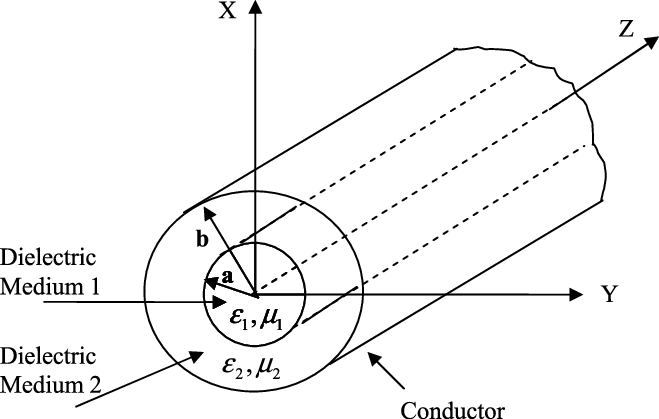
Waveguide bandwidth hinges on inner diameter (e.g., 3cm radius boosts TE₁₁ cutoff to 3.412cm, squeezing higher-mode onset), loss (TE₁₁ at 10GHz attenuates 0.015dB/m, narrowing usable range), and excitation purity—probes often stir multiple modes, unlike resonant couplers, trimming effective bandwidth by ~15%.​ Operating Frequency Cutoff In a ​​circular waveguide with a diameter of 2.54 cm (1 […]

5 factors affecting the bandwidth of circular waveguide Read More »
5 characteristics of evanescent modes in waveguides

Evanescent modes feature steep attenuation (e.g., TE₀₁ in rectangular waveguides decays ~0.6dB/μm at 10GHz), trapping >85% energy within 10μm of walls as fields diminish exponentially from surfaces; excited via near-field probes, they never propagate, unlike guided modes. ​Rapid decay with distance​​ A standard silicon optical waveguide operating at a wavelength (λ) of 1550 nanometers, the

5 characteristics of evanescent modes in waveguides Read More »

6 sources of radio waves

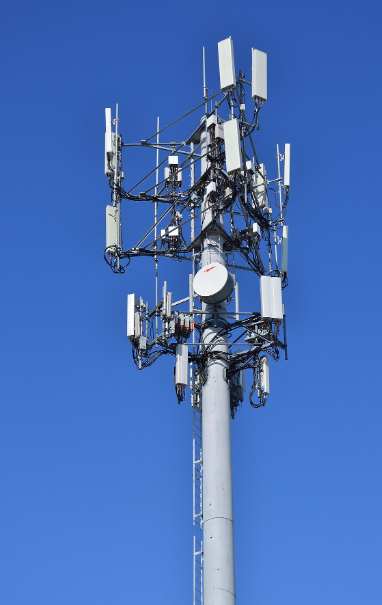
Radio waves stem from lightning (10-100kHz, peak power 1GW), solar flares (1GHz bursts hit 10¹⁵W), cell towers (800MHz-2.6GHz, 10-40W output), weather radars (X-band 8-12GHz, 1MW pulses), Wi-Fi routers (2.4GHz, 0.1-1W), and thermal emissions (body heat radiates ~0.001W/m² at 10GHz).​ The Sun and Solar Activity When we think of the Sun, we usually picture the intense

6 sources of radio waves Read More »

5 Things radio waves and microwaves have in common

Radio waves and microwaves both propagate at 3×10⁸m/s, obey reflection/refraction (e.g., 99% reflect off copper), suffer atmospheric loss (oxygen absorbs 60GHz microwaves like HF radio in ionosphere), and enable comms—Wi-Fi (2.4GHz) or FM (100MHz)—via amplitude/frequency modulation. Same Family, Different Energy They are fundamentally the same type of energy—oscillating electric and magnetic fields—and they both travel

5 Things radio waves and microwaves have in common Read More »

What is a waveguide circulator in a microwave

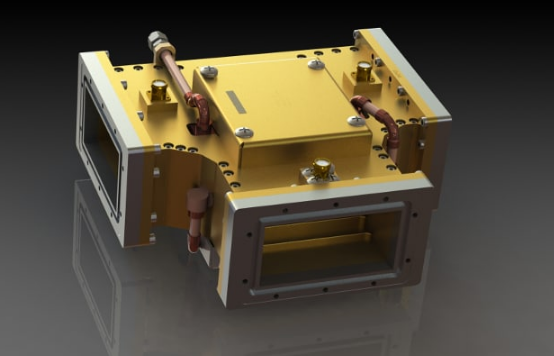
A waveguide circulator in microwaves uses ferrite materials and Faraday rotation to direct RF signals unidirectionally (e.g., 8-12GHz X-band) with <0.5dB insertion loss and >20dB isolation, handling 50W+ CW power to protect transmitters in radar/transceiver systems by preventing reflected signal damage. What It Is and Main Jobs A typical commercial C-band (4-8 GHz) radar circulator

What is a waveguide circulator in a microwave Read More »

Why do satellites use high frequency

Satellites use high frequencies (e.g., Ku/Ka bands, 12–40GHz) for wider bandwidth (hundreds of MHz vs. tens in L-band), enabling higher data rates; shorter wavelengths allow compact antennas, reducing launch weight while minimizing terrestrial interference. Why High Frequency Matters High-frequency bands, typically classified as those above 3 GHz, such as Ku-band (12–18 GHz) and Ka-band (26.5–40

Why do satellites use high frequency Read More »

How to design an antenna for a specific frequency

Design an antenna for a specific frequency (e.g., 2.4GHz) by calculating length via f=2Lc​ (≈6.25cm for dipole), adjusting for dielectric (FR4 εr​≈4.3) to shorten, and matching impedance to 50Ω via feed point or transformer for efficient radiation. Choose Your Target Frequency For instance, a Wi-Fi router operating at 2.4 GHz has a fundamentally different antenna

How to design an antenna for a specific frequency Read More »

What is the difference between Yagi and Omni antenna

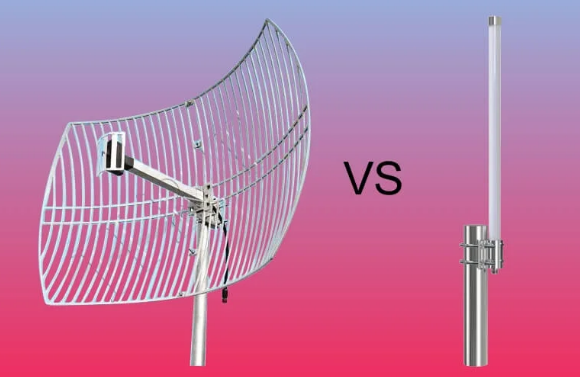
Yagi antennas are directional, with a driven element, reflector, and directors, offering 10–15dBi gain at 2.4GHz for focused point-to-point links. Omni antennas radiate uniformly horizontally (2–5dBi gain), suited for area coverage; Yagi typically operates 400MHz–6GHz, Omni 30MHz–6GHz, differing in pattern and use case. How They Send and Receive Signals A Yagi antenna, like a flashlight,

What is the difference between Yagi and Omni antenna Read More »

What is the material of a directional coupler

Directional couplers commonly use brass (copper-zinc alloy, 60–70% Cu) for housings for conductivity, PTFE (εr≈2.1, tanδ<0.001) for high-frequency PCB substrates, or ceramic (Al₂O₃, εr≈9.8) for power handling, balancing loss and thermal stability. Common Materials Used A 1 dB increase in insertion loss can degrade system performance by 20%, making low-loss materials non-negotiable for high-frequency applications.

What is the material of a directional coupler Read More »

What is the function of coupler antenna

Coupler antennas integrate signal routing and isolation functions, enabling power division (e.g., 10–20dB splits) or sampling (insertion loss <0.3dB) between transmit/receive paths while maintaining >25dB isolation at 2–18GHz to minimize interference, optimizing RF system efficiency. Connecting Two Devices Wirelessly A common challenge in RF systems is efficiently transferring a signal from a primary transmitter to

What is the function of coupler antenna Read More »

Scroll to Top
Blank Form (#3)