
HOME » Waveguide, RF & Microwave Components » Special Waveguide Transitions
Special Waveguide Transitions
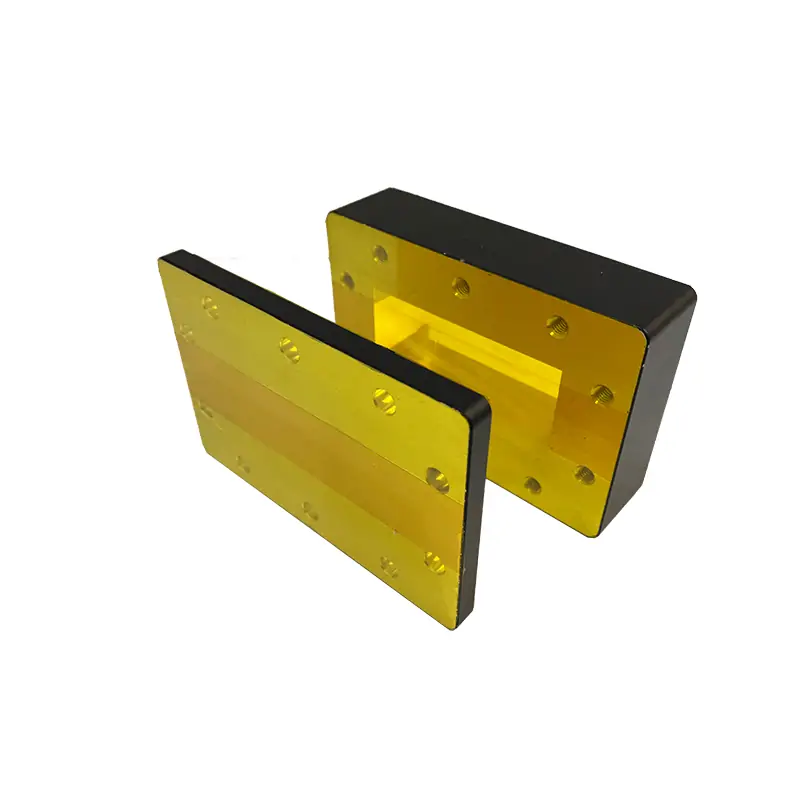
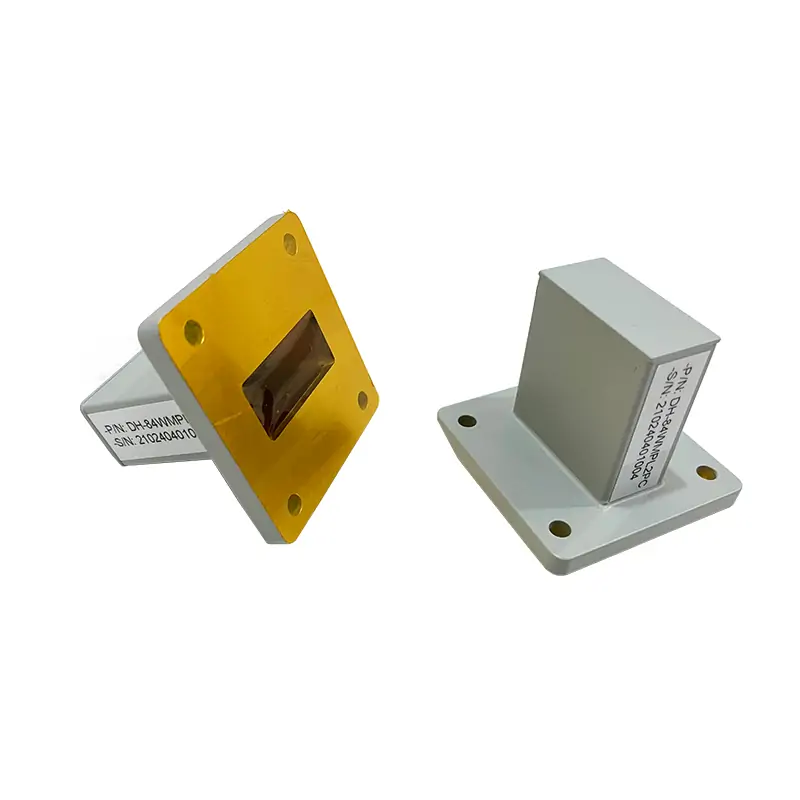
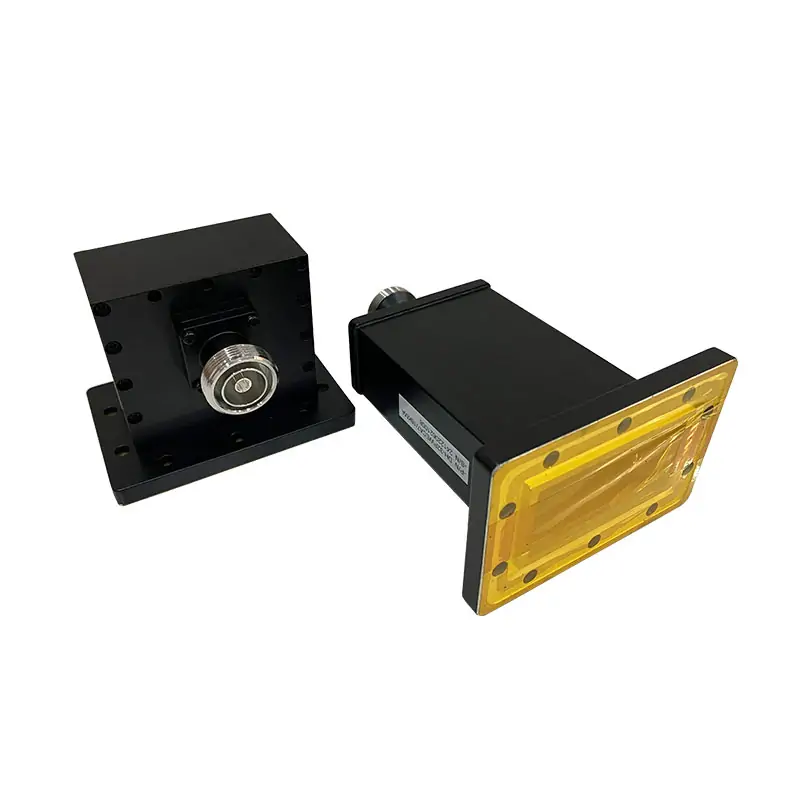
Special waveguide transitions connect unlike guide sizes, cross-sections or interfaces when a direct joint will not fit. Dolph lists WR2300–WR12 family coverage and a VSWR target of 1.04:1 or lower in overlapping bands. These are configuration-dependent references: the selected input and output guides must support the required operating band and modes.
A special waveguide transition adapts the RF path between unlike guide interfaces. Dolph’s published family covers WR2300–WR12 across 0.35–91.9 GHz, with Aluminum 6061 or Brass and listed UG, CPRG and UBR flange options. This is a family range, not one component’s bandwidth. Confirm the overlapping usable band, supported modes, length and the stated VSWR ≤1.04:1 target for the selected configuration.
Configuration Scope
- Waveguide Coverage: WR-2300 to WR-12.
- Frequency Range: 0.35 to 91.9 GHz.
- Transition Purpose: Adaptation between different waveguide sizes, shapes, or interface types.
- Electrical Target: VSWR ≤ 1.04:1 in overlapping bands.
Interface & Materials
- Base Materials: Aluminum 6061 or Brass.
- Flange Options: UG, CPRG, UBR.
- Surface Finish: Gray epoxy enamel on external non-mating surfaces.
- Interface Matching: Suitable for assemblies requiring non-identical mating sections.
Standards & Commercial Data
- Flange Reference: Compatible with published UG / CPRG / UBR configurations.
- Naming Reference: Flange designation can be aligned with IEC / EIA reference systems.
- Website Marks: RoHS and ISO shown on the website.
- Warranty: 1-year warranty shown on the website.
Technical Data
| Category | Specification |
|---|---|
| Product Type | Special Waveguide Transitions |
| Waveguide Size Range | WR-2300 to WR-12 |
| Frequency Range | 0.35 to 91.9 GHz |
| VSWR | ≤ 1.04:1 in overlapping bands |
| Material | Aluminum 6061 or Brass |
| Flange Configuration | UG, CPRG, UBR |
| External Finish | Gray epoxy enamel (external, non-mating surfaces) |
RFQ Inputs
- Input Side: Waveguide size and flange type.
- Output Side: Waveguide size and flange type.
- Band Data: Operating range or overlap range.
- Material Choice: Aluminum 6061 or Brass.
- Drawing Support: Assembly drawing or space limit is recommended.
Application Fit
- Telecommunications: Interface adaptation inside microwave link assemblies.
- Radar Systems: Low-reflection transition section for mixed-interface builds.
- Satellite Communications: Broad size coverage for non-identical mating systems.
- Scientific Research: Useful for custom bench setups and non-standard RF routing.
Procurement Notes
- Interface Matching: Input and output flange data should be confirmed before order release.
- Mechanical Limits: Length or envelope restrictions should be provided at RFQ stage.
- Finish Scope: Published coating applies to external non-mating areas.
- Project Suitability: Final configuration should follow actual mating hardware requirements.
Technical FAQ
Q: Is this a standard catalog item or a custom transition family?
A: It is presented as a special transition family for adapting different waveguide sizes, shapes, or types. Final configuration should match the actual project interface.
Q: What waveguide range is published?
A: The published range is WR-2300 to WR-12, covering a broad span of microwave and millimeter-wave interface sizes.
Q: Does one transition cover 0.35–91.9 GHz?
No. That interval describes the published family. Each transition needs a usable band supported by both connected guides and its transition geometry. State start and stop frequencies in the RFQ.
Q: Is VSWR ≤1.04:1 guaranteed for every interface?
The page lists this target in overlapping bands. Confirm its applicability to the chosen guide pair and agree the measurement band and reference planes before order release.
Q: Which flange options are available?
A: The page lists UG, CPRG, and UBR flange configurations.
Q: What should be included in the RFQ?
Send both guide apertures and flange drawings, operating band, required modes, maximum VSWR, loss limit, CW/peak power, material and available length. Use the waveguide transition range for size changes or a rectangular-to-circular transition for a change in cross-section.