+86 29 8881 0979

default

What is the difference between horn antenna and parabolic dish antenna

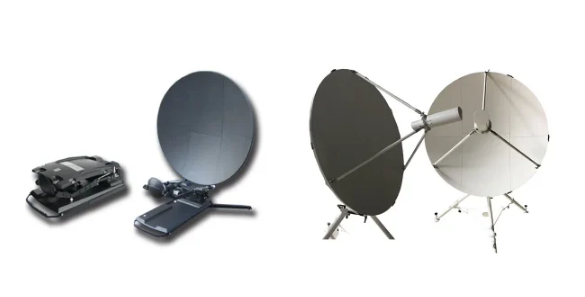
Horn antennas offer wide bandwidth (typically 10:1 ratio) with 10-20 dBi gain, ideal for short-range applications like radar feeds. Parabolic dishes achieve higher gain (30-50 dBi) through reflector focusing, but narrower bandwidth (5-10% of center frequency). Dishes provide 3° beamwidth at 10GHz vs. horns’ 25°, making dishes better for long-distance satellite links (60cm dishes reach […]

What is the difference between horn antenna and parabolic dish antenna Read More »
Up to 330GHz. mmWave & Microwave Products

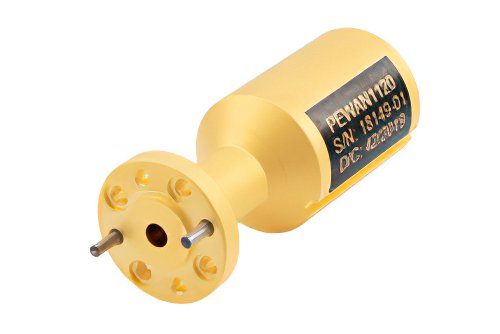
Excited to share you the highlights of our precision mmWave products in 2024: Standard Gain Horns, WG to Coaxial Adapters, Attenuators, Couplers, Power Dividers, Terminations, Isolators, Straights/Bends/Twists etc. We provide microwave products, assembly and engineering services for up to 330GHz. Customers ranges from telecom, government to university research, involving in military RADAR systems, EW units, Commercial RF solutions

Up to 330GHz. mmWave & Microwave Products Read More »

Packaging and Integration Technology of Double Ridge Waveguide Components

In the realm of modern telecommunication and radar systems, the evolution of waveguide technology has been pivotal in facilitating the transmission of electromagnetic waves with enhanced efficiency and reliability. Among various waveguide designs, the double ridge waveguide stands out as a significant innovation, offering unique characteristics that cater to specific industry needs. Understanding its structure,

Packaging and Integration Technology of Double Ridge Waveguide Components Read More »

How was complete coverage achieved with a minimum s-band antenna gain of -7 dBi

To achieve complete coverage with a minimum s-band antenna gain of -7 dBi, a straightforward configuration utilizing dual circularly polarized microstrip patch antennas was employed. The configuration involved the implementation of a wide bandwidth, dual circularly polarized truncated corner microstrip antenna, which was complemented by two parasitic patches. To enhance the cross polarization bandwidth, diagonally embedded holes

How was complete coverage achieved with a minimum s-band antenna gain of -7 dBi Read More »

[Dolph Microwave] 4.5 Meter Turning Head Antenna with Ext.Ka-band Tx27.5 to 31.0 GHz, Rx17.7-21.2GHz

Dolph Microwave finished production 4.5 Meter Turning Head Antenna and test of Ext. Ka-band Tx27.5 to 31.0 GHz, Rx17.7-21.2GHz satcom antenna with 4 port Circular Pol. Axis Ratio 0.6dB. Product & Pedestal Features:  Wide variety of feed options designed to meet the latest international standards. S, C, X, Ku, DBS and Ka Band, Tx/Rx, 2Tx/2Rx, TT&C,

[Dolph Microwave] 4.5 Meter Turning Head Antenna with Ext.Ka-band Tx27.5 to 31.0 GHz, Rx17.7-21.2GHz Read More »

Curved Waveguide Types

There are two types of curved waveguides: E-surface curved and H-surface curved. The curved waveguides include arc-shaped curved waveguides and cut-angle curved waveguides. Cut-angle curved waveguides can be used in situations where the arm length is short, the waveguide is large, the bandwidth is narrow, and the power is low. The standard bending angle is 90°,

Curved Waveguide Types Read More »

C-band Antenna Feeds & RF Networks from Dolph Microwave

Antenna feeds and RF networks as the heart of antenna system from Dolph Microwave is R&D by experienced our engineers who engaged into satcom and RF field for years. The components can be offered including OMT, duplixer, filter, phase shifter and feedhorn etc. covering different bands like C-band, Ku-band, Ka-band, S-band. X-band and required dual band etc. Our

C-band Antenna Feeds & RF Networks from Dolph Microwave Read More »

What are the frequency ranges for different frequency bands in circular waveguides

The frequency range of circular waveguides in different frequency bands varies according to their diameter. For example, in TE11 mode, a circular waveguide with a diameter of 22.86 mm operates at 7.3-10 GHz. Choose the appropriate diameter to match the required frequency range to ensure low-loss transmission. S-Band Characteristics At 3AM, ESA alerted us about

What are the frequency ranges for different frequency bands in circular waveguides Read More »

Scroll to Top
Blank Form (#3)