+86 29 8881 0979

default

What is the difference between directional coupler and splitter

A ​​directional coupler​​ samples a small portion (e.g., ​​-10dB to -30dB​​) of signal flow in one direction (forward/reflected) for measurement, while a ​​splitter​​ divides power equally (e.g., ​​3dB loss per port​​ in a 2-way splitter) across all outputs. Couplers maintain isolation (​​20–30dB​​), whereas splitters balance impedance (​​75Ω/50Ω​​). Use couplers for RF analysis, splitters for signal […]

What is the difference between directional coupler and splitter Read More »
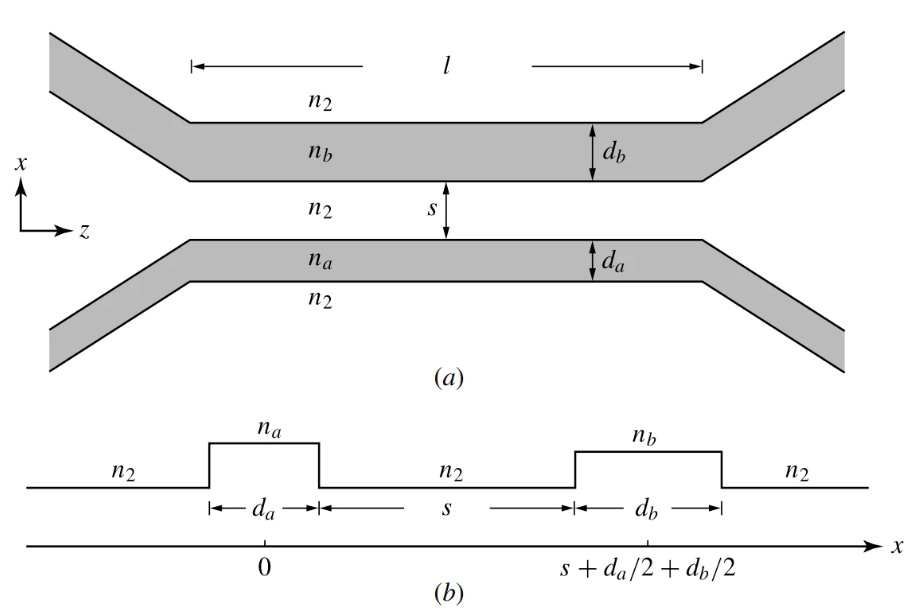
What is the distance between directional couplers

The ​​distance between directional couplers​​ depends on ​​wavelength and frequency​​—typically ​​λ/4 to λ/2​​ (e.g., 7.5–15 cm for 1GHz signals). In ​​RF systems​​, spacing is optimized for ​​20-30 dB isolation​​ to prevent interference, with ​​microstrip designs​​ maintaining ​​0.1mm precision​​ for ​​2-40GHz applications​​. Closer spacing (<5mm) may be used in ​​high-density PCBs​​ with ​​3dB coupling loss​​. ​​What

What is the distance between directional couplers Read More »

What is a dual directional coupler

A ​​dual directional coupler​​ is a passive RF device that ​​samples forward and reflected signals​​ simultaneously in a transmission line, typically operating from ​​1 MHz to 40 GHz​​ with ​​20-30 dB coupling factor​​. It uses ​​two coupled lines​​ to achieve ​​±0.5 dB directivity​​, enabling precise ​​VSWR measurements​​ and ​​power monitoring​​ in telecom/test systems without disrupting

What is a dual directional coupler Read More »

Can directional coupler be planar

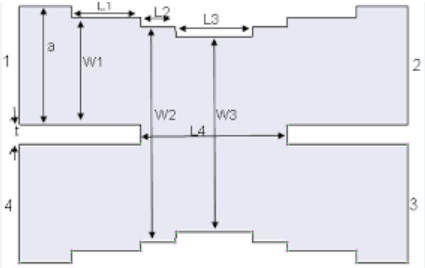
Yes, ​​planar directional couplers​​ (e.g., microstrip or stripline) enable ​​compact integration​​ (<5mm² footprint) with ​​broadband performance​​ (2-40GHz). They achieve ​​tight coupling​​ (3-20dB) via ​​λ/4 spaced traces​​ (0.1mm precision) on ​​FR4/Rogers substrates​​, offering ​​low loss​​ (<0.2dB/mm) but trade ​​isolation​​ (15-25dB vs. 30dB in waveguide). Ideal for ​​5G/MMIC​​ apps where ​​size/weight​​ matters. ​​What is a Directional Coupler?​​

Can directional coupler be planar Read More »

What advantage does a 3 port coupler have over a 4 port

A 3-port coupler offers simpler integration (30% fewer connections) and lower insertion loss (<0.3dB vs. 0.5dB in 4-port), ideal for unidirectional monitoring (e.g., 20dB coupled output). With compact size (50% smaller footprint) and reduced cost (25% savings), it excels in 5G/Wi-Fi apps where isolation (>25dB) matters more than bidirectional sampling—though lacks 4-port’s dual-path flexibility. ​​Fewer

What advantage does a 3 port coupler have over a 4 port Read More »

What is the difference between directional coupler and combiner

A ​​directional coupler​​ splits RF signals asymmetrically (e.g., 90:10 ratio) with ​​20-30 dB isolation​​ to monitor power without disrupting flow, while a ​​combiner​​ merges signals symmetrically (e.g., 3dB loss) with ​​<0.5dB insertion loss​​. Couplers operate at ​​1-40GHz​​ for measurement, combiners at ​​narrow bands​​ for coherent summation—critical differences in ​​phase matching​​ (±2°) and ​​VSWR​​ (<1.5:1). ​​Basic

What is the difference between directional coupler and combiner Read More »

How many ports does a directional coupler have

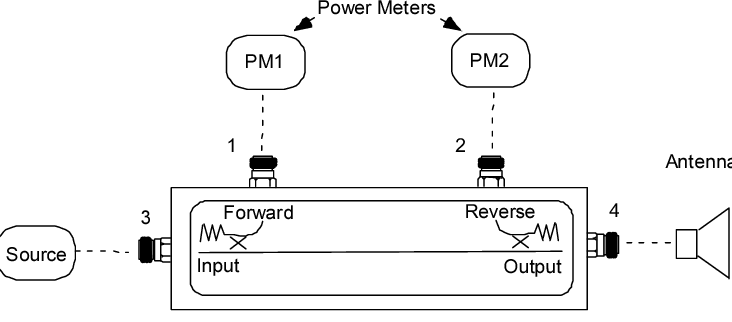
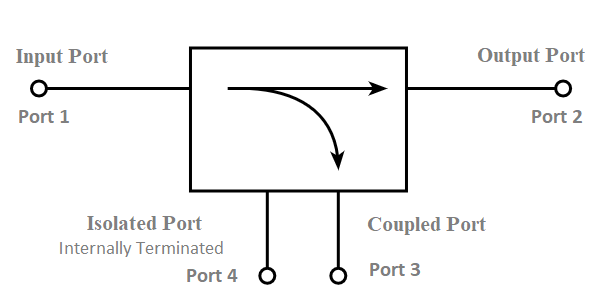
​A standard directional coupler has 4 ports: INPUT (accepts 1-100W signals), OUTPUT (through port with <0.5dB insertion loss), COUPLED (extracts -10 to -30dB of input power), and ISOLATED (terminated with 50Ω load achieving >20dB isolation). High-performance models operate from DC-40GHz with directivity >30dB. The coupling factor (e.g., 10/20/30dB) remains stable within ±0.5dB across 85% bandwidth.

How many ports does a directional coupler have Read More »

Dolph Microwave

10 Leading Microwave Waveguide Producers Globally

The top 10 global microwave waveguide manufacturers include L3Harris (US), Thales (France), and NEC (Japan), specializing in precision-machined aluminum/copper guides for 1-110 GHz applications. Key players like Rosenberger (Germany) and Pasternack (US) offer WR-90 to WR-650 standards with 0.1dB/m loss at 10GHz. Chinese firms CETC and Huawei supply 5G-compatible waveguides, while MVG (France) dominates aerospace-grade

10 Leading Microwave Waveguide Producers Globally Read More »

What is the difference between horn antenna and dipole antenna

Horn antennas are directional with 10-25 dBi gain, operating at 1-100 GHz for radar/satellite links, achieving 60-90% aperture efficiency. Dipoles are omnidirectional (1.5-2.15 dBi gain), typically for 100MHz-6GHz communications, with λ/2 length (e.g., 16cm at 900MHz). Horns offer 20dB front-to-back ratio, while dipoles radiate equally in azimuth. Horns need waveguide feeds; dipoles use simple coaxial

What is the difference between horn antenna and dipole antenna Read More »

What is the difference between horn antenna and parabolic dish antenna

Horn antennas offer wide bandwidth (typically 10:1 ratio) with 10-20 dBi gain, ideal for short-range applications like radar feeds. Parabolic dishes achieve higher gain (30-50 dBi) through reflector focusing, but narrower bandwidth (5-10% of center frequency). Dishes provide 3° beamwidth at 10GHz vs. horns’ 25°, making dishes better for long-distance satellite links (60cm dishes reach

What is the difference between horn antenna and parabolic dish antenna Read More »

Scroll to Top
Blank Form (#3)