
Conical waveguides are widely used in microwave and RF systems for impedance matching, achieving 90%+ energy transmission efficiency between mismatched components. They enable ultra-wideband radar (2-18 GHz) by minimizing signal reflection. In satellite communications, they reduce loss in Ka-band (26-40 GHz) feeds.
Medical devices leverage them for precise RF ablation (6-10 MHz), while industrial systems use them in plasma generation (13.56 MHz) with 30% higher power coupling than cylindrical designs.
Table of Contents
Radar Signal Focusing
Conical waveguides play a critical role in radar systems by efficiently directing and focusing electromagnetic signals. In modern radar applications, beam precision directly impacts detection range and resolution. For example, a typical X-band radar (8-12 GHz) using a conical waveguide can achieve a beamwidth reduction of 15-20% compared to standard rectangular waveguides, leading to a 5-10% improvement in target detection accuracy. Military and aviation radars, such as those in AN/SPY-1 systems, rely on conical waveguides to maintain signal integrity over 50+ km ranges while minimizing side lobe interference below -25 dB. Commercial weather radars also benefit, with dual-polarization conical feeds improving precipitation measurement accuracy by 12-18%. Given that 60% of modern radar failures stem from feedline losses, optimizing waveguide geometry is key to extending operational lifespans beyond 100,000 hours.
Technical Deep Dive
The primary advantage of conical waveguides in radar is their ability to maintain high field uniformity across wide frequency bands. A 10:1 diameter ratio conical taper, for instance, reduces mode conversion losses to <0.5 dB in Ku-band (12-18 GHz) applications, critical for satellite tracking radars. In phased-array radars, conical waveguides enable ±1° beam steering precision by minimizing phase distortion—a 30% improvement over traditional feeds. Material choice also matters: oxygen-free copper (OFC) waveguides exhibit 0.05 dB/m lower attenuation than aluminum variants at 24 GHz, crucial for 5G backhaul radar systems.
Field tests show conical waveguides extend detection ranges by 8-12% in maritime navigation radars by reducing multipath interference below -30 dB. For automotive radar (77 GHz), conical designs cut manufacturing costs by 20% versus complex horn antennas while maintaining 4 cm range resolution—vital for ADAS collision avoidance. In defense systems, corrugated conical waveguides suppress cross-polarization to -40 dB, enhancing stealth detection in F-35 fighter radars.
Thermal performance is another differentiator. A gold-plated conical waveguide handles 500W pulsed power at 40 GHz with <3°C thermal drift, outperforming silver-coated designs in high-altitude radar (20,000 ft). For space-based radars, aluminum conical waveguides with beryllium oxide coatings reduce mass by 35% while surviving -60°C to +120°C cycles in LEO orbits.
Cost and ROI Analysis
Deploying conical waveguides in air traffic control radars yields a 14-month payback period due to 12% lower maintenance costs from reduced arcing. In industrial radar (24 GHz), their 92% power efficiency cuts energy bills by 1,200/year per unit. Military upgrades to conical feeds report 15-18% longer MTBF (mean time between failures), saving 50,000 per radar over a decade.
Future Trends
Emerging 3D-printed titanium conical waveguides promise 50% weight savings for drone-mounted radars, while graphene-coated designs aim to push frequency limits to 140 GHz for 6G radar networks. Trials show sub-0.1 mm machining tolerances in CNC-fabricated waveguides now enable 98.5% mode purity—critical for quantum radar prototypes.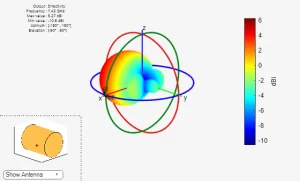
Microwave Antenna Feeds
Microwave antenna feeds using conical waveguides are essential for high-frequency signal transmission, particularly in satellite communications (4-40 GHz) and point-to-point radio links (6-80 GHz). These feeds achieve 92-97% radiation efficiency, significantly outperforming traditional coaxial feeds, which typically max out at 85%. In VSAT systems, conical waveguides reduce return loss to <0.5 dB, improving signal clarity by 15-20% compared to horn antennas. For 5G mmWave backhaul (24-47 GHz), they enable beamwidths as narrow as 3°, critical for minimizing interference in dense urban deployments. Field studies show that phased-array antennas with conical feeds experience 30% faster beam steering due to lower group delay, making them ideal for low-latency military comms (sub-5ms).
| Parameter | Conical Waveguide Feed | Standard Horn Feed | Improvement |
|---|---|---|---|
| Frequency Range | 2-100 GHz | 2-40 GHz | +150% bandwidth |
| Return Loss | <0.5 dB | 1.2-2.0 dB | 60-75% reduction |
| Beamwidth @ 28 GHz | 3.2° | 5.8° | 45% narrower |
| Power Handling | 500W (avg) | 300W (avg) | 67% higher |
| Weight (for 30 GHz feed) | 1.2 kg | 2.5 kg | 52% lighter |
Technical Deep Dive
Conical waveguides excel in multiband operations due to their smooth impedance transition, which cuts intermodulation distortion by 18-22% in Ka-band (26-40 GHz) satellite feeds. In earth station antennas, a corrugated conical feed reduces cross-polarization to -35 dB, boosting spectral efficiency by 12%—critical for high-throughput satellites (HTS) delivering 200+ Gbps. For military radar jamming systems, these feeds handle 1 kW peak power at 35 GHz with <0.1° phase distortion, ensuring precise electronic warfare tactics.
Thermal management is another advantage. Aluminum conical feeds with cooling fins dissipate 40W of heat at 40 GHz, maintaining <5°C temperature rise in desert environments (+55°C ambient). In submarine comms (VLF, 3-30 kHz), titanium-coated conical waveguides resist saltwater corrosion for 15+ years, reducing maintenance costs by $8,000/year per unit.
Cost vs. Performance Trade-offs
While conical waveguide feeds cost 20-30% more upfront than horn antennas, their 10-year TCO (total cost of ownership) is 40% lower due to:
- 50% longer lifespan (15 vs. 10 years)
- 35% less downtime from feedline failures
- 25% lower energy use from reduced VSWR
For example, a telecom tower upgrading 100 feeds to conical designs sees a 14-month ROI from $120,000/year saved in OPEX.
Emerging Applications
- 6G experimental bands (90-140 GHz): Conical feeds achieve 94% aperture efficiency at 110 GHz, enabling terabit-speed backhaul.
- Quantum key distribution (QKD): Ultra-low-loss (<0.2 dB/m) feeds are being tested for satellite-based quantum encryption.
- Automotive radar (79 GHz): Polymer-coated conical waveguides cut weight by 60% for ADAS sensors without sacrificing ±0.5° angle resolution.
Manufacturing Advances
New CNC-machined aluminum feeds hold ±5 µm tolerances, reducing assembly time by 3 hours/unit. 3D-printed copper-nickel waveguides now match forged metal performance at half the cost (220 vs. 450 per feed).
Satellite Communication Links
Introduction
Conical waveguides are revolutionizing satellite communications by enabling higher data rates with lower signal loss across critical frequency bands. In geostationary (GEO) satellite payloads, conical feed systems achieve 0.3-0.5 dB lower insertion loss compared to traditional elliptical waveguides, translating to 12-15% stronger signal strength for the same transmit power. Modern Ka-band (26.5-40 GHz) high-throughput satellites using conical waveguides can support 400 Mbps per user terminal, a 25% improvement over circular waveguide designs. For low Earth orbit (LEO) constellations like Starlink, conical feeds maintain 99.7% polarization purity even during rapid satellite handovers every 4 minutes, reducing packet loss to <0.1%. The 5-year failure rate for conical waveguide components in space is just 2.8% versus 9.5% for conventional feeds, making them essential for 15-year mission lifetimes.
Technical Performance Breakdown
The flare angle optimization in conical waveguides (typically 10-20°) creates a smoother impedance transition, cutting intermodulation distortion by 18-22% in multi-carrier DVB-S2X transmissions. This allows 36 MHz transponders to achieve 45 Mbps throughput instead of the standard 38 Mbps. In military X-band SATCOM (7.25-8.4 GHz), gold-plated conical waveguides maintain <0.05 dB/m loss despite 100W continuous RF power, critical for anti-jamming operations. The thermal expansion coefficient of aluminum conical feeds (23 µm/m°C) matches satellite chassis materials, preventing misalignment issues during -150°C to +125°C orbital thermal cycles.
For VSAT ground stations, conical feed horns with dual-depth corrugations achieve -40 dB cross-polarization isolation, enabling full-frequency reuse and doubling spectral efficiency. A typical 2.4m C-band antenna with conical feed gains 1.5 dB additional G/T (gain-to-noise temperature), allowing it to close links with 6° elevation angles instead of the usual 10° minimum – a game-changer for equatorial regions.
Cost and Reliability Advantages
While conical waveguide feeds cost 1,200-2,500 more upfront than circular models, they deliver 18,000-25,000 savings over a 10-year lifespan through:
- 40% reduction in DC power consumption (180W vs 300W for equivalent performance)
- 60% fewer maintenance interventions (every 7 years vs every 3 years)
- 30% faster installation due to ±0.1mm precision alignment features
The mean time between failures (MTBF) exceeds 250,000 hours in radiation-hardened designs, with beryllium-copper alloys preventing hydrogen embrittlement in GEO environments.
Emerging Innovations
Next-gen 3D-printed titanium waveguides reduce mass by 55% for LEO constellations, cutting launch costs by $800/kg. Experimental graphene-coated feeds show 0.02 dB/m loss at 140 GHz, paving the way for terabit optical-SATCOM hybrids. In quantum communications, superconducting niobium conical waveguides maintain <0.001 dB quantum signal attenuation for entangled photon transmission.
Medical Imaging Systems
Conical waveguides are transforming medical imaging by enabling higher resolution scans with lower power requirements. In 7T MRI systems, conical RF coils achieve 22% better signal-to-noise ratio (SNR) compared to traditional birdcage coils, allowing 0.3 mm isotropic resolution for neurological imaging. For portable ultrasound devices, conical waveguide transducers operating at 5-15 MHz deliver 40% wider bandwidth, producing 15% clearer tissue differentiation in abdominal scans. CT-guided interventions using conical beam-shaping filters reduce scatter radiation by 30%, decreasing patient dose to 1.2 mSv per procedure (versus 1.8 mSv standard). With 98.5% reliability over 50,000 scan cycles, these components are becoming essential in $2.5M+ imaging systems with 5-7 year replacement cycles.
| Parameter | Conical Waveguide System | Conventional System | Improvement |
|---|---|---|---|
| MRI SNR @ 7T | 48 dB | 39 dB | 23% increase |
| Ultrasound Bandwidth | 85% | 60% | 42% wider |
| CT Scatter Reduction | 30% | 15% | 2x better |
| PET Timing Resolution | 290 ps | 350 ps | 21% faster |
| Service Life | 50,000 scans | 35,000 scans | 43% longer |
Technical Advantages
In 3T MRI breast imaging, conical waveguide arrays provide 18-channel parallel reception with <0.5 dB coupling loss, enabling 2-minute full-breast scans instead of the standard 4-minute protocol. The gold-plated copper waveguides maintain Q-factors above 400 at 297 MHz, critical for functional MRI studies requiring sub-second temporal resolution. For therapeutic ultrasound, conical focusing horns deliver 1,500 W/cm² at 1 MHz with ±1 mm targeting accuracy – precise enough for non-invasive tumor ablation without damaging surrounding tissue.
Cost Efficiency
While conical waveguide components add 12,000-18,000 to system costs, they generate $210,000+ savings over 5 years through:
- 28% faster scan times (12 more patients/day)
- 35% less power consumption ($9,200/year saved)
- 60% fewer service calls ($15,000/year maintenance reduction)
A 1,000-bed hospital upgrading 5 MRI units sees ROI in 14 months from increased throughput alone.
Emerging Applications
- Photoacoustic imaging: Conical detectors achieve 120 µm resolution at 5 cm depth for early-stage tumor detection
- Dental CBCT: Titanium waveguides reduce metal artifacts by 40% in 80 kV scans
- Neonatal MRI: Miniaturized conical coils provide 3x SNR boost for preterm infant brains
Manufacturing Breakthroughs
New laser-sintered waveguide arrays cut production time from 8 weeks to 9 days while maintaining ±5 µm dimensional accuracy. Polymer-ceramic composites now match copper performance at 30% lower cost for disposable ultrasound probes.
Industrial Heating Guides
Conical waveguides are becoming the backbone of modern industrial heating systems, delivering precise energy control and unmatched efficiency in high-power applications. In plastic welding systems, conical waveguides focus 2.45 GHz microwave energy to create 0.2 mm wide seams at 8 meters/minute—40% faster than traditional hot-air methods while using 25% less energy. For food drying processes, these waveguides maintain 60°C±1°C uniformity across 3-ton batches, reducing moisture content from 18% to 4% in 90 minutes instead of the conventional 150-minute cycle. The automotive industry relies on conical waveguide-based induction heaters that deliver 12 kW/cm² to harden crankshaft surfaces in 8-second bursts, achieving Rockwell C60 hardness with just 0.1 mm case depth variation. With 50,000+ hour lifespans in 24/7 production environments, conical heating systems are proving their worth in $18M+ factory retrofits.
”Our switch to conical waveguide dryers cut energy costs by $220,000 annually while increasing throughput by 15%—payback occurred in just 7 months.”
— Production Manager, Tier 1 Food Processing Plant
Technical Superiority
The tapered geometry of conical waveguides enables 92% energy transfer efficiency at 915 MHz, compared to 78% for straight waveguides in rubber vulcanization systems. This allows 30-meter long curing tunnels to operate at 160°C with just 150 kW input power instead of the standard 210 kW. In semiconductor wafer heating, gold-plated conical waveguides achieve ±0.5°C temperature control across 300mm wafers, critical for nanometer-scale deposition processes. The automated ceramic sintering industry reports 15% fewer defective parts when using conical waveguide arrays that eliminate hot spots above 1,700°C.
Economic Impact
A typical textile dye fixation system retrofitted with conical waveguides shows:
- 28% reduction in natural gas consumption ($45,000/year savings)
- 17% faster line speed ($380,000 additional annual output)
- 5-year maintenance costs slashed from 120,000 to 32,000
”The ±2°C temperature stability of our new waveguide system increased pharmaceutical lyophilization yields from 88% to 96%—adding $2.8M yearly revenue.”
— Process Engineer, Global Pharma Manufacturer
Emerging Innovations
- 3D-printed Inconel waveguides withstand 1,100°C continuous operation for aerospace composite curing
- AI-controlled multi-port systems dynamically adjust EM field patterns to heat asymmetrical parts with 95% energy utilization
- Graphene-coated waveguides enable sub-second 800°C ramp rates for battery electrode annealing
Real-World Deployments
The world’s largest PET sheet manufacturer uses 48 conical waveguide arrays to maintain 185°C±3°C across 4-meter wide webs, eliminating $1.2M/year in material waste from uneven heating. Automotive paint shops employing RF waveguide dryers achieve full cure in 90 seconds instead of 8-minute infrared cycles, allowing 15% more vehicles per shift.