+86 29 8881 0979

default

What is coaxial feed in antenna

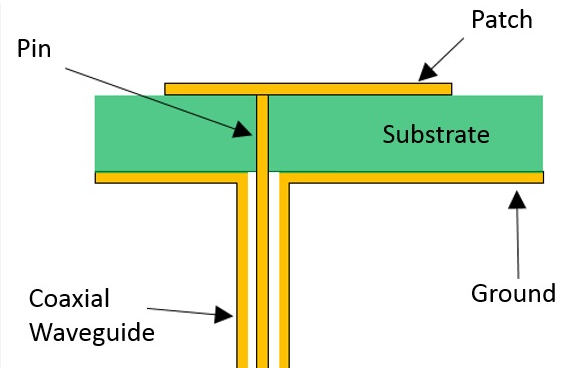
A ​​coaxial feed in antenna​​ refers to using ​​50-ohm or 75-ohm coaxial cable​​ to deliver RF signals directly to the radiator. This method achieves ​​>95% signal efficiency​​ with minimal loss (<0.5dB/m). The ​​inner conductor connects to the driven element​​ while the ​​outer shield grounds to the reflector​​, reducing interference by 30dB. Common in ​​dipole and […]

What is coaxial feed in antenna Read More »
What are the different types of antenna feed line

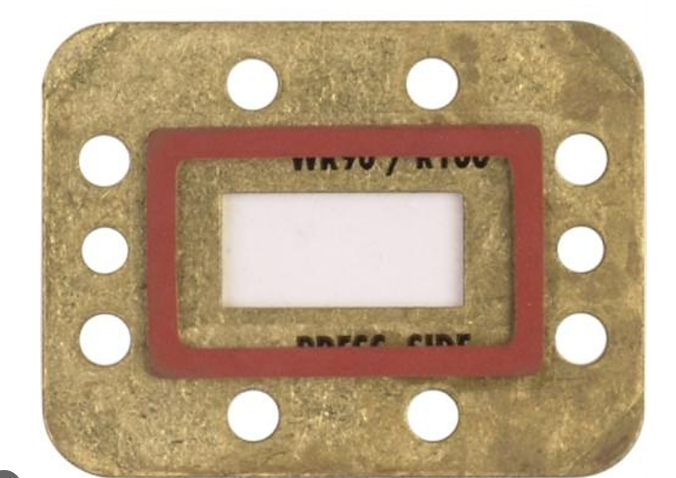
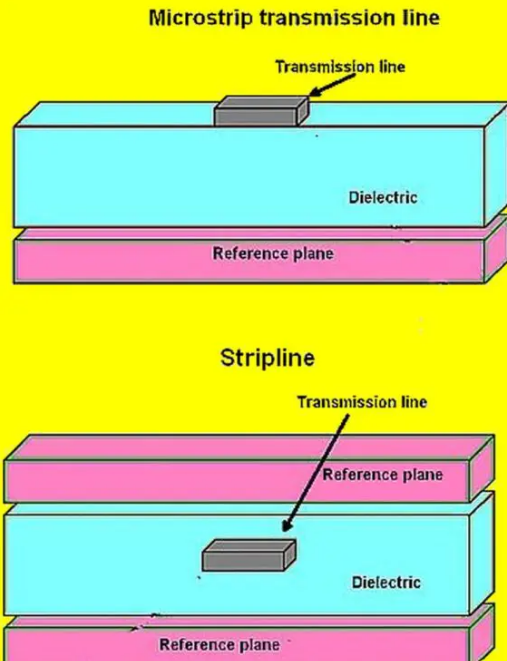
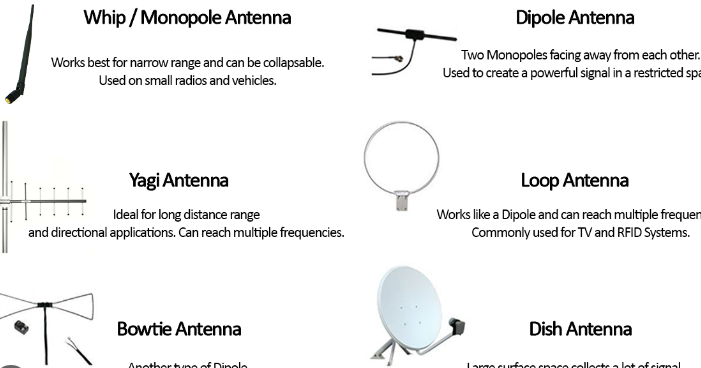
Common antenna feed lines include ​​coaxial cables​​ (50/75Ω impedance, <0.5dB/m loss at 1GHz), ​​waveguides​​ (low-loss for mmWave, e.g., WR-90 handles 8-12GHz), ​​microstrip lines​​ (PCB-integrated, 50Ω typical), and ​​twin-lead wires​​ (300Ω for FM antennas). Fiber optics (<0.2dB/km) feed phased arrays via photonic conversion. Baluns often match unbalanced feeds (e.g., coax) to dipole antennas. ​​Coaxial Cable Basics​​

What are the different types of antenna feed line Read More »

Why tem waves cannot propagate in waveguides

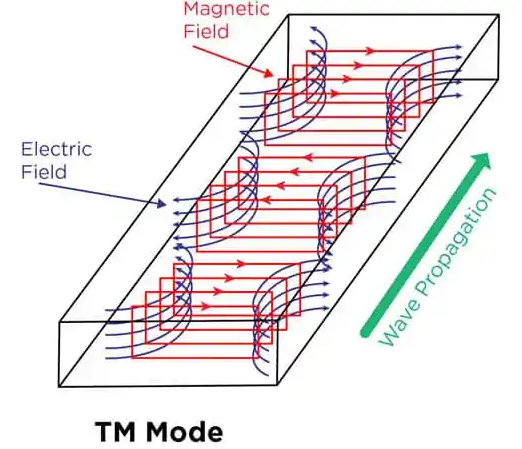
TEM (Transverse ElectroMagnetic) waves cannot propagate in ​​single-conductor waveguides​​ (e.g., rectangular or circular) because they require ​​two separate conductors​​ (like coaxial cables) to support both electric (E) and magnetic (H) fields orthogonally. In hollow waveguides, the ​​boundary conditions​​ force at least one field component to be longitudinal, creating ​​TE/TM modes​​ instead. For TEM propagation, the

Why tem waves cannot propagate in waveguides Read More »

What is the waves in a waveguide

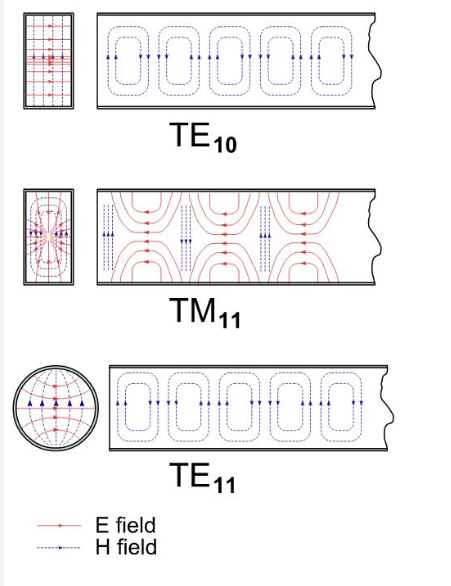
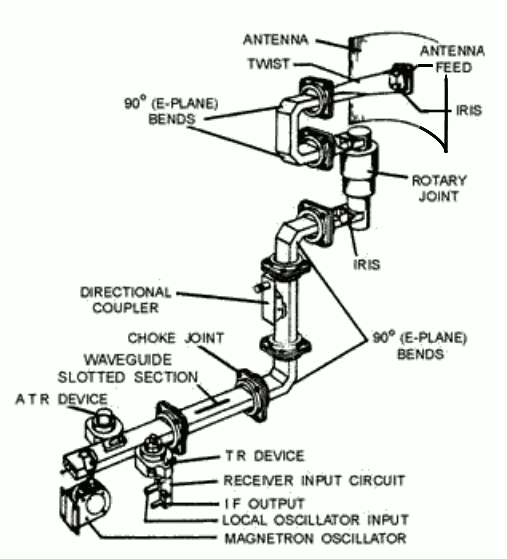
Waves in a waveguide are ​​confined electromagnetic modes​​ propagating along its structure, categorized as ​​TE (Transverse Electric), TM (Transverse Magnetic), or TEM (Transverse ElectroMagnetic)​​ modes. For example, in a ​​rectangular waveguide (e.g., WR-90 for X-band)​​, TE₁₀ mode dominates at ​​8.2-12.4 GHz​​ with a cutoff frequency of ​​6.56 GHz​​. Optical fibers guide ​​1.55 μm infrared waves​​

What is the waves in a waveguide Read More »

What is the waveguide effect

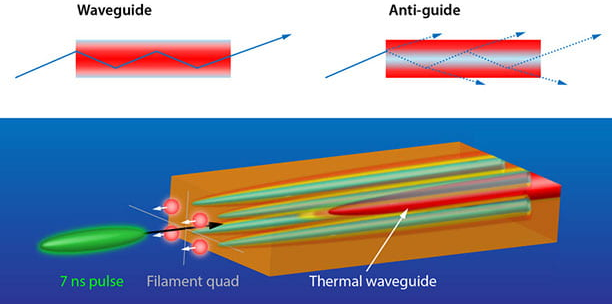
The ​​waveguide effect​​ occurs when electromagnetic waves (e.g., ​​microwaves at 2.45GHz​​ or light in fiber optics) are confined and propagated along a physical structure, reducing signal loss (<0.3dB/km in optical fibers). This effect relies on ​​total internal reflection​​ (critical angle ~82° for glass/air) or conductive boundaries (e.g., ​​rectangular metal waveguides​​). It enables efficient energy transfer

What is the waveguide effect Read More »

What is the difference between a waveguide and a guided wave

A ​​waveguide​​ is a physical structure (e.g., metal tube or fiber optic) that confines and directs electromagnetic waves (e.g., ​​5G mmWave at 28GHz​​ or optical signals) with low loss (<0.2dB/m). ​​Guided waves​​ refer to the propagation phenomenon itself, where energy travels along boundaries (e.g., ​​surface acoustic waves at 1-10MHz​​). Waveguides enable guided waves by controlling

What is the difference between a waveguide and a guided wave Read More »

What are wave guide feeders pressurised to

​​Waveguide feeders​​ are typically pressurized to ​​3–5 psi (0.2–0.35 bar)​​ using dry air or nitrogen to ​​prevent moisture buildup​​ and ​​minimize signal loss​​ at high frequencies (e.g., 18–40 GHz). Systems include ​​pressure sensors​​ with alarms if levels drop below ​​1 psi (0.07 bar)​​, ensuring ​​optimal RF performance​​ and preventing ​​arcing​​ in radar/telecom applications. Regular ​​leak

What are wave guide feeders pressurised to Read More »

Why are waveguides Pressurised

Waveguides are ​​pressurized​​ (typically 2–5 psi above ambient) to ​​prevent moisture ingress​​ and ​​arcing​​ at high frequencies (e.g., 1–100 GHz). Dry air or nitrogen is used to maintain ​​dielectric strength​​, reducing signal loss by up to ​​30%​​. Pressure monitors trigger alarms if levels drop below ​​1 psi​​, ensuring uninterrupted RF performance in radar/satellite systems. ​​What

Why are waveguides Pressurised Read More »

What is the difference between a waveguide and a transmission line

Waveguides (e.g., rectangular, optical) confine and guide electromagnetic waves (microwave/light) via dielectric or metallic boundaries, operating above cutoff frequency (~1 GHz for metal waveguides). Transmission lines (coaxial, microstrip) carry lower-frequency electrical signals (DC to ~100 GHz) with defined impedance (50/75Ω). Waveguides minimize loss (<0.1 dB/m) for high frequencies, while transmission lines suit integrated circuits and

What is the difference between a waveguide and a transmission line Read More »

Which waveguide is better

Silicon nitride (SiN) waveguides offer lower loss (0.1–0.3 dB/cm) and broader bandwidth, ideal for dense photonic integration. Silicon (Si) waveguides provide higher index contrast for compact designs but suffer higher loss (0.5–3 dB/cm). For visible light, polymer waveguides (0.3–1 dB/cm) balance flexibility and performance. Choice depends on application-specific needs like loss tolerance and fabrication constraints.

Which waveguide is better Read More »

Scroll to Top
Blank Form (#3)