+86 29 8881 0979

default

6 specific aspects of arcing in waveguides

Waveguide arcing involves six key aspects: breakdown voltage (typically 10-30 kV/mm), surface roughness (Ra <0.4 μm recommended), gas pressure (maintain <10^-3 Torr), material purity (99.95% aluminum preferred), RF power density (keep below 5 kW/cm²), and proper conditioning (gradual power increase over 2-4 hours). Proper waveguide cleaning with alcohol and strict particulate control (<100 particles/ft³) are […]

6 specific aspects of arcing in waveguides Read More »
How are waveguides different from normal two wire transmission lines

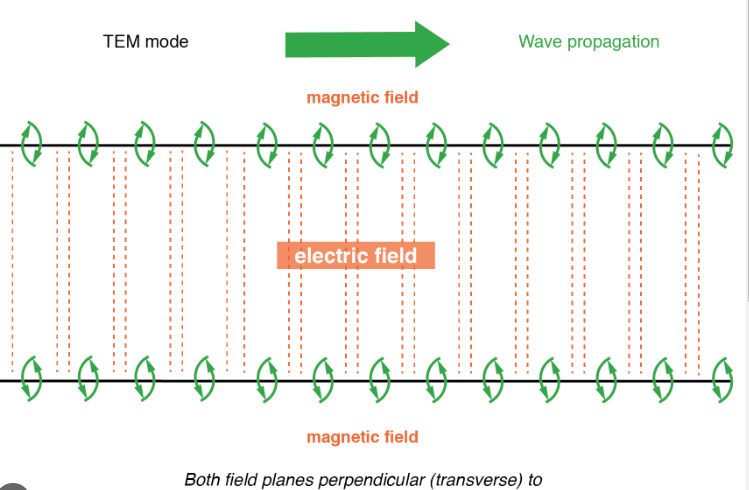
Waveguides transmit microwave signals (1-300 GHz) as electromagnetic waves through hollow metal tubes, unlike two-wire lines that carry lower-frequency currents (DC-3 GHz). They offer lower loss (0.1 dB/m vs. 0.5 dB/m at 10 GHz), handle higher power (MW range), and have precise cutoff frequencies (e.g., WR-90 waveguide operates at 8.2-12.4 GHz). Installation requires careful flange

How are waveguides different from normal two wire transmission lines Read More »

What are the five parameters of dipoleantenna

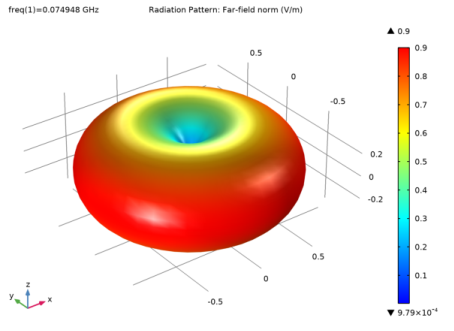
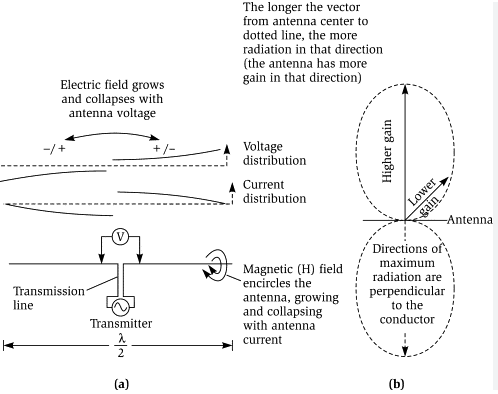
The dipole antenna’s five key parameters are length (typically λ/2, e.g., 2.44m for 60MHz), impedance (73Ω at resonance), bandwidth (5-10% of center frequency), radiation pattern (omnidirectional in H-plane), and gain (2.15dBi). For optimal performance, ensure precise length adjustment (±1% tolerance), proper conductor thickness (1-5mm for HF bands), and balanced feed (50Ω coaxial with balun). The

What are the five parameters of dipoleantenna Read More »

5 Tips for Matching Dipole Feed Impedance with Your Transmission Line

To match ​​dipole feed impedance​​ with your transmission line, ​​1) Use a 1:1 balun​​ for balanced 50Ω conversion (reducing ​​common-mode currents by 20dB​​), ​​2) Trim dipole length (±2% of λ/2)​​ to achieve ​​VSWR <1.5:1​​, ​​3) Elevate antenna ≥λ/4 above ground​​ to minimize impedance shifts, ​​4) Deploy a matching network (LC circuit)​​ for multi-band tuning (1.8-30MHz),

5 Tips for Matching Dipole Feed Impedance with Your Transmission Line Read More »

Top 3 Feeding Techniques for Optimal Dipole Antenna Performance

The ​​top 3 dipole feeding techniques​​ are ​​1) Center-fed with 1:1 balun​​, ensuring ​​50Ω balanced impedance (VSWR <1.5:1)​​; ​​2) Ladder-line feed (450Ω) + tuner​​, ideal for ​​multi-band operation (1.8-30MHz) with <0.5dB loss​​; and ​​3) Gamma match​​, optimizing ​​asymmetric dipoles (e.g., 75Ω) via adjustable capacitor (2-20pF)​​. Key tips: ​​keep feed point ≥λ/4 above ground​​, use ​​ferrite

Top 3 Feeding Techniques for Optimal Dipole Antenna Performance Read More »

5 Essential Factors that Influence the Impedance of Dipole Antennas

The ​​impedance of dipole antennas​​ is influenced by ​​length (72Ω at λ/2, dropping if shorter)​​, ​​diameter (thicker wires reduce impedance)​​, ​​height above ground (≥λ/2 for 50-75Ω)​​, ​​nearby objects (metal can shift impedance ±20Ω)​​, and ​​feed method (balun usage affects balance)​​. Optimal tuning requires ​​VSWR <1.5:1​​, achieved by adjusting ​​length (±5% for 50Ω match)​​ and using

5 Essential Factors that Influence the Impedance of Dipole Antennas Read More »

Which feeding method is best for dipole antenna

The best feeding method for dipole antennas is a balanced feed using a 1:1 balun, ensuring 50Ω impedance matching and minimizing RFI. Center-fed coaxial cables (RG-58/U) with ferrite chokes reduce common-mode currents, achieving VSWR <1.5:1 across 2-30MHz. For optimal performance, use ladder-line feeders (450Ω) with an antenna tuner for multi-band operation, reducing losses to <0.5dB.

Which feeding method is best for dipole antenna Read More »

Where is the antenna feed point

The ​​antenna feed point​​ is where the ​​transmission line (e.g., 50Ω coax)​​ connects to the radiating element, typically at the ​​voltage minimum/current maximum​​ for efficient energy transfer. In dipoles, it’s the ​​center gap (λ/2 length)​​, while patch antennas feed via ​​edge or inset (λ/4 inset for 50Ω match)​​. For yagis, it’s the ​​driven element’s split

Where is the antenna feed point Read More »

What is the feeding structure of an antenna

The feeding structure of an antenna delivers RF energy from the transmitter to the radiating elements. Common types include coaxial feeds (50-75Ω impedance), microstrip lines (for patch antennas), and waveguide feeds (for high-power applications). Key parameters are impedance matching (VSWR <2:1), bandwidth (e.g., 2:1 for log-periodic antennas), and insertion loss (<0.5dB). Proper design ensures efficient

What is the feeding structure of an antenna Read More »

Scroll to Top
Blank Form (#3)