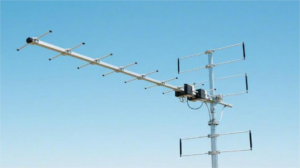
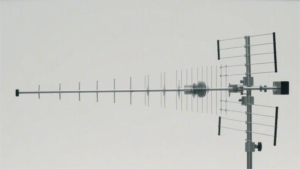
Ku-band procurement should lock onto 1.2-meter antennas to reserve a 5dB rain fade margin.
HTS requires LNBs with a 0.2dB low noise figure.
Utilizing AGC technology for compensation and fine-tuning polarization angles can withstand heavy rainfall of 30mm/h, ensuring 99.9% availability for high-throughput systems.
Table of Contents
Weather Fade
Operating in the 12-18 GHz range, Ku-band wavelengths are similar in size to raindrops, making rainfall the primary cause of signal loss.
When rainfall reaches 50 mm per hour, signal attenuation often exceeds 10 dB.
To achieve an annual uptime of 99.99% in rainy regions (such as Florida or the Indochina Peninsula), a link margin of over 15 dB must be reserved.
Increasing the antenna aperture directly boosts gain; for example, upgrading from a 1.2m to a 1.8m antenna provides approximately 3.5 dB of additional power headroom, reducing the frequency of outages.
Rain Fade Characteristics
Ku-band signals operate within the 12 GHz to 18 GHz frequency range, with electromagnetic wavelengths between 16.7 mm and 25 mm. This physical size resonates with raindrops that have diameters ranging from 0.5 mm to 5 mm. As the signal passes through a rainy area, raindrops absorb electromagnetic energy and convert it into heat, while also scattering the energy in various directions, causing a significant drop in power at the receiving end.
According to the ITU-R P.838-3 standard, the attenuation per unit length caused by rainfall follows a power-law relationship. At 12 GHz, the attenuation coefficient per kilometer increases non-linearly with rain intensity. At a rain rate of 50 mm/h, the loss per kilometer for horizontally polarized signals is approximately 3.2 dB, while for higher-frequency 14 GHz uplink signals, the loss rises to 5.1 dB under the same conditions.
The following table shows the theoretical path attenuation estimates for different Ku-band sub-bands at specific rain intensities (Unit: dB/km):
| Frequency (GHz) | Polarization | 10 mm/h (Moderate) | 50 mm/h (Heavy) | 100 mm/h (Extreme) |
|---|---|---|---|---|
| 11.7 (Downlink) | Vertical (V) | 0.28 | 2.65 | 6.80 |
| 12.5 (Downlink) | Horizontal (H) | 0.38 | 3.45 | 8.20 |
| 14.0 (Uplink) | Vertical (V) | 0.45 | 4.10 | 10.20 |
| 14.5 (Uplink) | Horizontal (H) | 0.58 | 5.35 | 13.10 |
Due to atmospheric drag, large raindrops with diameters exceeding 2 mm become flattened into oblate spheroids as they fall. This shape causes the cross-sectional area of the raindrop to be larger horizontally than vertically. This physical deformation leads to horizontally polarized waves (H-Pol) encountering a larger scattering cross-section. Experimental data indicates that attenuation for horizontal polarization is typically 15% to 20% higher than for vertical polarization.
In high-humidity regions such as the southeastern coast of North America or Southeast Asia, link designs often prioritize vertical polarization schemes. Deploying a Ku-band system in Miami using vertical polarization can provide approximately 3.5 dB of additional power headroom compared to horizontal polarization during 80 mm/h rainstorms. This few-decibel difference allows the satellite demodulator to maintain QPSK modulation rather than experiencing a total outage during severe weather.
The actual path length of the signal through the rain zone, known as the slant path length, depends on the antenna’s installation elevation angle. At low elevation angles (such as 15 to 20 degrees), the signal must pass through a thicker layer of the troposphere. If the rain height is 4 km, an antenna with a 20-degree elevation angle will have a propagation distance of approximately 11.7 km through the rain. In contrast, an antenna at a 45-degree elevation angle has a propagation distance of only 5.6 km.
This increase in path length exponentially amplifies rain attenuation. In heavy rain of 25 mm/h, the total path loss for a 20-degree elevation site could reach 22 dB, while the loss for a 45-degree elevation site is only 10.5 dB. In regions like Northern Canada or Scandinavia, where low elevation angles are required to track satellites, the threat of weather fade to link availability is far more significant than in equatorial regions, necessitating reliance on large-aperture antennas of 1.8m or more for gain compensation.
Rainfall also significantly increases the background noise level of the receiving system. In clear weather, the equivalent noise temperature of a satellite receiver is typically between 40K and 60K. Raindrops, acting as thermal radiation sources, inject their own thermal noise (approx. 290K) into the receive path. During heavy rain fade, the total system noise temperature can soar above 200K, causing the Signal-to-Noise Ratio (SNR) to drop an additional 2 dB to 3 dB.
- Double SNR Degradation: Decreased signal strength and increased background noise occur simultaneously, with the total degradation often exceeding the attenuation value alone.
- Cross-Polarization Interference: Oblate raindrops cause Cross-Polarization Discrimination (XPD) to drop from 30 dB to below 15 dB, triggering co-channel interference.
- Rain Distribution Differences: For the same 50 mm/h rate, tropical convective rain (mostly large drops) causes higher attenuation than temperate stratiform rain (mostly small drops).
- Availability Thresholds: Pursuing 99.99% uptime requires link margins that cover the 99.99th percentile of local annual peak rain intensities.
- Dynamic Rate of Change: Signal drops caused by moving rain cells can reach 1 dB to 2 dB per second, requiring automatic power control systems with millisecond response times.
The ITU divides the globe into different rain climate zones; for instance, most of North America falls into Zones K or M. In Florida (Zone N), the rain rate reaches 95 mm/h during 0.01% of the year. By contrast, a site in Arizona (Zone BC) sees only 12 mm/h at the same probability. The annual reliability of the same 1.2m antenna varies drastically between these two locations.
To account for the non-linear losses caused by rain, link calculations must include an effective path length correction factor. Since heavy storms are usually not distributed uniformly across the entire slant path, actual losses are slightly lower than theoretical maximums. In the 14 GHz band, when the physical path exceeds 10 km, the correction factor is approximately 0.6 to 0.8.
When rain intensity breaks 150 mm/h, Ku-band signals enter a state of near-total shielding. At this point, unit attenuation can exceed 20 dB/km, and even a 3.7m large-scale ground station struggles to maintain the link. Such extreme conditions usually occur in the core of summer thunderstorms and last for 5 to 15 minutes. To counter this, financial or military-grade services often utilize geographic diversity, setting up backup stations at least 20 km apart.
When satellite transponders are operating at full capacity, rain attenuation can also trigger non-linear distortion. As the downlink signal weakens, the demodulator attempts to increase gain; if multipath effects are present, the Bit Error Rate (BER) can soar from 10^-9 to 10^-3 in a very short time. This sudden deterioration requires the front-end antenna to have extremely high pointing accuracy, keeping tracking errors within 0.1 degrees.
The following table compares the specific business impacts of different rain levels on a 12 GHz downlink:
| Rain Rate (mm/h) | 1.2m Dish Margin Consumption | Typical Business Performance | Automatic Adjustment Measures |
|---|---|---|---|
| 5 (Light) | 0.5 – 1.5 dB | Normal operation, full speed | No adjustment needed |
| 25 (Heavy) | 4.0 – 7.5 dB | Speed halved, latency increases | Switch to 16APSK or 8PSK |
| 60 (Storm) | 10.0 – 15.0 dB | Video stuttering, voice only | Force QPSK, increase uplink power |
| 120 (Extreme) | > 20.0 dB | Connection completely lost | Wait for storm core to pass |
In High Throughput Satellite (HTS) architectures, the impact of rain on narrow beams is more concentrated. Since a spot beam covers only a few hundred kilometers, a local strong thunderstorm cell can cover the entire beam. In this case, gateway stations use baseband processing techniques to resist symbol corruption caused by raindrop scattering by increasing the Forward Error Correction (FEC) rate. This software compensation typically provides an additional 2 dB to 4 dB of survival headroom for the system.
The statistical characteristics of weather fade show significant seasonal and diurnal variations. In North America, afternoon to evening is the peak time for strong convective rainfall, during which link fluctuations are typically 300% higher than in the early morning. When performing an annual availability assessment for a site, one cannot look only at average rainfall; hourly rain intensity distribution must be analyzed. This depth of analysis directly determines whether to purchase a standard 1.2m antenna or upgrade to a 1.8m high-performance version.
Snow and Ice Crystal Loss
When Ku-band signals pass through snow zones in high-latitude or high-altitude regions, the loss characteristics are physically distinct from those of rain. Electromagnetic waves at 12 GHz to 18 GHz interact with solid ice crystals, and the degree of attenuation is strictly limited by the water content, diameter distribution, and fall speed of the snowflakes. Dry snow, with a dielectric constant of only 1.2 to 1.5, produces far less power loss than liquid water at the same precipitation rate.
When temperatures are below 0°C and the snowfall rate is 10 mm/h, the path attenuation for a 12 GHz downlink is typically between 0.05 dB/km and 0.15 dB/km. Because the polar molecular movement inside ice crystals is restricted, absorption loss is negligible; most of the signal reduction stems from non-coherent scattering by large snowflakes. In the cold, dry winters of Northern North America or Northern Europe, space propagation loss is usually not the main cause of communication interruption.
The Melting Layer is a critical area in weather fade. In the troposphere, as snowflakes descend to the 0°C isotherm, they begin to melt, forming a water film around an ice core. This “wet snow” state rapidly increases the effective diameter of the snowflake, increasing the scattering cross-section by more than 10 times compared to dry snow. In a 14 GHz uplink, a melting layer only 500 meters thick can generate 2 dB to 4 dB of instantaneous burst loss.
The following table compares the theoretical path attenuation for different Ku-band frequencies in specific snowfall environments (Unit: dB/km):
| Snow Type | Snow Rate (mm/h) | 12 GHz Loss | 14 GHz Loss | 18 GHz Loss |
|---|---|---|---|---|
| Dry Snow | 5.0 | 0.03 | 0.04 | 0.07 |
| Dry Snow | 20.0 | 0.12 | 0.18 | 0.28 |
| Wet Snow | 5.0 | 0.65 | 0.88 | 1.45 |
| Wet Snow | 20.0 | 2.80 | 3.95 | 6.20 |
In high-altitude Cirrus clouds, large quantities of needle-like or plate-like ice crystals exist, typically at altitudes of 6,000 to 12,000 meters. While these ice crystals contribute minimally to 12 GHz signal amplitude attenuation (usually less than 0.2 dB), they cause significant phase shifts in electromagnetic waves. This effect, known as “ice crystal depolarization,” leads to crosstalk between horizontally and vertically polarized signals.
When atmospheric electric fields cause ice crystals to align, Cross-Polarization Discrimination (XPD) can drop from a normal 30 dB to below 15 dB. This interference is particularly fatal for satellite links using polarization multiplexing. During frequent winter storms on the North American East Coast, ice crystal concentrations in clouds can reach 0.1 g/m³, causing hours of low SNR operation even when ground rainfall is absent.
Physical snow accumulation on the ground station antenna surface is a more serious threat than space attenuation. Since Ku-band wavelengths are only about 2 cm, any thickness of foreign material on the reflector changes the reflection phase. When 3 cm of snow accumulates at the bottom of the parabolic dish, antenna gain decreases by 3 dB to 6 dB. If snow buries the feed support arms, losses can quickly exceed 15 dB.
- 5 mm Accumulation: Causes approx. 1.8 dB gain loss.
- 15 mm Accumulation: Causes approx. 5.5 dB gain loss.
- 30 mm Accumulation: Causes over 11 dB gain loss, triggering demodulation thresholds.
- Ice Crust: A 0.5 mm thick layer of clear ice can cause a beam deflection of 0.3 degrees.
Snow also causes a sharp rise in the equivalent noise temperature of the receiving system. In clear weather, the background noise of the receiver is about 40K to 60K. When the antenna surface is covered with wet snow, the blackbody radiation effect of the ice-water mixture can cause the system noise temperature to soar to 150K–230K. This rise in the noise floor directly reduces the Carrier-to-Noise ratio (C/N), leading to throughput drops or total disconnection.
For satellite links with elevation angles below 20 degrees, the slant path distance through the atmosphere increases significantly. At remote sites in Canada or Alaska, the distance the signal travels through potential ice crystal clouds can be 15 km. This long-distance contact amplifies the phase accumulation effects of ice crystals, necessitating a reserved power headroom of at least 3 dB specifically to counter non-rainfall-induced weather loss.
In addition to snow accumulation, freeze-thaw deformation of the antenna mount is a hidden technical risk. In extreme cold of -20°C, steel antenna bases undergo thermal expansion and contraction, causing minor beam pointing offsets. For a 1.8m Ku-band antenna, the beamwidth is only 0.8 degrees. A structural deformation of 0.15 degrees results in a 1.5 dB power loss, which stacks with weather fade to make the link extremely fragile.
The following table lists the typical performance degradation for different antenna sizes under snow cover:
| Antenna Aperture (m) | Snow Thickness (mm) | Gain Loss (dB) | Noise Temp Rise (K) |
|---|---|---|---|
| 0.9 | 10 | 2.5 | 85 |
| 1.2 | 10 | 3.2 | 90 |
| 1.8 | 10 | 4.1 | 110 |
| 2.4 | 10 | 5.5 | 135 |
According to measurements, a reflector using a hydrophobic coating maintains 4 dB higher signal stability in 10 mm/h snowfall than a standard reflector. This is crucial for maintaining high-order modulation modes (such as 16APSK or 32APSK) for 12.5 GHz downlinks.
In High Throughput Satellite (HTS) systems, single-point failures are mitigated via automatic switching. When a gateway station’s SNR falls below 5 dB due to a blizzard, traffic is automatically rerouted to a backup station in a drier climate. This strategy relies on precise analysis of local historical weather data, typically requiring the backup station to be at least 50 km away to ensure it is in a different weather sector.
In Northern European practice, de-icing blowers are often used instead of traditional electric heating pads. The blowers prevent snow attachment by continuously blowing dry air onto the reflector. This method limits thermal loss on the antenna surface to within 1.5 dB. This hardware-level redundancy design can reduce the required weather margin by approximately 5 dB in link budget calculations, thereby lowering transmitter power consumption.
Polarization shifts caused by ice crystals can be partially corrected via baseband processor compensation algorithms. Modern demodulators can analyze the strength of cross-polarized components in real-time and use reverse-phase cancellation technology to recover primary signal purity. In the 18 GHz band, this algorithm can restore an otherwise unusable link to over 98% availability, effectively countering dynamic fade brought by cirrus layers.
Aperture Gain Compensation
In Ku-band satellite links, there is a clear physical square-law relationship between antenna aperture and signal gain. Using the 12.5 GHz downlink frequency as an example, a typical 0.6m antenna has a gain of approximately 36.5 dBi, while a 1.2m antenna reaches 42.1 dBi. This 5.6 dB difference corresponds to a nearly fourfold increase in power intensity in the link budget, enough to maintain a signal during light rain fade.
Every time the physical diameter doubles, the antenna’s electromagnetic wave capture area increases fourfold, boosting theoretical gain by 6 dB. For a 14 GHz uplink, a 1.8m antenna provides approximately 3.5 dB of extra gain compared to a 1.2m antenna. This gain margin can offset most path losses caused by typical weather fade at rain rates of 20 mm/h, ensuring that data transmission rates do not experience a staircase-like drop.
The following table lists the standard gain performance for common Ku-band antenna apertures at different frequencies (Unit: dBi):
- 0.75m: Downlink (12GHz) 37.8 / Uplink (14GHz) 39.2
- 1.0m: Downlink (12GHz) 40.2 / Uplink (14GHz) 41.6
- 1.2m: Downlink (12GHz) 42.1 / Uplink (14GHz) 43.5
- 1.8m: Downlink (12GHz) 45.6 / Uplink (14GHz) 47.0
- 2.4m: Downlink (12GHz) 48.1 / Uplink (14GHz) 49.5
The beamwidth of a 1.2m antenna is approximately 1.2 degrees, while a 2.4m antenna’s beamwidth is reduced to 0.6 degrees. This narrow-beam characteristic allows the ground station to more precisely aim at the target satellite in high-density orbital environments, reducing interference from adjacent orbital positions (usually 2 degrees apart) by more than 10 dB.
Link Margin is a quantitative metric of system robustness. In areas with frequent rainfall like the Eastern United States, a 99.9% annual availability requirement usually necessitates a margin of 10 dB or more. Replacing a 1.2m antenna with a 1.8m model can double the system’s tolerance for sudden storms, reducing average annual downtime from 8.8 hours to less than 1 hour.
For uplinks, large-aperture antennas effectively reduce the specification requirements for Block Upconverters (BUC). If a 1.2m antenna requires an 8W BUC to close the link, a 2.4m antenna—with its 6 dB gain boost—requires only a 2W BUC to achieve the same Equivalent Isotropically Radiated Power (EIRP). This solution can save approximately 60% in electricity consumption over long-term operation.
In large-scale enterprise networking, the G/T value (ratio of gain to noise temperature) of the downlink is the foundation for receiver throughput. A 1.2m antenna paired with a 55K noise temperature LNB has a G/T value of approximately 20.5 dB/K. Increasing to 2.4m can raise the G/T value to 26.5 dB/K. This performance jump allows the modem to switch from QPSK to the more efficient 16APSK modulation.
In real-world environments, this switch in modulation corresponds to a doubling of data transmitted per unit of bandwidth. If a 5 MHz carrier can only transmit 8 Mbps in QPSK mode, it can transmit approximately 15 Mbps via 16APSK in the high SNR environment provided by a 2.4m antenna. This approach of trading physical gain for spectral efficiency is highly economically viable in regions like Southeast Asia or Africa where satellite bandwidth costs are high.
- SNR Improvement: Every 0.6m increase in aperture improves signal quality (Eb/No) by an average of 2-3 dB.
- BER Reduction: A 3 dB increase in gain margin can reduce the Bit Error Rate (BER) from 10^-5 to 10^-9.
- Climate Adaptability: In ITU Zone N (heavy rain), 1.8m is the starting threshold for ensuring telecom-grade services.
- Spectral Efficiency: Supports higher DVB-S2X standards, achieving transmission efficiencies of over 3 bit/s per MHz.
The mechanical precision of a satellite antenna becomes more stringent as its aperture increases. A 1.2m antenna requires surface accuracy within 0.5 mm to ensure a reflection efficiency of 65% at Ku-band frequencies. When the aperture increases to 3.7m, weight-induced deformation can cause gain losses of over 1 dB. Therefore, large-aperture antennas are usually equipped with reinforcement ribs and high-strength backframes to withstand working wind loads of 120 km/h.
The improvement in noise temperature is reflected in the reduction of sidelobe gain. Large-aperture antennas have sharper main lobes and lower sidelobes, reducing the absorption of noise from surrounding ground thermal radiation (typically 290K). In low-elevation installation environments, a 1.8m antenna receives approximately 15K less ground environment noise than a 1.2m antenna, further increasing the overall demodulation threshold headroom.
In temperate climate regions like Central Europe, while a 0.9m antenna can meet basic communication needs, relay stations often adopt 1.2m or 1.5m as a redundancy standard to counter the 2-4 dB attenuation caused by cloud accumulation. This design ensures that real-time services like VoIP do not experience packet loss or severe jitter during long periods of winter cloud cover.
Since the Ku-band uplink frequency (14.0-14.5 GHz) is higher than the downlink frequency (10.7-12.75 GHz), the uplink is more sensitive to antenna precision. When using a 2.4m large antenna, a pointing deviation of 0.2 degrees results in a 3 dB gain loss. This sensitivity requires installers to use high-precision signal analyzers to control pointing error within 0.05 degrees during the installation phase to fully leverage the gain compensation advantages of the large aperture.
From an O&M perspective, the power margin provided by large-aperture antennas reduces reliance on Adaptive Coding and Modulation (ACM). Frequent ACM switching causes large bandwidth jumps, affecting the stability of HD video streaming or remote industrial control. Through physical gain compensation, the link can lock into the highest-order modulation mode for long periods, reducing latency fluctuations, which is critical for financial trading or key monitoring tasks.
In terms of cost structure, the purchase price of a 2.4m antenna is typically three times that of a 1.2m antenna, but over a five-year operating cycle, the resulting bandwidth efficiency gains and reduced downtime losses usually cover the initial investment. In High Throughput Satellite (HTS) architectures, the ground station aperture selection must be precisely matched to the transponder’s saturated flux state to match the spot beam’s high-power characteristics and avoid non-linear operation of the front-end amplifier.
High Throughput
Ku-band High Throughput Satellites (HTS) utilize 0.5 to 0.6 degree narrow spot beams and four-color frequency reuse technology to increase total satellite capacity to 100Gbps–500Gbps.
Based on the DVB-S2X standard, spectral efficiency can reach 4.5 bps/Hz.
On the terminal side with 60cm to 120cm antennas, downlink rates consistently reach 50-200Mbps, with uplinks at 10-20Mbps.
Compared to traditional wide beams, the cost per Mbps of bandwidth is reduced by approximately 70%, significantly enhancing the data-carrying capacity of small-aperture terminals.
Beam Coverage Technology
Traditional Ku-band satellites typically use a single beam covering an entire continent, with signal strength dropping rapidly at the edges. HTS (High Throughput Satellite) beam coverage technology achieves geographic frequency reuse by deploying dozens or even hundreds of narrow spot beams with diameters of only 300 to 500 kilometers. This spatial isolation technology allows total satellite bandwidth in the same frequency band to expand from 500MHz to several GHz, drastically increasing communication capacity per unit area.
The physical characteristics of narrow spot beams have a direct impact on the ground receiving end:
- Concentrated Gain: Spot beams focus satellite transmit power, with ground receive power (EIRP) reaching 55 to 60 dBW.
- Frequency Reuse: Uses the “four-color map” principle, where adjacent beams use different frequencies or polarizations, and the same frequency can be reused by beams separated by a single cell.
- Spatial Gain: Compared to traditional wide beams, spot beams increase the Carrier-to-Noise ratio (C/N) at the antenna receiver by 8 to 12 dB.
- Seamless Multi-Beam Switching: Signal overlap areas are typically set at the -3dB power point to ensure smooth transitions as mobile terminals cross beam boundaries.
- Dynamic Power Allocation: Satellites can direct more transponder power to specific spot beams based on real-time demand in certain areas (e.g., busy ports).
Under a traditional Ku satellite, a 1.2m antenna might have only 2dB of link margin on a rainy day. However, under HTS spot beam coverage, the same 1.2m antenna can have a gain margin of over 10dB. Even in extreme environments with rain rates of 20 mm/h, the high power density of spot beams can maintain the minimum communication requirements for QPSK 1/2 mode.
The precision of beam coverage depends on the design of the satellite antenna feed array. The following table compares the physical performance of different coverage modes:
| Coverage Parameter | Traditional Global Beam | Typical HTS Spot Beam | Performance Difference |
|---|---|---|---|
| Beam Angle | 15 – 17 degrees | 0.4 – 0.6 degrees | 30x higher focus |
| Coverage Area | ~150 million sq km | ~150,000 sq km | Extremely high energy density |
| Freq Reuse Factor | 1 (No reuse) | 20 – 60 | Geometric throughput growth |
| Edge Roll-off | 0.5 dB/100km | 3 – 5 dB/100km | Extremely sensitive to pointing |
| User Density | 0.1 Mbps/sq km | 50 – 100 Mbps/sq km | Supports high-density access |
When a user is at the center of a beam, downlink rates can reach 200 Mbps; but if the antenna pointing deviates by 0.2 degrees, or if the user moves 100 km toward the beam edge, the receive level drops by about 4 to 6 dB. This forces the system to enable Adaptive Coding and Modulation (ACM), real-time switching between 32APSK and QPSK to offset path loss at the beam edge.
Because satellite receive antenna gain (G/T) in spot beam mode is typically between 10 and 15 dB/K, ground terminals only need to use 4W or 8W low-power BUCs to achieve return rates of over 10 Mbps. This saves approximately 60% in hardware amplifier costs compared to traditional wide-beam systems, while also reducing overall terminal power consumption and heat dissipation requirements.
HTS systems employ Feeder Link separation technology between the Gateway station and the user beams:
- User Link: Uses Ku-band to communicate with ground terminals, with extremely narrow beams focused on user coverage.
- Feeder Link: Typically uses Ka-band to connect to large gateway stations, with bandwidths exceeding 1 GHz.
- Polarization: Uses circular polarization or high-isolation linear polarization, with Cross-Polarization Discrimination (XPD) requirements greater than 30 dB.
- Frequency Mapping: Satellite transponders slice high-speed feeder link data streams and map them to dozens of different user spot beams.
- Site Diversity: To counter rain fade at gateway sites, backup stations are usually set up 50 km away to ensure coverage is not interrupted.
In sparsely populated open-ocean areas, beam power can be lowered to save energy; in busy shipping lanes, overlapping multiple spot beams can push total area throughput to Gbps levels. When selecting an antenna, its ability to capture narrow beam tangential angles in high-latitude regions must be confirmed, as beam stretching at low elevation angles further reduces signal strength by 2 dB.
HTS systems set up 10% to 15% frequency guard bands between adjacent beams, paired with high-performance filters to reduce Inter-Beam Interference (IBI). Ground antenna sidelobe characteristics must comply with FCC 25.209 or ITU-R S.580 standards to prevent transmit signals from leaking into neighboring spot beams and affecting other users’ communication quality.
For offshore or mobile users, HTS technology provides more stable switching logic. When a mobile platform (such as a cruise ship or aircraft) moves at 50 km/h, it undergoes a beam switch every 5 to 10 hours. Modern Antenna Control Units (ACU) pre-store global Beam Maps and can predict incoming beam frequencies via GPS coordinates, keeping switching interruption times within 500 milliseconds.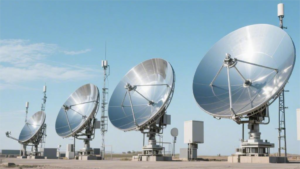
Spectral Utilization Efficiency
In traditional Ku satellite links, efficiency has historically hovered between 1.2 bps/Hz and 1.5 bps/Hz due to power density and modulation limitations. The HTS architecture, paired with the DVB-S2X standard, pushes this value above 4.5 bps/Hz, allowing a 36MHz transponder’s throughput to jump from 50Mbps to over 160Mbps.
The DVB-S2X protocol introduces much finer modulation and coding (MODCOD) steps than the standard S2, with more than 100 in total. In ideal environments with a Carrier-to-Noise ratio of 15dB, the system can run stably in 32APSK mode. If SNR further improves to 20dB, 256APSK mode allows a single Hertz of bandwidth to carry more than 5.5 bits of data. Below is a comparison of different modulation modes in HTS systems:
| Modulation and Code Rate | Ideal Spectral Efficiency (bps/Hz) | Threshold SNR (Es/No) | Rate @ 10MHz Bandwidth |
|---|---|---|---|
| QPSK 11/45 | 0.48 | -2.5 dB | 4.8 Mbps |
| 8PSK 23/36 | 1.88 | 7.5 dB | 18.8 Mbps |
| 16APSK 7/9 | 3.07 | 12.8 dB | 30.7 Mbps |
| 32APSK 32/45 | 3.50 | 15.6 dB | 35.0 Mbps |
| 64APSK 11/15 | 4.33 | 19.2 dB | 43.3 Mbps |
Satellite link efficiency depends not only on modulation order but also on the Roll-off Factor. Traditional equipment uses 20% or 35% roll-off, leaving large amounts of unusable guard bandwidth at the edges. HTS terminals support a 5% roll-off, which saves approximately 28% of frequency space compared to the 35% mode, converting the extra bandwidth into actual user download speeds.
Physical waveform optimization sets the foundation, while the Adaptive Coding and Modulation (ACM) mechanism ensures resources are maximized in changing environments. The system detects feedback signaling (Es/No) every 100 milliseconds and adjusts parameters in extremely short timeframes. In clear weather, the antenna locks onto the highest-order modulation to extract bandwidth; when 5mm/h rain causes signal decay, the system instantly switches to a lower-order mode to prevent physical link loss.
- High-Order Coding Gain: Low-Density Parity-Check (LDPC) codes provided by DVB-S2X reduce overhead.
- Narrow-band Filtering: Receivers support smaller carrier spacing, increasing transponder fill rates.
- Symbol Rate Flexibility: Supports an ultra-wide symbol rate range from 1Msps to 500Msps.
- Channel Bonding: Allows merging multiple small carriers into a single logical large channel.
- Short Frame Mode Support: Optimizes data encapsulation efficiency for low-latency sensitive services.
- Phase Noise Suppression: Improved pilot insertion mechanisms enhance resistance to high-frequency fluctuations.
16APSK and higher modulations are extremely sensitive to phase noise, requiring the LNB (Low Noise Block downconverter) to have a phase noise better than -80 dBc/Hz @ 10kHz. If the antenna hardware does not meet this precision, the system will not be able to handshake into a high-throughput state even with sufficient SNR. Antenna control units must have a pointing resolution of less than 0.1 degrees.
The following table shows the degradation impact of antenna pointing deviation on spectral efficiency levels:
| Pointing Deviation (deg) | Link Loss (dB) | Highest Available Mod | Efficiency Loss Ratio |
|---|---|---|---|
| 0.00 | 0.0 | 64APSK | 0% |
| 0.05 | 0.8 | 32APSK | -12% |
| 0.10 | 3.1 | 16APSK | -35% |
| 0.15 | 6.8 | 8PSK | -60% |
| 0.20 | 12.0 | QPSK | -85% |
Adjacent Polarization Interference (XPD) is another hidden efficiency metric. HTS uses both horizontal and vertical polarization in the same geographic beam. If the antenna’s cross-polarization isolation is below 30 dB, the two signal sources will interfere. This forces the system to drop to lower-order modulation, causing actual throughput to shrink by over 50% compared to theoretical values.
Channel Bonding technology at the gateway station side further squeezes spectral space. It allows user terminals to simultaneously receive three carrier streams distributed across different transponders and combine them into a single logical link. This method solves the problem of single carriers being limited by the amplifier’s linear region. In HTS networks, single-terminal downlink peaks of over 500 Mbps can be achieved through channel bonding.
Because HTS spot beam power is unevenly distributed, spectral efficiency at the beam edge is typically 30% to 40% lower than in the center. When choosing an antenna aperture, the extra 2.5dB of gain provided by a 1.2m antenna compared to a 90cm model is enough for the system to upgrade from 16APSK to 32APSK. This physical gain, through spectral efficiency conversion, can result in approximately 15% higher data rates.
The linearity of the BUC (uplink power amplifier) on the antenna side also affects spectral efficiency. When the uplink signal enters the amplifier’s saturation region, spectral regrowth occurs, generating third-order intermodulation interference. High-quality antennas paired with BUCs featuring linearization technology maintain high Power Added Efficiency (PAE) while ensuring uplink efficiency. This allows the uplink to also run in 16APSK mode, achieving return speeds of over 20 Mbps.
Hardware Installation Standards
Antenna surface accuracy (RMS) must be controlled within 0.5 mm to ensure gain loss at 14 GHz is lower than 0.2 dB. Traditional molding processes, if deviating by more than 1.0 mm, will cause phase center shifts.
The structural rigidity of the reflector must resist deformation caused by thermal expansion and contraction. Over an ambient temperature range of -40°C to +65°C, the focal point deviation of the primary reflector must be less than 1 mm. Using carbon fiber or reinforced aluminum alloy materials can effectively reduce the thermal expansion coefficient.
- Antenna primary reflector surface accuracy (RMS) must not exceed 0.5 mm.
- Feed support arm displacement in Force 12 winds must be kept within 0.1 mm.
- Azimuth rotation range must cover 0 to 360 degrees without physical limit dead zones.
- Elevation adjustment mechanisms must support a full range of 0 to 90 degrees.
- Transmission gear backlash must be lower than 0.05 degrees.
- Base mounting flatness requirements are less than 0.2 mm per meter.
Mechanical precision is the prerequisite for high-precision pointing. In HTS narrow spot beam environments, if the pointing deviation reaches 0.15 degrees, the receive level will instantly drop by 3 dB. This requires Antenna Control Units (ACU) to have a real-time feedback processing frequency of 50 Hz.
Automatic tracking systems must integrate high-precision GPS and electronic compasses. Signal scanning steps during the tracking process are typically set to 0.05 degrees. The servo motor’s zero-point repeatability must reach 0.01 degrees to ensure the satellite is immediately locked upon reboot.
The selection of electronic components determines the upper limit of spectral efficiency. The LNB (Low Noise Block downconverter) noise figure must be below 0.7 dB to guarantee SNR for weak signals. For links supporting 32APSK modulation, the LNB phase noise at 10kHz offset should be better than -80 dBc/Hz.
- LNB local oscillator frequency stability must reach ±1 ppm.
- BUC (Block Upconverter) 1dB compression point (P1dB) must be 3 dB higher than actual output power.
- Feed assembly Cross-Polarization Discrimination (XPD) must be greater than 30 dB.
- Outdoor Unit (ODU) protection rating must reach IP66 or higher.
- Intermediate Frequency cable (IFL) characteristic impedance must be stable at 75 ohms.
- F-type or N-type connector torque tightening standard is 1.5Nm to 2.0Nm.
8W or 16W BUCs can consume nearly 100W at full load, and heat sink surface temperatures should not exceed 85°C. If thermal design is inadequate, internal transistor linearity will drop, causing uplink data rates to fall from 10Mbps to 1Mbps.
Cable loss between the Indoor Unit (IDU) and Outdoor Unit must be kept within 10 dB. For installation distances exceeding 30 meters, LMR-400 grade low-loss cables must be used to avoid severe attenuation caused by RG-6 cables at high frequencies.
Installation locations must avoid all physical obstructions. In the Ku-band, even sparse foliage can cause signal fluctuations of 2 dB to 5 dB. No power lines, lightning rods, or building edges should exist within a 10-degree cone along the beam path in front of the antenna.
- Mounting bases should use a 60cm x 60cm x 60cm reinforced concrete pit.
- Base expansion bolt pull-out force must be greater than 5000 Newtons.
- The ODU must have an independent 4mm² copper grounding wire.
- Grounding resistance requirement is less than 4 ohms to prevent lightning surges.
- Waterproof connectors must be wrapped with at least 3 layers of self-adhesive waterproof tape.
- Cable bending radius must not be less than 10 times the cable diameter.
The wind force on a 1.2m aperture antenna in 120 km/h winds can reach hundreds of kilograms; insufficient base stiffness will cause the antenna to vibrate. This micro-tremor manifests as violent fluctuations in carrier phase on a spectrum analyzer.
Polarization alignment accuracy directly affects frequency reuse effectiveness. When manually adjusting the polarization angle, increments should be as small as 0.5 degrees. In dual-polarization systems, if polarization deviation exceeds 1 degree, Adjacent Polarization Interference (ACI) will reduce SNR by over 2 dB.
Sidelobe suppression characteristics meeting FCC 25.209 are required for compliant installation. Gain in areas 1 to 7 degrees off the main axis must meet specific envelope curve limits.
- Feed window membranes must be kept dry and clean; water droplets cause a 2 dB loss.
- Power supply systems must support 24V or 48V DC, with voltage fluctuations under 5%.
- Systems should support the OpenAMIP protocol for seamless hardware interaction.
- BUC uplink linear gain flatness should be better than ±0.5 dB per 40MHz.
- Modem input level range should be maintained between -65 dBm and -25 dBm.
In clear weather, the system should be able to stably handshake at 32APSK 3/4 or higher. If it consistently stays in QPSK mode, physical pointing or LNB phase noise performance must be re-checked.
Dish Size
Antenna aperture determines the G/T value at the receiver. In the Ku-band, a 1.2m antenna provides approximately 6 dB more gain than a 60cm one, which can increase system availability from 99.5% to 99.9%.
The transmitter side must control beamwidth within 1.5° to reduce Adjacent Satellite Interference (ASI).
Small 74cm antennas can provide 20 Mbps downlinks in strong coverage areas, but large apertures are the standard solution for extreme weather.
Aperture’s Impact on Gain
The primary change brought by increasing antenna aperture is the expansion of the physical area for capturing electromagnetic waves. A 1.2m antenna reflector has an effective area of approximately 1.13 square meters, compared to only 0.28 square meters for a 60cm antenna. This fourfold difference in physical area corresponds to a 6.02 dB increase in power gain.
The increase in gain changes the terminal’s modulation and coding efficiency under the DVB-S2X standard. At the same satellite transponder power, using a 1.2m antenna allows the link to switch from inefficient modes like QPSK 3/4 to 16APSK 2/3 or higher. This switch boosts spectral efficiency from 1.49 bits/symbol to 2.63 bits/symbol.
For commercial users, this gain difference quantifies directly as bandwidth output. Within a 10 MHz spectrum bandwidth, a large-aperture antenna can transmit approximately 75% more data. If the monthly satellite lease cost per MHz is $2,000, using a large-aperture antenna can save over $40,000 in spectrum expenses over a three-year service period.
Beyond the receiver, the transmitter (Uplink) gain performance in the 14.0-14.5 GHz band is even more pronounced. A 1.8m antenna typically has a transmit gain of 46.5 dBi in this band. In contrast, a 90cm antenna has a transmit gain of only 40.5 dBi. This means the Block Upconverter (BUC) specifications required to reach the same Equivalent Isotropically Radiated Power (EIRP) are completely different.
- 90cm Antenna: Requires a 16W BUC to reach an uplink power of 52 dBW.
- 120cm Antenna: Requires only an 8W BUC to achieve the same effect.
- 180cm Antenna: Can easily cross the signal threshold with a 4W BUC.
- Power Consumption: A 16W BUC has an instantaneous power draw of about 150W, whereas a 4W BUC only needs about 40W.
- Hardware Lifespan: Low-power BUCs generate less heat, with a Mean Time Between Failures (MTBF) about 30% higher than high-power models.
In Ku-band communication, ground station performance is defined by the G/T value (ratio of gain to noise temperature). A mainstream 0.6 dB Low Noise Block downconverter (LNB) paired with a 1.2m antenna has a G/T value of approximately 21.5 dB/K at 12 GHz. If the aperture is reduced to 75cm, this value drops to 17.5 dB/K.
This 4 dB/K gap is the defensive line against weather fade. In regions like the Eastern US (ITU Climate Zone M) or Western Europe, instantaneous attenuation from heavy rain (50mm/hr) can reach 10-12 dB. Small-aperture antennas typically have link margins of only 3-5 dB, which will instantly drop below the demodulation threshold during storms, causing service interruption.
Large-aperture antennas provide extra gain that acts as a signal “reservoir.” A 1.8m antenna provides about 10-12 dB of link margin, maintaining low-order modulation in 95% of heavy rain scenarios. Even in harsh weather, remote branch offices can keep voice or basic text commands flowing.
Beamwidth is inversely proportional to aperture. A 2.4m antenna at 12.5 GHz has a Half Power Beam Width (HPBW) of only 0.65°. In the same band, a 60cm antenna’s beamwidth reaches 2.6°. A wider beam is more likely to capture interference signals from adjacent orbital positions (such as other satellites spaced 2° apart).
- Adjacent Satellite Interference (ASI): Wide beams increase the risk of SNR degradation.
- Pointing Precision: 1.8m antennas require installation precision at the 0.1° level.
- Alignment Offset: If a 1.2m antenna is 0.4° off the target satellite, signal strength drops by 3 dB.
- Sidelobe Levels: Large-aperture antennas can suppress sidelobes below -25 dB, complying with FCC Part 25 regulations.
- Carrier Lock Speed: Narrow beams place higher demands on Auto-pointing algorithm response.
When deploying in urban environments like New York or Chicago, the physical accuracy of the antenna reflector is also influenced by aperture. Ku-band wavelengths are approx. 2.5cm, requiring the reflector’s Root Mean Square (RMS) error to be less than 0.5mm. To maintain this physical precision, large-aperture antennas must use thickened composite materials or high-hardness aluminum, which increases weight.
A 1.2m Sheet Molding Compound (SMC) antenna weighs about 35-45 kg, while a 2.4m antenna’s weight can soar to over 200 kg. This means structural load-bearing must be considered for roof installations. In coastal areas where wind speeds exceed 120 km/h, the lateral wind force on a 2.4m antenna can reach several thousand Newtons.
The balance between Operating Expenses (OPEX) and Capital Expenditures (CAPEX) often falls on the 1.2m specification. While the purchase cost of a 74cm antenna is only 30% of a 1.2m model, its lower gain results in higher monthly satellite bandwidth rental prices. In the long run, because large apertures support higher modulation efficiency, running costs are actually lower.
For sites deployed outside the center of a coverage area (at the fringe), the role of aperture cannot be compensated for by software. If the downlink EIRP at the fringe is only 44 dBW, a 60cm antenna will be unable to achieve stable carrier lock. In this case, 1.2m is the minimum entry threshold, while 1.8m provides sufficient redundancy for video backhaul.
Specification Comparison
Physical ground station aperture specifications range from 60cm to 2.4m, with gain differences reaching 12 dBi at 12.5 GHz. This performance span determines how the terminal performs at the edge of a satellite Footprint. Smaller apertures are typically used in high-power zones above 50 dBW, while large apertures are a necessity for low-power zones.
The following table shows a quantitative parameter comparison of mainstream Ku-band parabolic antennas under standardized conditions:
| Aperture (cm) | RX Gain (12.5GHz) | TX Gain (14.25GHz) | Beamwidth (HPBW) | Rec. BUC Power | Op Wind Speed (km/h) |
|---|---|---|---|---|---|
| 60 | 36.5 dBi | 37.8 dBi | 2.8° | 8W – 16W | 72 |
| 74 | 38.2 dBi | 39.5 dBi | 2.3° | 6W – 8W | 80 |
| 90 | 40.1 dBi | 41.4 dBi | 1.9° | 4W – 6W | 80 |
| 120 | 42.5 dBi | 43.8 dBi | 1.4° | 2W – 4W | 96 |
| 180 | 46.2 dBi | 47.5 dBi | 0.9° | 1W – 2W | 100 |
| 240 | 48.4 dBi | 49.7 dBi | 0.7° | < 2W | 100 |
In regions like North America or Europe with high satellite density, a 2.0° orbital spacing is standard. A 60cm antenna’s 2.8° beamwidth easily picks up stray signals from adjacent orbits. In contrast, the 1.4° beam of a 1.2m antenna provides a cleaner noise floor, reducing signal degradation by 0.5-1.0 dB.
Signal quality is reflected in the G/T value, the ratio of gain to system noise temperature. Paired with an LNB with a 60K noise temperature, a 1.2m antenna can reach 21.5 dB/K in the downlink band. When the aperture is reduced to 74cm, this value falls to 17.2 dB/K; the 4.3 dB/K difference determines the system’s survival capability during rain.
In terms of modulation support, this gain difference produces significant data output gaps. A 1.8m antenna can maintain 16APSK 3/4 operation at the receiver, with a spectral efficiency of 2.97 bits/Hz. A 75cm antenna under the same rain conditions might degrade to QPSK 1/2, with an efficiency of only 0.95 bits/Hz, a 68% drop in bandwidth utilization.
The transmitter side (Uplink) hardware selection is also constrained by antenna specifications. To transmit a 2 Mbps return signal, a 90cm antenna usually requires an 8W BUC. If upgraded to 1.8m, the 6 dBi increase in transmit gain allows for the use of only a 2W BUC to achieve the same result.
Low-power BUCs reduce the power load on ground stations. An 8W BUC typically has an operating current around 4A, while a 2W BUC only needs 1.5A. This is a decisive physical metric for feasibility in remote monitoring points powered by solar, potentially reducing battery bank capacity by about 50%.
Regarding mechanical structure, larger apertures require higher strength for the installation foundation. The wind area for a 1.2m SMC antenna is approx. 1.13 square meters, whereas for a 2.4m antenna, it increases to 4.52 square meters. In 120 km/h gusts, the horizontal thrust on a 2.4m antenna will exceed 4,000 Newtons.
Installing large stations of 2.4m and above usually requires a reinforced concrete base at least 30cm thick. Smaller 74cm antennas can use Non-Penetrating roof Mounts (NPM), secured by only 100kg of ballast blocks.
There is a massive cost difference in data stability between 99.5% and 99.9%. In rainy parts of Western Europe, if the requirement is for less than 9 hours of annual downtime, a 1.2m antenna is the minimum technical requirement. While using a 74cm antenna reduces initial hardware costs by 60%, annual downtime could extend to 44 hours.
For enterprise-grade trunk links, apertures from 1.2m to 1.8m accommodate a wider variety of MODCODs (Modulation and Coding schemes). In high-power coverage centers, a 1.8m antenna paired with DVB-S2X technology can push downlink throughput past 150 Mbps. A 60cm antenna, limited by gain, often cannot reach this high-order performance.
- Alignment Redundancy: 60cm antennas allow a 0.8° alignment error, while 1.8m antennas lose 3 dB of signal if the error exceeds 0.2°.
- Logistics Packaging: Antennas larger than 1.2m are shipped in crates or pallets, with volumes usually exceeding 1.5 cubic meters.
- Frequency Reuse: Narrow-beam apertures are more conducive to reusing frequencies via orthogonal polarization in the same geographic area.
- Feed Precision: Large antennas are extremely sensitive to physical deformation of the feed support, where micron-level deviations disrupt phase consistency.
In multinational corporate network planning, uniform use of 1.2m antennas is often for standardization. Although 90cm would suffice for some sites in strong coverage areas, a unified aperture reduces the complexity of spare parts inventory and reserves enough power headroom for future bandwidth upgrades.
From an ROI perspective, large-aperture antennas support lower prices per megabit. Satellite operators often offer better spectrum pricing for large-aperture sites because their narrow-beam characteristics consume fewer satellite power resources. Over a 36-month operating cycle, the total expenditure for a 1.2m site is typically 15% lower than for a 75cm site.
Compliance and Interference Limits
According to ITU-R S.524-9 and FCC 47 CFR Part 25.209 standards, Ku-band ground stations must strictly control energy transmitted toward non-target satellites. In the 14.0 – 14.5 GHz uplink band, satellites in geostationary orbit are typically spaced only 2.0 degrees apart. The physical characteristics of smaller antennas lead to wider transmit beams, which can easily cause Adjacent Satellite Interference (ASI).
Off-axis power levels are limited by the gain mask formula 29 – 25 log theta. For a 75cm antenna, if the pointing error exceeds 0.2 degrees, the interference intensity to adjacent satellites increases by 3 to 5 dB. Such out-of-spec transmissions lead satellite operators to forcibly cut off the station’s transmit authorization to protect orbital assets worth hundreds of millions of dollars.
The Intelsat IESS 601 standard stipulates that any antenna smaller than 1.2m must undergo more rigorous testing when applying for network access. When using 60cm antennas, the uplink Power Spectral Density (PSD) is typically restricted to below -14 dBW/4kHz. This limits the maximum upload rate for a single site, making it difficult to stably exceed 2 Mbps in a standard Ku environment.
The first sidelobe of a 90cm antenna typically appears 2.5 to 3.0 degrees off the main axis. If the parabolic surface deviation exceeds 0.5mm during manufacturing, sidelobe energy will rise significantly. This would fail Eutelsat or SES type approval requirements and might even interfere with ground-based microwave relay systems.
Cross-Polarization Isolation is also a critical compliance parameter. Ku-band leverages both horizontal and vertical polarization to reuse frequencies. Regulations require isolation within a 1 dB beamwidth to be better than 27 dB. A 1.2m antenna usually provides 30-35 dB of isolation, while a generic 60cm antenna might only reach 22 dB, causing signal crosstalk between the two polarization channels.
When selecting a BUC (Block Upconverter), one must consider whether the combination with the antenna aperture exceeds Equivalent Isotropically Radiated Power (EIRP) limits. A 1.2m antenna has 43 dBi of transmit gain; paired with a 4W BUC, it produces 49 dBW of EIRP. If swapped for a 37 dBi gain 60cm antenna, a 16W BUC would be needed for the same power, but the resulting lateral interference from the wider beam would inevitably violate FCC limits.
- 2.0 Degree Orbital Spacing: The standard physical spacing for Ku-band satellite deployment globally.
- 29 – 25 log theta: The internationally recognized limit curve for off-axis power growth, where theta is the off-axis angle.
- 35 dB Isolation: The technical benchmark required for high-performance dual-polarization operation.
- -14 dBW/4kHz: A typical red-line limit for the uplink power spectral density of small-aperture antennas.
- 0.3mm RMS: The physical manufacturing precision required for reflectors of 1.8m and larger antennas.
In the Comms-on-the-Move (COTM) field, automatic tracking systems must have a refresh rate of 100 Hz or more. Because the pointing requirements for 60cm panel antennas are extremely high, if vehicle vibration causes a deviation exceeding 0.5 degrees, the antenna must automatically reduce transmit power or shut down within 100 milliseconds. This instantaneous protection mechanism is a fundamental requirement for meeting the ETSI EN 301 428 EU telecom standard.
For sites deployed in cities like London or New York, compliance with ITU Radio Regulations Article 21 is also necessary to prevent interference with ground-based radio services. In major cities, even if link calculations show 75cm is sufficient, engineers tend to install 1.2m antennas. The narrower beam (approx. 1.4 degrees) can more accurately avoid ground-based microwave receivers along the streets.
Non-compliant interference leads to heavy “interference fines,” which can sometimes increase monthly operating costs by 20% to 50%. Satellite operators typically charge based on “Power Equivalent Bandwidth” (PEB); if a small antenna consumes too much transponder power due to insufficient gain, the user’s unit price for spectrum will be about 15% higher than for a large-antenna site.
In high-rainfall zones like Africa or the Middle East, antenna compliance also involves the precision of Automatic Uplink Power Control (AUPC). When an antenna detects rain fade, it increases transmit power; but if a 60cm antenna is used, increasing power easily causes sidelobe interference to exceed limits. Therefore, in these regions, using 1.5m to 2.4m antennas is not just for rain fade resistance, but also to stay within compliance curves when boosting power.
- Beam Buffer Space: A 2.4m antenna has only a 0.7 degree beam, leaving a buffer zone of over 1.3 degrees for adjacent satellites.
- Logistics vs. Compliance: Antennas over 1m require palletized shipping, but their narrow-beam characteristics can reduce coordination paperwork by 30%.
- Spread Spectrum Usage: To remain compliant, small-aperture antennas often must use a spread factor of 4 to 8 times, significantly sacrificing effective bandwidth.
- ATIS Identification Code: All compliant transmit terminals must carry a unique ID signal to allow satellite centers to locate interference sources.
A 2.4m antenna not only provides extremely high gain, but its superior directivity ensures almost no excess energy spillover in complex orbital environments. In contrast, consumer-grade 60cm terminals, while easy to install, must accept strict “throttling” of transmit power by satellite operators when used in high-density orbital areas.
In multinational network planning, adopting a uniform 1.2m specification is often to pass bulk approvals from national radio regulators (like the US FCC or UK Ofcom). This standardized approach avoids the coordination risks that small antennas might trigger in different geographic locations. Over a 36-month service contract, the bandwidth cost savings and avoided penalties for a large-aperture antenna far outweigh its hardware purchase cost.