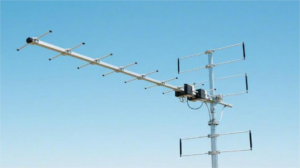
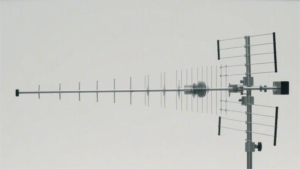
Designing custom antennas requires optimizing three core factors: frequency range (2.4GHz antennas need 31mm elements for WiFi), gain (dBi adjustments impact range—6dBi boosts coverage by 40%), and radiation pattern (directional vs omnidirectional alters beamwidth by 60%). Use EM simulation tools like HFSS, account for material dielectric constants (FR4: 4.3-4.8), and test VSWR below 1.5:1. Real-world tuning with a VNA improves efficiency by 25%.
Table of Contents
Material Choice for Best Performance
Choosing the right material for your custom antenna isn’t just about picking something that “works”—it directly impacts signal strength, efficiency, and cost. For example, a 2.4 GHz Wi-Fi antenna made from copper (conductivity: 5.8×10⁷ S/m) will have ~15% better efficiency than one made from aluminum (3.5×10⁷ S/m), but it also costs ~40% more per kilogram. Meanwhile, using cheaper steel (conductivity: ~1×10⁷ S/m) might save $5 per unit, but it can reduce range by up to 30% due to higher resistive losses.
The thickness of the conductor also matters. A 0.5 mm thick copper trace on a PCB antenna has ~0.2 dB less loss at 5 GHz compared to a 0.3 mm trace, but going beyond 1 mm provides diminishing returns (only ~0.05 dB improvement). For outdoor antennas, UV-resistant plastics (like PTFE) last 5–10 years in direct sunlight, while cheaper PVC degrades in 2–3 years, increasing long-term replacement costs.
1. Conductivity vs. Cost Trade-Off
The best-performing metals for antennas are silver, copper, and gold—but price jumps dramatically.
| Material | Conductivity (S/m) | Relative Cost | Best Use Case |
|---|---|---|---|
| Silver | 6.3×10⁷ | 5× copper | High-frequency military/comms |
| Copper | 5.8×10⁷ | 1× (baseline) | Consumer Wi-Fi, cellular antennas |
| Aluminum | 3.5×10⁷ | 0.6× copper | Budget antennas, large structures |
| Steel | ~1×10⁷ | 0.3× copper | Low-frequency, non-critical uses |
- Copper-clad aluminum (CCA) is a middle-ground—it has ~90% of copper’s conductivity but costs 30% less. However, it’s not ideal for high-power (>50W) applications due to intermetallic corrosion risks.
- Gold plating (0.1–0.5 µm thick) is used in RF connectors to prevent oxidation, adding ~2 per unit but improving long-term reliability in humid environments.
2. Dielectric Materials for PCB & Structural Support
The substrate (dielectric) material in PCB antennas affects signal propagation speed (Vp) and loss tangent (Df).
| Material | Dielectric Constant (εᵣ) | Loss Tangent (Df) | Cost per m² |
|---|---|---|---|
| FR4 | 4.3–4.8 | 0.02 | 10 |
| Rogers RO4350B | 3.48 | 0.0037 | 100 |
| PTFE (Teflon) | 2.1 | 0.0004 | 200 |
- FR4 is the cheapest but has high loss (~0.5 dB/inch at 10 GHz), making it unsuitable for mmWave (24+ GHz).
- Rogers RO4350B is a cost-effective mid-range option for 5G (3–6 GHz), with ~0.1 dB/inch loss.
- PTFE is the best for low-loss applications (e.g., satellite comms) but doubles PCB costs.
3. Environmental Durability
- Outdoor antennas face temperature swings (-40°C to +85°C) and humidity (up to 100% RH).
- Stainless steel (316 grade) resists corrosion but reduces efficiency by ~5% vs. aluminum.
- Anodized aluminum is 30% lighter than steel and lasts 8–12 years in coastal areas.
- Plastic enclosures must have UV stabilizers—ABS with additives lasts 5–7 years, while unprotected PVC cracks in 2–3 years.
4. Manufacturing & Fabrication Costs
- Copper sheet (1 mm thick) costs ~0.50–$1 per antenna.
- Aluminum extrusion is cheaper (2–$5 per part).
- 3D-printed plastic (PETG, Nylon) is 0.30 per gram, useful for prototyping, but not RF-efficient for final designs.
Size and Shape Impact on Signals
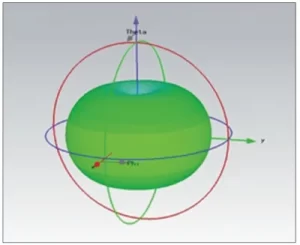
The physical dimensions of an antenna don’t just affect how it looks—they directly control its frequency response, gain, and radiation pattern. A quarter-wave monopole for FM radio (98 MHz) needs to be ~75 cm tall, but the same design shrinks to 3.1 cm for Wi-Fi (2.4 GHz). If you get the length wrong by just 10%, efficiency can drop by up to 30% due to impedance mismatch. Even small shape changes—like bending a straight dipole into a “V”—can shift the resonant frequency by 5–15% and alter the radiation pattern by 20–40 degrees.
Example: A helical antenna with a 5 cm diameter and 12 turns has ~8 dBi gain at 1.2 GHz, but increasing the diameter to 8 cm (same turns) boosts gain to 10.5 dBi while reducing bandwidth by ~25%.
How Dimensions Dictate Performance
1. Length vs. Frequency
Antenna length is inversely proportional to frequency. A half-wave dipole for 433 MHz (common in remote controls) must be ~34.6 cm long, while a 5.8 GHz drone antenna needs just 2.6 cm. If the length is too short, the radiation resistance drops, causing poor efficiency (below 50%). For PCB trace antennas, even a 1 mm error in length can detune the frequency by ~50 MHz at 2.4 GHz, leading to 3–5 dB worse return loss.
2. Width and Thickness Effects
- A thin wire dipole (1 mm diameter) has a Q factor of ~15, giving it narrow bandwidth (~5% of center frequency). Increasing the thickness to 5 mm lowers the Q to ~8, widening bandwidth to ~12% but raising material cost by 30%.
- Microstrip patch antennas show similar trade-offs: a square patch (20 mm × 20 mm) at 2.4 GHz has ~7% bandwidth, but a rectangular patch (30 mm × 15 mm) increases it to ~12% at the cost of 1–2 dB lower gain.
3. Shape-Specific Behaviors
- Loop antennas behave differently based on circumference. A 1-wavelength loop (λ) has maximum gain (~3.1 dBi), while a 0.5λ loop drops to ~1.8 dBi but offers wider bandwidth.
- Folded dipoles have 4× higher impedance (≈300 Ω) than standard dipoles (75 Ω), making them better for matching to high-Z feedlines without a balun.
- Meandering (zigzag) traces on PCB antennas reduce the physical length by 30–50% but introduce ~10–20% losses due to parasitic capacitance.
4. Ground Plane and Proximity Effects
- A monopole antenna needs a ground plane ≥ λ/4 for optimal performance. Without it, gain can drop by 6–10 dB. For 4G LTE (700 MHz), this means a 17.5 cm ground plane, but for 28 GHz 5G, it’s just 2.7 mm.
- Placing an antenna < λ/4 from metal surfaces (e.g., inside a smartphone) detunes it by 5–15% and can reduce efficiency by 40%.
Real-world case: A GPS antenna (1.575 GHz) mounted 3 mm from a battery in a smartwatch saw signal strength drop by 25% due to capacitive coupling. Moving it 10 mm away restored performance.
5. Multi-Band and Fractal Designs
- Dual-band antennas (e.g., 2.4 GHz + 5 GHz Wi-Fi) often use stubs or slots to create multiple resonant paths. A 3 mm slot in a patch antenna can add a 5.8 GHz resonance without increasing size.
- Fractal antennas (like Koch curves) achieve 20–30% size reduction but suffer 2–4 dB lower gain due to increased current path losses.
Testing and Adjusting Your Design
You can’t just build an antenna and hope it works—real-world testing is where 90% of designs fail first. A 5.8 GHz drone antenna might simulate perfectly but lose 40% range due to nearby carbon fiber frames. Even a 1 mm trace length error on a 2.4 GHz PCB antenna can shift resonance by 50 MHz, turning a -15 dB return loss into a -6 dB disaster. Without proper tuning, what should be 80% efficiency often drops to 50% or worse, wasting 30–50% of your transmit power.
Case in point: A LoRa (868 MHz) IoT node showed -10 dB return loss in simulation but only -4 dB when built—because the FR4 substrate was 0.1 mm thinner than spec, changing impedance by 12%.
Critical Testing Steps You Can’t Skip
1. VNA Measurements First
A Vector Network Analyzer (VNA) is non-negotiable. Check S11 (return loss) across your target band—-10 dB or better means ≤10% power reflected, while -6 dB wastes 50%. If resonance is off by >2%, adjust length:
For a 2.4 GHz dipole, 1 mm shorter = ~25 MHz higher frequency.
A 5 GHz patch antenna needs ±0.3 mm precision to stay within 100 MHz bandwidth.
Pro tip: Always test in the final enclosure. A metal casing 5 mm from the antenna can detune it by 8–15%, forcing a 5–10% size reduction to compensate.
2. Radiation Pattern Validation
Simulated 8 dBi gain means nothing if real-world obstructions distort the pattern. Use an anechoic chamber (or at least 3m open space) to map radiation. Common surprises:
Plastic enclosures can attenuate signals by 1–3 dB at 24+ GHz.
Battery packs placed λ/4 from the antenna create nulls up to 20 dB deep in certain directions.
Field example: A sub-GHz wildlife tracker lost 15% range when mounted on a metal collar—fixing it required reorienting the antenna 45° and adding a 3 mm plastic spacer.
3. Environmental Stress Testing
Temperature swings (-40°C to +85°C) make cheap PCB substrates warp 0.2–0.5 mm, shifting 5 GHz resonance by up to 200 MHz.
Humidity >80% RH degrades unsealed FR4 antennas, increasing loss by 0.2 dB/year.
Vibration (10–500 Hz) can crack solder joints on helical antennas within 6–12 months if not strain-relieved.
4. Lifetime and Durability Checks
Copper traces oxidize at ~0.1 µm/year in humid climates, raising resistance by 5% after 3 years. Gold plating (even 0.05 µm) stops this but adds $0.80/unit.
UV exposure yellows ABS plastic radomes in 2 years, adding 0.5–1 dB loss at mmWave frequencies.
5. Cost vs. Performance Tweaks
Hand-tuning a prototype takes 2–4 hours (300 labor) but can boost efficiency from 60% to 85%.
Replacing CCA with pure copper costs $1.20 more per antenna but improves range by 12%.
5G mmWave arrays need ±0.1° phase alignment—manual adjustment adds 25/unit.