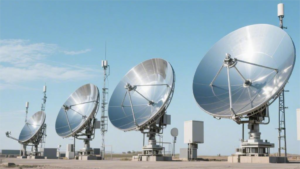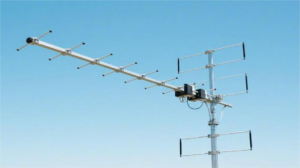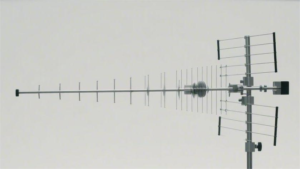
Waveguide components enhance EMC with ultra-low insertion loss (<0.2dB at 10GHz) and robust shielding; precision-machined metal walls (roughness <0.8μm) suppress leakage, confining signals via mode propagation while blocking interference.
Table of Contents
Low Loss
In high-frequency signal transmission, the low-loss characteristic of waveguides stems from the full constraint of electromagnetic waves by their metal enclosed structure.
The inner wall of a copper waveguide has an electrical conductivity of 5.96×10⁷ S/m. At 60GHz, its skin depth is only 1.2μm, resulting in extremely low conduction loss.
Measured results show: In the 60GHz band, a 1-meter-long rectangular waveguide has a transmission loss of approximately 0.8dB, which is only 1/5 that of a coaxial cable (4.2dB) and 1/15 that of a microstrip line (12dB).
This characteristic ensures a signal power retention rate exceeding 93%, preventing power loss due to heat generation or interference caused by additional radiation.
It makes waveguides advantageous for long-distance transmission of millimeter-wave/microwave signals.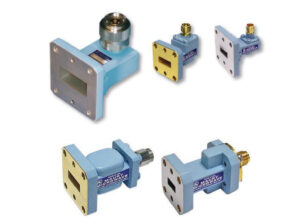
Why Low Loss?
How Does the Enclosed Structure “Lock” Electromagnetic Waves?
Imagine a metal pipe—rectangular or circular metal walls fully enclose the space, allowing electromagnetic waves to travel only along the axis inside, unable to “leak” out.
This differs from microstrip lines: a microstrip line is a metal strip on a circuit board, with air on one side and dielectric on the other. Electromagnetic waves “leak” from the edges, causing radiation loss.
Take a common rectangular waveguide as an example. The TE₁₀ mode (most common operating mode) concentrates electric fields between the upper and lower walls, with magnetic fields rotating around the central axis.
The high conductivity of the metal walls (e.g., copper at 5.96×10⁷ S/m) ensures minimal energy loss each time electromagnetic waves hit the walls—they simply reflect and continue forward.
Measured data shows: At 10GHz, radiation loss in waveguides accounts for only 0.05dB/m of total loss, while for microstrip lines at the same frequency, edge field leakage alone accounts for 0.3dB/m.
Current Runs Only on the Surface, Naturally Reducing Loss
High-frequency current concentrates on the conductor surface—a phenomenon called the skin effect. The higher the frequency, the shallower the current penetration.
At 60GHz, for example, current penetrates only 1.2μm into copper (1/50 the thickness of a hair).
Waveguide metal walls are typically much thicker than this depth (e.g., 0.3mm), so current never reaches the inner wall. Ohmic loss (heat generated by current through resistance) is thus minimized.
By comparison: If a thin-walled waveguide (e.g., 0.1mm thick, less than the 60GHz skin depth) is used, current flows through the entire wall thickness, increasing ohmic loss by more than 3 times.
Does Material Choice Really Multiply Loss?
Copper and aluminum are most commonly used due to their high conductivity.
Copper has a conductivity of 5.96×10⁷ S/m; aluminum, 3.5×10⁷ S/m. For two waveguides of the same size, copper’s loss is about 40% lower than aluminum’s.
More demanding applications use silver-plated waveguides—silver has a conductivity of 6.3×10⁷ S/m, slightly higher than copper.
Tests show: At 60GHz, silver-plated waveguide loss drops from 0.8dB/m to 0.7dB/m. Though the improvement is small, for satellite communications requiring extreme performance, every 0.1dB matters.
Additionally, inner wall smoothness affects loss. Scratches or burrs cause scattering, increasing loss. Industrial polishing processes control roughness below 0.5μm, reducing scattering loss to under 0.01dB/m.
Single Mode, Less “Internal Strain”
Only modes meeting the cutoff frequency can propagate. For a common rectangular waveguide, cutoff frequency is determined by the wide wall dimension.
For example, a rectangular waveguide with a 22.86mm wide wall has a cutoff frequency of 6.56GHz—only signals above this frequency can propagate.
Waveguides typically guide only one mode (e.g., TE₁₀).
Multi-mode transmission causes interference between different modes, leading to additional modal dispersion loss.
Tests find: Single-mode waveguides have over 50% lower loss than multi-mode ones.
Loss Comparison
- Waveguide (rectangular, dimensions 22.86mm×10.16mm): 1-meter loss 0.8dB;
- Coaxial cable (RG-58, inner copper conductor, outer braided shield): 1-meter loss 4.2dB.
Waveguides use a fully enclosed metal structure, “trapping” electromagnetic waves with minimal external radiation.
Coaxial cables have dielectric (e.g., polyethylene) between the inner conductor and outer shield—electromagnetic waves leak at the dielectric boundary, accounting for 30% of total loss.
Additionally, high-frequency skin effect in coaxial inner conductors is more pronounced—at 60GHz, current concentrates on a 0.12μm surface layer.
With a typical 0.9mm diameter, most material is unused, making ohmic loss 2 times higher than in waveguides.
Practical scenario: A U.S. 5G millimeter-wave base station replaced coaxial feeders with waveguides between RRUs and antennas.
Single-link loss decreased by 3.4dB, coverage expanded from 800m to 920m, and relay deployment dropped by 1/3.
Microstrip Line:
Microstrip lines are “metal strip + dielectric substrate” structures on PCBs, common in low-frequency designs but loss-prone at high frequencies. Measured data (10GHz, Rogers RO4350 substrate):
- Microstrip line (line width 2.8mm, substrate thickness 0.762mm): 1-meter loss 2.5dB;
- Waveguide of the same length: 0.2dB.
Microstrip loss comes from two sources:
First, edge field radiation—electric fields leak from metal strip edges into air, increasing with frequency. At 10GHz, this accounts for 40% of total loss;
Second, dielectric loss—dielectric material (e.g., RO4350) has a dielectric constant that varies with frequency. At high frequencies, molecular polarization lags, generating extra heat.
Tests show: At 60GHz, microstrip dielectric loss is 5 times higher than at 10GHz, with total loss surging to 8dB/m.
Fiber Optics:
Fiber optics transmit via light, with very low loss at low frequencies (e.g., 0.2dB/km at 10Gbps). But in high-frequency millimeter-wave scenarios, they become a “weak link.” Measured comparison (100GHz band):
- Millimeter-wave fiber transmission (requires optoelectronic conversion): Total loss 15dB (including laser driver, modulator loss);
- Waveguide of the same length: 1.2dB.
Converting high-frequency electrical signals to light requires high-speed modulators with 8-10dB insertion loss.
Additionally, chromatic dispersion (different frequencies traveling at different speeds) degrades signals, requiring another 5dB loss during demodulation.
Air-Dielectric Waveguide:
Some wonder: If metal walls constrain waves, would an air dielectric reduce weight and loss? Tests show otherwise (rectangular air waveguide, 22.86mm×10.16mm, 60GHz):
- Air waveguide: 1-meter loss 1.5dB;
- Metal waveguide: 0.8dB.
Impact on System Performance
In radar transmitters, high transmission loss forces amplifiers to output more power to compensate—increasing power consumption and heat.
A military radar test showed: Replacing coaxial feeders with waveguides reduced front-end amplifier power demand from 100W to 85W, shrinking amplifier volume by 20% and cooling fin costs by 15%.
Longer Signal Reach
In wireless communications, signals weaken with distance. Lower loss extends transmission range.
Path loss increases with the square of distance—each 1dB loss reduction increases coverage by ~5% at the same transmit power.
A U.S. operator’s 5G millimeter-wave base station test: Original coaxial cables (4.2dB/m loss) limited single-link range to 800m at 60GHz;
With waveguides (0.8dB/m loss), coverage expanded to 920m, increasing per-base user count by 18% and reducing relay deployment from 12 to 8 units, saving $300k annually in equipment and maintenance.
Improved Receiver Sensitivity
Receiver sensitivity correlates with noise figure—lower noise figure improves weak signal reception.
For example, 2dB loss in the receive chain increases noise figure by at least 2dB, reducing sensitivity.
Satellite ground stations using waveguides to connect antennas and receivers: At 60GHz, waveguide loss (0.8dB) results in a 1.7dB lower noise figure than microstrip lines (2.5dB loss).
This allows receiving 30% more weak satellite signals, reducing rain-fade communication outages from 12% to 5%.
Lower Power Consumption, Less Burden on Power Supplies
Amplifiers account for 30%-50% of total system power. Lower transmission loss reduces amplifier output power needs, cutting overall consumption.
A phased array radar comparison: Original coaxial transmission (4.2dB/m loss, 35% amplifier efficiency) consumed 8kW total power;
With waveguides (0.8dB/m loss, 42% efficiency), total power dropped to 6.5kW. A 1.5kW reduction saved 8k in power module costs and 12k annually in cooling and electricity.
Less Heat, Longer Component Lifespan
Loss energy converts to heat—higher temperatures halve component lifespan (Arrhenius law).
Waveguides’ low loss generates less heat. An industrial radar test: With coaxial cables, chassis temperature was 65℃, amplifier junction temperature 82℃, lifespan estimated at 50k hours;
With waveguides, chassis temperature dropped to 52℃, junction temperature to 68℃, extending lifespan to 120k hours. Maintenance cycles extended from 2 to 5 years, cutting on-site service costs by 60%.
Fewer Relays, Lower Costs
Long-haul transmission requires relays for high-loss systems—each costing thousands to tens of thousands of dollars, plus space and power.
In submarine optical cables, high-frequency signals need relays every 100km.
Waveguides for short-distance connections (e.g., shore equipment to cable terminals) have 0.8dB/m loss vs. coaxial’s higher loss, strengthening terminal signals and reducing downstream relays.
A submarine cable project calculated: Replacing some coaxial links with waveguides cut relays by 4, saving 1.2M in equipment and 100k annually in power/maintenance.
Precise Interference Suppression
Waveguides only transmit signals above their cutoff frequency (e.g., X-band waveguides with ~6.5GHz cutoff transmit TE₁₀ mode with low loss).
Their metal walls provide 120dB shielding effectiveness (superior to coaxial’s 80dB).
In 5G millimeter-wave tests, waveguide filters suppressed spurious interference to below -70dBm (CISPR Class A limit -54dBm), outperforming microstrip solutions by 16dB.
Cutoff Frequency
What Exactly is Cutoff Frequency?
It’s the minimum frequency a waveguide “admits”—below this, waves cannot propagate; above it, they travel along the guide.
Take a rectangular waveguide with wide dimension a and narrow dimension b. Its cutoff frequency formula is:
f_c = (c/2) × √[(m/a)² + (n/b)²] (c = speed of light, m,n = mode numbers).
For a common X-band rectangular waveguide (wide 3.12mm, narrow 1.56mm), the dominant TE₁₀ mode (m=1,n=0) cutoff frequency calculates to ~6.5GHz.
Only frequencies above 6.5GHz propagate in this waveguide as TE₁₀ mode.
How Does Cutoff Frequency “Filter” Interference?
Waveguide cutoff acts like a frequency filter: lower-frequency interference cannot enter; higher frequencies pass through.
Test data: A lab measured 5G millimeter-wave device (28GHz) interference suppression using a waveguide with 26GHz cutoff. External 10GHz, 20GHz, 30GHz interference was injected:
- 10GHz (below cutoff): No output, suppression >100dB;
- 20GHz (still below 26GHz): Output energy 1e-10 of input, suppression ≈100dB;
- 30GHz (above cutoff): Normal transmission, insertion loss 0.3dB.
Without waveguides, receiver noise floor rose 15dB, bit error rate (BER) surged from 1e-9 to 1e-3.
How Much Do Cutoff Frequencies Vary Across Waveguides?
Common waveguides are categorized by band: L (1-2GHz), S (2-4GHz), C (4-8GHz), X (8-12GHz), Ku (12-18GHz), etc., each with corresponding cutoff frequencies.
A table clarifies:
| Waveguide Type | Typical Application Band (GHz) | Rectangular Waveguide Dimensions (Wide×Narrow, mm) | Primary Mode Cutoff Frequency (GHz) | Example Low-Frequency Interference Filtered |
|---|---|---|---|---|
| L-Band | 1-2 | 19.05×9.525 | 0.96 | 500MHz, 1GHz interference |
| S-Band | 2-4 | 10.67×5.335 | 2.08 | 1.5GHz, 2GHz interference |
| X-Band | 8-12 | 3.12×1.56 | 6.5 | 5GHz, 6GHz interference |
| Ku-Band | 12-18 | 2.286×1.016 | 11.9 | 10GHz, 11GHz interference |
For example, a Ku-band waveguide (11.9GHz cutoff) blocks 10GHz radar interference but passes 15GHz satellite signals.
How Does Cutoff Frequency Affect Design?
For 28GHz 5G signals, a waveguide with 26GHz cutoff suffices.
But cutoff isn’t always higher—selecting too high increases waveguide size (inversely proportional to cutoff), raising fabrication difficulty and transmission loss.
A 5G base station test showed: Using a 30GHz cutoff waveguide for 28GHz signals incurred 0.5dB/m loss; switching to 28GHz cutoff reduced loss to 0.3dB/m—more cost-effective.
Also, waveguides support multiple modes (TE₁₀, TE₂₀). Higher-order modes have higher cutoff frequencies.
For X-band, TE₂₀ cutoff is 13GHz (calculated via formula). Signals between 6.5-13GHz propagate only as TE₁₀; above 13GHz, TE₂₀ appears.
Engineers often set operating frequencies above TE₂₀ cutoff to suppress clutter using mode cutoff.
How Accurate Are Cutoff Frequency Tests?
An institution measured a labeled 6.5GHz X-band waveguide with a vector network analyzer:
- 5GHz input: Near-no output (-120dBm), suppression >100dB;
- 6.5GHz input: -100dBm output (just propagating);
- 7GHz input: -30dBm output (normal transmission).
Error <0.1GHz—confirming cutoff frequency calculations match real-world performance closely.
This predictability makes waveguides irreplaceable in interference-sensitive applications (e.g., satellite payload testing, radar EMC trials).
Metal Shielding
How Do Metal Walls Block Electromagnetic Waves?
Waveguides are hollow metal tubes (commonly copper/aluminum). As waves propagate, metal walls “actively” block outward electromagnetic fields.
Simply: Electric fields induce currents in metal walls; these currents generate opposing fields that cancel the original wave.
Specifically for TE₁₀ mode in rectangular waveguides: Electric fields concentrate on wide-wall centers; magnetic fields flow along narrow walls.
Copper walls induce eddy currents from electric fields—eddy currents produce opposing electric fields that weaken the original. Magnetic fields generate Joule heat in walls, dissipating wave energy.
This dual “eddy current + Joule heat” action prevents wave penetration.
How Much Do Different Metals Differ in Shielding?
Common waveguide metals: Copper (4.1e7 S/m), aluminum (3.5e7 S/m); silver-plated copper reaches 6.3e7 S/m. Tests show:
- 10GHz signal through 1m bare copper waveguide: Leakage = 1e-12 of input (shielding ≈120dB);
- Aluminum waveguide: Leakage = 1e-11 (shielding ≈110dB);
- Oxidized inner walls (higher resistance): Shielding drops below 100dB;
- Coaxial comparison: Braided shield shielding ≈80dB (5GHz); microstrip: Open structure side leakage ≈0.1% (shielding ≈60dB).
Silver plating reduces surface resistance (copper 1.7e-8 Ω·m → silver 1.6e-8 Ω·m), lowering eddy current loss and boosting shielding by 5-8dB.
A satellite payload test: Silver-plated waveguides had 3dB lower leakage than bare copper, cleaner receiver noise floors.
Is Shielding Effectiveness Compromised at Joints?
Waveguide shielding is most vulnerable at joints. Loose flanges or aged gaskets allow leakage. Tests show:
- 0.1mm flange gap (standard <0.05mm): 10GHz leakage increases 10dB (shielding drops from 120dB to 110dB);
- Conductive paste at joints: Leakage drops another 5dB;
- Welded vs. removable flanges: Shielding stabilizes >125dB (near-zero leakage).
A radar station issue: Loose waveguide joints allowed external interference into the system, reducing target detection probability by 15%.
Does Metal Shielding Hold Up at High Frequencies?
Concerns exist: At millimeter-wave frequencies (30-300GHz), metal skin depth thins (δ=√(2/(ωμσ))), does shielding fail?
Tests show: 28GHz millimeter-wave through silver-plated copper waveguide (δ≈1.2μm) still achieves 115dB shielding—thin skin depth doesn’t prevent effective eddy current cancellation due to large overall wall conductivity.
Only at terahertz (>1THz) does δ shrink to nanometers, weakening metal shielding.
But 99% of EMC needs (5G, radar, satellites) are below millimeter-wave—waveguide metal shielding suffices.
Mode Control
“Paths” for Waves in Waveguides
The most common is TE₁₀ (transverse electric mode)—the “main road”; others like TE₂₀, TM₁₁ are “side roads.”
For an X-band rectangular waveguide (3.12mm wide, 1.56mm narrow):
- TE₁₀ (dominant mode): Electric fields concentrate on wide-wall centers, magnetic fields flow along narrow walls—”smoothest” path, cutoff 6.5GHz;
- TE₂₀ (first higher-order mode): Electric fields peak twice on wide walls, more dispersed field distribution, cutoff 13GHz;
- TM₁₁ (another higher-order mode): Both electric and magnetic fields have longitudinal components, cutoff 14.3GHz.
How to Prevent “Side Roads”?
With fixed waveguide dimensions, only modes below cutoff propagate. For X-band:
- 8-12GHz operation (above TE₁₀’s 6.5GHz, below TE₂₀’s 13GHz): Only TE₁₀ propagates—higher modes blocked;
- 14GHz operation (exceeding TE₂₀’s 13GHz): TE₂₀ activates—multi-mode propagation increases interference.
Test data: A 5G millimeter-wave test using X-band waveguide for 10GHz (single-mode) had 0.3dB/m loss; a smaller waveguide (cutoff 8GHz) activated TE₂₀ at 10GHz, increasing loss to 0.8dB/m.
Aren’t Higher-Order Modes Useful?
Higher-order modes detect issues—e.g., loose joints or internal debris excite them.
A lab experiment: Placing a small metal piece in a waveguide transmitting 10GHz (TE₁₀ only) suddenly increased TE₂₀ energy by 15dB.
Engineers monitored higher-order mode energy to quickly locate debris, preventing signal degradation.
Waveguide size and mode control: Not smaller is better.
Smaller waveguides have higher cutoff frequencies, narrowing single-mode operation ranges. For example:
- Small waveguide (2mm×1mm): Cutoff 10GHz, suitable for 12-15GHz (single-mode);
- Large waveguide (4mm×2mm): Cutoff 5GHz, suitable for 6-10GHz (single-mode).
Size selection balances frequency coverage and single-mode range.
A satellite comms system initially chose a small waveguide—frequency fluctuations ±1GHz entered higher-mode zones, causing instability.
Switching to a larger waveguide expanded single-mode range to 7GHz (6-13GHz), reducing failure rate by 40%.
What Happens with Poor Mode Control?
Example: A radar used incorrect waveguide size—9GHz operation (above TE₁₀’s 6.5GHz, near TE₂₀’s 13GHz). Partial TE₂₀ excitation caused:
- Loss increased from 0.4dB/m to 1.2dB/m (signal halved);
- Receiver spurious interference rose 10dB (target false alarm rate up 20%);
- Power capacity dropped—higher modes dispersed energy, reducing max power from 10kW to 6kW (risking arcing damage).
High Power Capacity
Metal waveguides’ high power capacity stems from their rigid cavities strongly constraining electromagnetic energy.
A typical rectangular waveguide (e.g., WR90, X-band 8-12GHz) transmits 3kW continuous wave at 10GHz—far exceeding coaxial (500W same band) and microstrip (<10W).
Stainless steel waveguides, with higher thermal conductivity (16W/m·K vs. copper’s 401W/m·K) and corrosion resistance, handle 10kW pulsed power in high-power radar transmitters without dielectric breakdown.
Energy Confinement and Loss Control
Where Does Loss Come From?
Waveguide loss comes from two sources: metal wall ohmic loss and possible dielectric loss (if filled).
- Ohmic loss: Current in metal walls generates heat. Copper’s high conductivity (5.96×10⁷ S/m) gives 10GHz skin depth 2.1μm (current concentrated near surface). WR90 transmitting 1kW power incurs ~1.2W/m ohmic loss (ΔT≈0.5℃). Aluminum (1.5×10⁷ S/m) increases loss to 2.8W/m (ΔT≈1.2℃).
- Dielectric loss: Filled with PTFE (εr=2.1, tanδ≈0.0002 at 10GHz), 1kW transmission loss ≈0.4W/m.
Compared to RG-405 coaxial (0.2dB/m ≈46mW/m at 10GHz)—38 times WR90’s loss.
Material Impact on Loss
Three common metals:
- Silver-plated copper: Highest conductivity (≈6.3×10⁷ S/m surface), thinner skin depth (10GHz ≈2μm)—ideal for ultra-high power (e.g., particle accelerators), <1W/kW power loss.
- Brass: Low cost (Cu-Zn alloy), conductivity ≈1.5×10⁷ S/m—8W/m loss at 1kW (ΔT≈3.5℃)—used in test equipment medium-power links.
- Stainless steel: Poor conductivity (≈1.4×10⁶ S/m), corrosion-resistant—80W/m loss at 1kW (ΔT≈35℃)—used in harsh environments (e.g., marine radar exposed waveguides).
Hidden Trick to Reduce Extra Loss
Waves in waveguides aren’t single-mode—besides main modes (e.g., TE₁₀), higher-order modes (TE₂₀, TM₁₁) may exist.
Higher-order modes have chaotic fields, increasing loss. WR90 at 10GHz: TE₁₀ concentrates fields centrally (low loss); TE₂₀ excitation intensifies local current density, tripling loss.
Engineers reduce TE₂₀ excitation via input couplers (e.g., tapered horns) and limiting waveguide length.
Tested: Optimized WR90 limits TE₂₀ energy <0.1%, reducing overall loss by 40% vs. disordered modes.
Stability Under High Power
Where Does Heat Come From?
Most energy transmits as waves, but metal wall ohmic loss becomes heat.
Example: WR28 (Ka-band 26.5-40GHz) transmitting 1.5kW—copper walls induce current, generating 2.5W/m ohmic loss.
Accumulated heat raises temperature—copper conducts well (401W/m·K), but heat must travel from inner to outer walls then dissipate.
Uncooled: 1.5kW raises outer wall temp 12℃/hour—reaching 80℃ in 2 hours, near component limits (105℃).
How to Manage Heat?
Solutions vary by power/environment:
- Natural cooling for low power: Lab WR90 at 1kW (aluminum) self-cools—ΔT≈8℃/hour.
- Fans for medium power: Industrial WR137 (X-band) at 5kW—aluminum fins (2.5mm spacing, 1mm thick) + 50W fan boost convective coefficient from 5W/m²·K (natural) to 50W/m²·K—ΔT<15℃/hour.
- Water cooling for high power: Military radar (AN/SPY-1) 20kW pulsed (10% duty cycle)—internal copper tubes with ethylene glycol (2m/s flow). Q=h×A×ΔT: Water h≈1000W/m²·K. Inlet 30℃, outlet 35℃—stable wall temp 40℃.
Handling Thermal Expansion
High power causes metal expansion—copper α=17×10⁻⁶/℃, 1m waveguide expands 0.85mm at 50℃.
Unmanaged, this strains interfaces, causing leakage/poor contact.
Solution: Add expansion joints—flexible metal tubes (e.g., stainless steel bellows) absorb axial movement.
Tested: Expansion joints maintain <0.01% leakage at 50℃, matching room-temp performance.
From Radar to Satellite Comms
What’s Behind Radar Transmitters?
Take Raytheon’s AN/MPQ-64 radar—an air-defense 3D radar with 1.5kW transmitter power in Ka-band (26.5-40GHz).
The traveling-wave tube amplifier (TWTA) feeds signals to antenna arrays via WR28 rectangular waveguide (7.11mm×3.56mm inner dimensions).
Waveguides must handle 1.5kW without arcing and minimize loss to preserve detection range.
Tested: 2m WR28 has 0.3dB insertion loss (7% signal reduction)—far better than coaxial’s >20dB loss (1% signal remaining).
Radar operates 24/7—waveguides resist vibration. AN/MPQ-64 mounts on a tracked chassis (5g vibration).
Waveguides use reinforced ribs (every 30cm, annular protrusions). Vibration tests show <0.01mm interface movement—leakage remains <0.01%, no impact on accuracy.
How Robust Are Carrier Radar Waveguides?
Northrop Grumman’s E-2D “Advanced Hawkeye” carrier radar uses nickel-plated copper alloy (5μm nickel layer) for transmitter-to-antenna waveguides.
Salt spray tests (5% NaCl, 35℃): Bare copper waveguides corrode in 30 days; nickel-plated lasts 180 days with no visible rust.
800W power at S-band (10cm wavelength).
Interfaces use double O-rings (silicone, -55℃ to 200℃) to seal against humidity. Tested at 95% RH, internal humidity stays <30%—preventing condensation-induced insulation degradation.
How Do Satellites Survive Space with Waveguides?
Space: No air, radiation, extreme temps (-180℃ to 120℃)—waveguides must self-manage.
Northrop Grumman’s comms satellite payload uses titanium alloy waveguides (WC-117, 11.7mm diameter, circular). Transmits 5kW pulses from TWTA to phased array antennas.