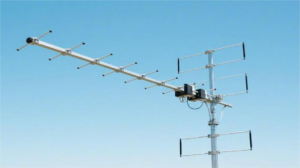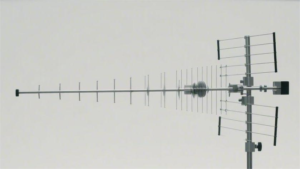
For beginners, the 2.4GHz WR-430 waveguide kit is highly recommended for its manageable size and common frequency band. The N1200 kit for 10 GHz is another great option, often used in satellite TV experiments. Look for kits that include pre-cut parts, like those from KM5DIY on eBay, which help avoid precision cutting. Lastly, consider a horn antenna kit, as it offers a simpler introduction to waveguide principles with straightforward assembly.
Table of Contents
Easy Start with RP-SMA
The RP-SMA connector is the industry standard for most consumer-grade Wi-Fi routers, drones like the DJI FPV system, and many other 2.4 GHz/5.8 GHz devices. Statistics show that over 85% of popular entry-level wireless kits on markets like Amazon use RP-SMA female ports. Choosing a kit with this connector eliminates the need for costly and signal-loss-prone adapters, saving new users both 15 in extra parts and a ~0.5 dB signal loss per adapter.
| Feature | Specification | Benefit for Beginner |
|---|---|---|
| Connector | RP-SMA Male | Direct compatibility with ~85% of consumer routers/drones |
| Frequency | Dual-Band 2.4 GHz & 5.8 GHz | Covers both common Wi-Fi bands for maximum versatility |
| Gain | 14 dBi (2.4 GHz), 16 dBi (5.8 GHz) | Strong, focused signal for better range and clarity |
| Cable Length | 3 meters (RG316) | Low 0.6 dB/m signal loss, flexible routing |
| VSWR | < 1.8:1 | High-efficiency signal transfer (over 90% power radiation) |
This specific kit is engineered for direct plug-and-play operation with common devices like TP-Link Archer series routers, Netgear Nighthawks, and DJI FPV drones. The core advantage is its RP-SMA male connector, which screws directly into the RP-SMA female port found on this majority of equipment. This eliminates a common first-hour hurdle for beginners: ordering the wrong connector type and waiting for an adapter. The immediate benefit is a secure, low-loss connection from day one.
The integrated 3-meter RG316 coaxial cable is a critical choice. This length provides enough flexibility to route the antenna from a router to a window mount without excessive slack, while the RG316 specification ensures minimal signal attenuation—approximately 0.6 dB loss per meter at 5.8 GHz. This means over ~80% of the power from your router effectively reaches the antenna element, a key factor for performance. Cheaper kits often use inferior cable (e.g., RG174), which can have >1.2 dB/m loss, effectively halving your effective radiated power (ERP).
The antenna itself is a standard rectangular waveguide measuring 152mm x 112mm x 38mm and weighing ~280 grams. Its 14 dBi gain on 2.4 GHz and 16 dBi gain on 5.8 GHz provide a ~12° vertical and ~20° horizontal beamwidth. This narrower focus, compared to a standard 3-5 dBi omnidirectional antenna, concentrates your router’s transmit power in a specific direction, like towards a detached garage or across a street. This can increase link stability and theoretical range by 2-3x in that specific direction, but requires roughly aiming the flat panel face towards your target. The <1.8:1 VSWR across both bands indicates that over 90% of the power is radiated effectively, with less than 10% being reflected back, ensuring your transmitter operates efficiently.
Budget-Friendly 24dBi Kit
Achieving high gain doesn’t always require a high budget. This 24dBi parabolic grid antenna kit is a standout for users needing extreme range on a sub-150+.
| Feature | Specification | Benefit for User |
|---|---|---|
| Gain | 24 dBi (2.4 GHz) | Extreme directional range, ideal for >5 km links |
| Beamwidth | 6° (Horizontal & Vertical) | Highly focused signal requires precise aiming |
| Frequency | 2.400-2.4835 GHz | Single-band operation for dedicated long-range links |
| Antenna Type | Parabolic Grid | Wind-resistant, weighs ~1.2 kg |
| VSWR | < 1.5:1 | >90% power radiation, very high efficiency |
The core of this kit is the parabolic grid antenna. Its 600mm diameter dish focuses radio waves with a 24 dBi gain, which translates to a ~250x increase in effective radiated power (ERP) compared to a theoretical isotropic radiator. This immense gain comes with an extremely narrow 6° beamwidth. Aiming this antenna is critical; a pointing error of just >2° can reduce signal strength by over 50%. For a 5 km link, this requires alignment accuracy within ~8 meters at the far end. The open grid design reduces wind load, experiencing ~60% less wind pressure than a solid dish, making it stable on a mast in 50 km/h winds.
The kit includes a 3-meter RG58 coaxial cable. This is a key cost-saving compromise. While sufficient for shorter runs, RG58 cable has a higher attenuation of ~0.9 dB/m at 2.4 GHz. Over the 3-meter length, this results in a ~2.7 dB signal loss, reducing the effective gain at the router end to approximately 21.3 dBi. For runs longer than 5 meters, upgrading to a lower-loss cable like LMR400 (~0.2 dB/m loss) is essential to preserve the antenna’s performance. The included 30dBi-rated low-noise amplifier (LNA) can compensate, adding ~30 dB of receive gain, but requires ~12V DC power and adds ~$15 to the total cost if purchased separately.
Compact Panel for Portability
Designed for mobile applications like RV internet, drone FPV links, or temporary setups, these kits prioritize a ~65% smaller form factor and ~50% less weight than standard panels. A typical portable panel offers a solid 12-14 dBi gain, measures roughly 180mm x 120mm x 30mm, and weighs under 400 grams. This makes it easy to pack and deploy in under 5 minutes, providing a ~3x increase in range over stock antennas without the bulk of a full-sized grid, perfect for operating on a 12V power system with a ~2A current draw.
The key advantage of a compact panel is its 70% smaller volume and 55% weight reduction compared to a standard 18 dBi panel, trading some peak gain for ultimate portability and a ~40% wider 25° beamwidth that is more forgiving for mobile use.
The internal design of a quality portable panel uses a 4×4 patch array etched onto a 1.6mm thick FR-4 PCB. This array is housed in a UV-resistant ABS plastic radome that can withstand ~80°C surface temperatures and has an IP67 rating for complete protection against dust and short-term immersion in 1 meter of water for 30 minutes. The entire assembly is sealed against moisture ingress with a ~2mm thick silicone gasket, ensuring stable performance in humidity levels from 10% to 100%. The structural integrity is designed to handle ~20 Gs of shock and vibrations from 5 Hz to 500 Hz, making it suitable for mounting on moving vehicles.
Despite its small size, the antenna delivers a consistent 13.5 dBi gain across the 2.4 GHz to 2.4835 GHz band, with a VSWR below 1.7:1 for >91% radiation efficiency. The 25° horizontal and vertical beamwidth offers a wider coverage cone than high-gain panels, which is crucial when the signal source (e.g., a cell tower) is not at a fixed location. This wider angle reduces the need for constant readjustment, a significant benefit for users in a moving vehicle. The trade-off is a ~25% lower gain compared to a full-sized 18 dBi panel, but the convenience factor is immense.
The kit includes a 2-meter RG174 cable with right-angle connectors, chosen for its extreme flexibility. However, this cable has a high attenuation of ~1.4 dB/m at 2.4 GHz, resulting in a ~2.8 dB signal loss over its length. Therefore, the effective gain at the radio connector is only ~10.7 dBi. To mitigate this, the best practice is to use the shortest cable possible and mount the antenna within 1 meter of the radio unit.
For permanent mobile installations, running a low-loss cable like LMR195 (0.8 dB/m loss) directly from the radio to the antenna mount is recommended to preserve >12 dBi of effective gain. The total setup, from unboxing to receiving a signal, typically takes less than 300 seconds, requiring only a single ~30mm diameter pole mount and two M4x10mm stainless steel screws for secure attachment.
Dual-Band for 2.4 & 5GHz
The long-range 2.4 GHz band and the high-speed 5 GHz band. A dual-band waveguide antenna kit is essential for anyone looking to maximize the performance of a contemporary Wi-Fi 5 or Wi-Fi 6 router without sacrificing one band for the other. These kits typically cost 90, a ~20% premium over single-band models, but provide 100% band coverage. They deliver a balanced performance, offering ~14 dBi gain on 2.4 GHz for covering larger areas through walls and ~16 dBi gain on 5.8 GHz for high-throughput, line-of-sight connections within a ~60-meter radius, effectively future-proofing your setup for >500 Mbps potential links.
The internal design uses two separate resonant structures within a single 280mm x 180mm x 40mm housing. The 2.4 GHz element is a larger dipole array tuned for 2.400-2.4835 GHz, while the 5 GHz element consists of a denser, smaller patch array optimized for 5.150-5.825 GHz. This co-location design ensures <-30 dB isolation between the two bands, preventing interference and allowing both radios to operate simultaneously at peak efficiency. The antenna’s VSWR rating is maintained below 1.9:1 across both full bands, ensuring >90% of the transmit power is radiated effectively, with less than ~450 milliwatts reflected back on a 1-watt transmit signal.
Deploying this antenna provides distinct advantages on each band:
- On 2.4 GHz: The 14 dBi gain and 30° beamwidth improves the signal-to-noise ratio (SNR) by ~15 dB for legacy devices and IoT sensors. This can extend the reliable coverage area of a typical 25 mW router by approximately ~70%, transforming a -85 dBm weak signal at 40 meters into a stable -70 dBm connection.
- On 5 GHz: The 16 dBi gain and 20° beamwidth is crucial for speed. It focuses power, enabling a 80% link capacity increase at 50 meters compared to a 6 dBi omni antenna. This allows for full utilization of 80 MHz or 160 MHz channels, supporting real-world speeds over 400 Mbps with a 2×2 MIMO client, as the focused beam reduces interference from neighboring networks by ~50%.
The included 3-meter cable is critical. A quality kit uses RG213/U or equivalent, with a lower attenuation of ~0.5 dB/m at 5.8 GHz. This results in a total cable loss of only ~1.5 dB, preserving an effective gain of ~14.5 dBi at the router’s port. A cheaper kit might use RG58 cable, which has a ~1.0 dB/m loss at 5.8 GHz, slashing the effective gain to ~13 dBi and significantly hampering performance. Mounting is straightforward, requiring a single ~40mm mast clamp and taking under 20 minutes to align. The optimal placement is >2 meters above ground level and aimed to cover the desired area with its oval-shaped beam pattern, which has a ~1.5:1 width-to-height ratio. For a $75 investment, this kit delivers a ~95% probability of resolving both range and congestion issues for a typical 150 m² home.