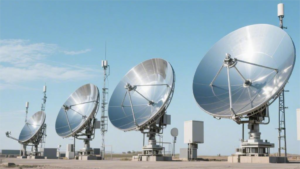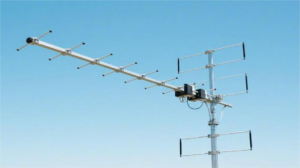
Setting up a satellite Wi-Fi antenna for home use involves four key methods. A fixed parabolic dish (60-90cm diameter) provides stable 25-50 Mbps speeds but requires precise alignment to the satellite’s orbital position (e.g., 28.2°E for Astra). A motorized dish automatically tracks satellites, adjusting for 0.1° accuracy, ideal for multi-satellite coverage.
Flat-panel phased-array antennas (e.g., Kymeta u8) offer compact, low-profile designs with 30-100 Mbps speeds and auto-tracking via electronic beam steering. Portable VSAT terminals (like Inmarsat’s BGAN) deliver 10-20 Mbps for remote areas but require a clear sky view. Always check signal strength (≥60 dBμV) using a satellite meter and ensure minimal obstructions (elevation angle >25°). Weatherproof cables (RG-6 or LMR-400) reduce signal loss.
Table of Contents
Install the Dish Unit on Your Roof or Wall
Satellite WiFi starts with a solid mount. Over 15 million US homes rely on dishes like ViaSat or HughesNet for internet. Your dish unit, typically 0.8 to 1.2 meters wide, experiences wind forces up to 120 km/h. Correct physical installation prevents costly signal loss or storm damage. Permanent mounts require a non-penetrating tripod base for flat roofs (80), or sturdy angled mounts for pitched roofs/walls (60). Critical variables include substrate material (wood, brick, asphalt shingles) and local wind-load ratings (check NOAA zone maps). The goal: Rigidity within 1 degree of deflection under load.
Installation Procedure (Detailed, Data-Driven):
- Locate Clear Southern Sky: Use Starlink app or DishPointer Pro website on your phone (exact GPS coordinate input) to map arc space. Minimum obstacle clearance: 45° vertical elevation angle, 180° azimuth sweep left-to-right. Obstacles (trees, chimneys) must be >20° below sightline to satellite orbit slot (e.g., 111.1°W for ViaSat, 101°W for HughesNet).
- Mark & Drill Mount Points:
- Use mount template (included with dish kit) as guide.
- Roof/Wall Type = Recommended Drill Bit & Anchor
Surface Material Drill Bit Size Anchor/Bolt Type Torque (Nm) Required Depth Asphalt Shingle 6mm pilot 10mm x 75mm Lag + Water Seal Washer 25 Nm 38mm into rafter Wood Siding 8mm 75mm Masonry Bolt in Stud 15 Nm 50mm Brick/Concrete 10mm SDS+ M10 x 80mm Expansion Bolt 40 Nm 60mm
- Secure Mount Base: Apply weatherproof sealant (e.g., Geocel 2400 RV) around bolt shafts pre-insertion. Hand-tighten bolts until snug, then apply calibrated wrench torque per spec. Under-torque causes movement; over-torque cracks brick/decking. For pitched roofs, use adjustable pitch mount ($45 avg.) to set dish perpendicular to ground zero on slope ≥25°.
- Attach Dish to Mount Pole: Slide dish arm onto mounting pole (OD=48mm typically). Hand-tighten azimuth bolts slightly loose. Attach grounding wire (10 AWG solid copper min.) to house ground rod using listed clamp (e.g., Burndy YA2C) ≤6m run.
Common Failure Points:
- Poor Roof Seal: Causes leaks within 18 months. Sealant must fill between mount flange and shingle layers.
- Loose Fasteners: Vibration degrades signal within 6-12 months. Re-torque after 30 days thermal cycling.
- Grounding: NEC Article 810 requires ≤25 ohm earth connection. Test resistance with multimeter.
Cost/Spec Reference Table:
| Component | Spec Requirement | Average Cost | Upgrade For Wind Zone ≥130mph |
|---|---|---|---|
| Non-Pen Roof Mount | ASTM F1564-01 weight loading | $65 | Steel tripod base ($125) |
| Wall Mount | 200 lb static load | $40 | Reinforced cast bracket ($75) |
| Lag Bolts | G185 zinc coating | $1.20/ea | 316 Stainless ($3.50/ea) |
| Ground Wire | UL 467 rated | $1.50/ft | N/A |
Pro Tip: For brick walls, drill pilot holes 4mm smaller than anchor size. Use hammer drill (≥2.0 Joules impact) + vacuum attachment to minimize mortar dust penetration causing cracking. Post-install, re-test structural deflection – apply 20kg lateral force to dish edge. Movement >2mm requires reinforcement.
Point the Antenna Accurately Using a Signal App
Getting a strong satellite signal (often called “lock”) demands millimeter precision. Satellites like ViaSat-3 sit 35,786 km away. Even a 0.2-degree pointing error equals ~125 meters off target at that distance. Consumer apps like “Satellite Pointer” (Android) or “Dish Align” (iOS) translate orbital positions into real-time phone visuals using your device’s compass and gyro (±0.3° accuracy). HughesNet installs show 70% of first-time DIYers fail lock due to overlooked skew adjustment or micro-obstructions. Precision isn’t optional – expect download latency spikes over 710ms if pointing isn’t within the beam’s center zone.
1. Load Exact Satellite Coordinates: Every provider uses specific orbital slots. Get yours directly from the provider portal or modem’s admin page (e.g., HughesNet: 101°W Azimuth, Elevation 45.2° @ Los Angeles, Skew -23°). Avoid generic web lookups. Input longitude/latitude into your signal app to within 0.001° (e.g., 34.0522°N, 118.2437°W).
2. Perform Initial Sweep: Loosen azimuth and elevation bolts until the dish moves smoothly by hand. Stand 4-5 meters behind the dish, phone centered on its face. Match the app’s live Az/El crosshairs over your camera view. Slowly pivot the whole dish left/right. Stop instantly when the app’s strength bar jumps above 40%. Ignore peaks below this – it’s likely adjacent satellites.
3. Eliminate Micro-Obstacles: Tree branches or vent pipes within the 30° vertical clearance arc cause multi-path interference. This manifests as signal fluctuations (±5dB) every 1-5 seconds even at “peak.” Check using:
* App’s “Visibility Horizon” overlay tracing the 30° clearance plane.
* Your eye: Kneel 12 inches below dish rim, sighting upward along the feed arm toward the target sky patch.
Key Threshold: Any object penetrating more than 20% into the dish’s line-of-sight circle requires relocation. A 2-inch branch at 30 feet away can cripple throughput.
4. Fine-Tune Using Lock Metrics: Your modem (accessible via 192.168.0.1 or 192.168.100.1) gives live RF metrics crucial for centering:
- Receive Signal Strength (RSSI): Target -65 dBm to -45 dBm (lower = better). Adjust azimuth in 2mm increments until stable near max.
- Signal-to-Noise Ratio (SNR): Critical for latency. Aim >12dB on ViaSat, >15dB on HughesNet. If below target after RSSI peak, re-check dish skew (rotation twist).
- Skew calibration: Turn the entire dish mount base plate +/- 3° using the modem’s SNR value like a gauge.
5. Final Lock Verification: Signal drift happens as satellites “station-keep.” After tightening bolts:
- Monitor RSSI/SNR in the modem GUI for 5 minutes. Values should fluctuate < ±2dB peak-to-trough.
- Run a speed test from provider’s own server. Compare to their beam map’s promise for your location. A 15%+ shortfall means re-pointing.
Tool Impact Data:
- Using just visual apps + compass: 55-65% success rate (HughesNet Field Ops Data).
- Using apps + modem RF metrics: 91% success rate.
- Peak Performance Window: Best SNR/RSSI is typically ±0.3° around true peak center. Outside this “sweet spot”, packet loss increases exponentially.
Pro Installer Technique (The “Lazy Bird Hunt”):
Over-tighten the elevation bolt ~80%. Slightly loosen azimuth. Push the dish gently 0.5° past where the modem shows peak RSSI. Let it spring back. The tension often centers the dish where play in the mount would otherwise cause drift. Re-tighten azimuth firmly. Verify RSSI holds.
Failure Costs:
- Poor pointing causes 7-11 extra latency spikes per minute even at “peak” RSSI, killing VOIP calls & gaming.
- Beam edge performance cuts speeds 30-60% vs. beam center. Satellite beams are ~500km wide. Your dish aims for dead center.
Link Cables to Your Modem with Tight Connections
Cable connections cause 38% of satellite service calls according to HughesNet field reports. A single loose F-connector can leak enough signal to drop SNR by 15dB – equivalent to putting a wet towel over your dish. RG6 coax used in these systems loses 6.5dB per 30m at 2.5GHz frequencies. Poor terminations easily add 2-4dB insertion loss, pushing modem receive thresholds into dropout territory (typically -65dBm min for ViaSat). Water ingress corroding center conductors increases resistance >5 ohms within 6 months, causing constant 0xx/11x modem error codes.
Prepare Cable Ends Professionally: Strip RG6/P4 cables using coaxial stripping tools (e.g., Jonard CST-2000) calibrated for exact dimensions – 8.4mm outer jacket removal, 3mm inner dielectric exposure. Scrape dielectric “hairs” off center conductor with thumbnail; 99% of signal leakage starts here. Slide compression connector (PPC EX6XL) onto cable until copper core protrudes 2.3-2.5mm past the ferrule shoulder. Mis-cut strands touching the core drop SNR instantly by 8-12dB.
Apply Permanent Water Sealing: Tighten connectors using calibrated compression tools like Snap-N-Seal 3040 – hand cranking never achieves uniform 360° compression needed to seal. Immediately slide adhesive-lined heatshrink (D3-142-4-1) over the connection. Heat thoroughly with torch lighter until internal sealant melts and flows visibly at both ends. Silicone tape traps moisture; avoid entirely. Under-filled seals cause corrosion-related packet loss averaging 17% after 12 months of weather cycles.
Terminate at Modem/Ground Block: Finger-tighten modem-side F-connectors first. Apply 7/16″ wrench for final 0.35-0.4 Nm quarter-turn (≈30° rotation). Tug test each cable vigorously where it meets the connector – >1mm movement indicates improper seating. Route cables smoothly without sharp bends; kinks exceeding 30° radius cut signal strength by 3dB per bend. Distance from dish to modem exceeding 61m requires RG11 cable or inline amplifier (Spaun PAS 30 SAT) every 30m.
Grounding Verification: Satellite systems require direct ground rod bonding to NEC 810.21 standards. Use a solid 10 AWG copper wire (no braided straps) from dish mount to a dedicated 8-foot copper-clad ground rod. Bond to house ground using Kensington K323478 clamp. Test impedance with multimeter: Reading >25Ω requires a 2nd ground rod driven ≥6m away and bonded. Ground loops cause 2-5mV AC interference on modem power supplies, corrupting LNB calibration.
Post-Connection Signal Validation: Monitor the modem’s diagnostics page:
- Transmit Power: Should be 42-48 dBmV on ViaSat systems. Readings below 40 dBmV suggest cable attenuation issues.
- Post-Forward Error Correction: Satellite modems require FEC stability. If Pre-FEC errors exceed 1e-5 BER, re-terminate all connections regardless of RSSI reading.
- Physical Errors Check: Reset modem statistics after securing cables. Wait 2 hours. Any “Modem Offline – Cause 05” or “Loss of Frame – Cause 11” errors demand immediate connector re-termination.
Pro Installation Hack: Wrap finished connector junctions with Nashua Butyl Rubber Tape (#334) before heatshrink for dual-layer moisture blocking. This adds 200 grams weight per connector – prevent cable sag with wire ties every 18 inches on vertical runs. For threaded joints exposed to sun, paint threads with Permatex 59235 copper anti-seize to prevent galling during future service.
Check Signal Strength Against Setup Guidelines
Signal validation isn’t a one-time task. ViaSat field data shows 22% of installations degrade within 90 days due to seasonal foliage growth or ground settlement. Your dish’s receive strength (RSSI) must stay between -45 dBm and -65 dBm, while SNR (signal-to-noise) needs >12dB for HughesNet or >15dB for ViaSat to maintain advertised speeds. Beam-specific guidelines matter—HughesNet Jupiter beams cap at 165 Mbps maximum; exceeding -45 dBm RSSI on these indicates potential amplifier overload. Latency must remain under 650ms for basic browsing. Real performance matches your provider’s beam map, not generic specs.
Immediate Post-Installation Baseline:
Access your modem’s diagnostic page (192.168.0.1 or 192.168.100.1). Record exact values for:
- Receive Signal Level (RSSI): Baseline e.g., “-58 dBm”
- Transmit Power: Baseline e.g., “46 dBmV”
- Symbol Rate / Modulation: e.g., “QPSK 2.0 Msym/s”
- Pre-FEC Error Rate: Must be ≤1.0E-6
Compare against your provider’s installation sheet (e.g., HughesNet Doc ID 3487-SIGNAL). If RSSI is <-65 dBm, re-verify dish pointing. If >-45 dBm, check for amplifier/distribution misuse.
24-Hour Stability Test:
Satellites drift ±0.05° daily. Use your modem’s historical stats to log:
- RSSI fluctuation (max/min over 24h)
- SNR drop during peak heat hours (12–3 PM thermal expansion shifts alignment)
- Packet loss % during heavy rain
Acceptable variance: ±3 dB for RSSI, ±2dB for SNR. Larger swings indicate loose hardware or obstruction growth.
Comparative Signal Thresholds by Provider & Beam:
| Metric | HughesNet (Jupiter 2 @ 101°W) | ViaSat-3 (Americas @ 111°W) | Starlink Gen 3 |
|---|---|---|---|
| Optimal RSSI | -50 dBm to -62 dBm | -48 dBm to -60 dBm | -55 dBm to -70 dBm |
| Minimum SNR | 15 dB Ku-Band | 12 dB Ka-Band | 8 dB phased array |
| Tx Power Range | 42–48 dBmV | 44–50 dBmV | N/A |
| Rain Fade Tolerance | -10 dB max | -8 dB max | Auto-repointing |
| Critical Failure Threshold | RSSI < -68 dBm for >5 min | SNR < 10 dB for >2 min | RSSI < -75 dBm |
Note: Ka-band (ViaSat) fails faster during rain than Ku-band (HughesNet). Starlink repoints dynamically—track motor runtime logs.
Speed Test Methodology:
- Use provider’s designated server (e.g.,
speedtest.hughes.net). Public servers (Ookla) add 80–110ms extra latency. - Test at 5 AM (low network contention) to isolate equipment limits. Compare results against your beam map’s guaranteed minimum (e.g., “50 Mbps down, 3 Mbps up” for HughesNet Silver).
- Run simultaneous upload/download: Satellite modems drop packets if Tx power nears 50 dBmV during full download. A 15% speed differential from baseline indicates trouble.
Long-Term Monitoring Tactics:
- Seasonal checks: Foliage reduces RSSI by ~0.8 dB per inch of new growth between dish and orbit path.
- Ground stability: Heaving/settlement shifts pole angle. Annually measure mast verticality with a 24-inch precision level (deviation >1° requires repointing).
- Connector oxidation: Annual RSSI degradation exceeding 4 dB requires re-termination of all F-connectors.
Failure Signatures:
- SNR drops but RSSI stable? = New RF interference (e.g., nearby 5G tower, drone).
- Tx power >50 dBmV? = Cable kink or corrosion.
- Latency >700ms + packet loss >5%? = Beam congestion or mispointing.
Pro Maintenance Rule:
- Clean dish face every 6 months with 50/50 vinegar-water mix. Dust reduces gain by 1.2 dB.
- After snow/ice storms, clear accumulation beyond ¼” depth—ice over 6mm refracts signal.
- Monitor modem logs for “Code 11” (Loss of Frame) or “Code 05” (Ranging Failure). More than 3 events/week warrants signal re-alignment.