To select waveguide components for satellite communication, match their frequency (e.g., 12–18GHz for Ku-band) to the system’s operating range to minimize insertion loss (<0.5dB/cm). Use corrosion-resistant stainless steel or aluminum with joint gaps <0.1mm, and verify compliance with ITU-R S.465 standards for optimal signal integrity.
Table of Contents
Define Your Frequency Band
In satellite communications, this typically means operating within established bands like Ku-band (12-18 GHz) or Ka-band (26.5-40 GHz). The specific center frequency and bandwidth you choose, for instance, a 14.5 GHz uplink with a 500 MHz bandwidth, will directly determine the physical size of your waveguide, its attenuation (signal loss), and ultimately, the cost of the entire assembly. Getting this wrong can lead to a 15-20% drop in system efficiency or even complete incompatibility, wasting significant development time and budget on a component that simply cannot function as intended.
For a standard rectangular waveguide operating in the dominant mode (TE10), the critical dimension is the internal width (a), which must be greater than half the wavelength of your highest operating frequency. For example, for a system operating at 14.0 GHz, the wavelength in free space is approximately 21.4 mm. The waveguide’s inner width needs to be larger than half of this, around 10.7 mm, to allow propagation. A common standardized waveguide for this frequency is WR-75, which has an exact inner width of 19.05 mm (0.75 inches) and is designed for operations between 10 and 15 GHz.
Selecting a predefined standard like WR-75 or WR-28 (for Ka-band) is almost always better than a custom size, as it ensures compatibility with off-the-shelf flanges and accessories, reducing lead time by 4-6 weeks and cutting costs by up to 30%.
Attenuation increases proportionally to the square root of the frequency. This means moving from Ku-band (e.g., 14 GHz) to Ka-band (e.g., 30 GHz) can roughly double the attenuation per meter. For a standard 3-meter run of WR-75 waveguide at 14 GHz, you might expect an attenuation of approximately 0.7 dB. However, the same length in WR-28 at 30 GHz could see losses nearing 1.8 dB. This loss directly translates to a need for more transmit power or more sensitive receivers, impacting the overall link budget and system cost. 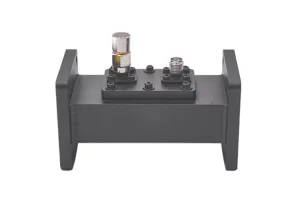
Choose Waveguide Size and Shape
While the frequency defines the theoretical size, you must then choose from standardized rectangular, double-ridged, or circular waveguides, each with distinct trade-offs in bandwidth (often 2:1 for ridged types), power handling (a 40% decrease compared to standard), and ultimately, the final price per meter, which can vary by 300% or more between a simple WR-430 and a specialized, wide-band ridge guide.
| Waveguide Standard | Frequency Range (GHz) | Inner Dimensions (mm) a x b | Typical Attenuation (dB/m @ mid-band) | Common Application |
|---|---|---|---|---|
| WR-430 | 1.70 – 2.60 | 109.22 x 54.61 | ~0.007 | C-band Satellite |
| WR-75 | 10.00 – 15.00 | 19.05 x 9.525 | ~0.13 | Ku-band Links |
| WR-42 | 18.00 – 26.50 | 10.67 x 4.32 | ~0.25 | K-band Radar |
| WR-28 | 26.50 – 40.00 | 7.112 x 3.556 | ~0.55 | Ka-band Satellite |
| WR-12 | 60.00 – 90.00 | 3.099 x 1.549 | ~1.8 | V-band Research |
The dimensions in the table are not arbitrary; they are calculated to ensure the cutoff frequency is approximately 25% lower than the lowest operating frequency, guaranteeing single-mode propagation. For a WR-75 waveguide, the theoretical cutoff frequency is about 9.84 GHz, safely below its operational range of 10-15 GHz. Deviating from these standards invites significant problems. Using an oversized waveguide for a 28 GHz signal might allow higher-order modes to propagate, creating multiple field patterns that can distort the signal phase and amplitude, potentially reducing effective data throughput by 15%.
A WR-112 waveguide can typically handle several kilowatts of average power in earth station applications. If your system requires a wider octave bandwidth, a double-ridged waveguide (DRWG) is necessary. However, this versatility comes at a cost: its ridge structure lowers the impedance and concentrates the electric field, which reduces its power handling capability by nearly 40% compared to a standard RWG of similar size and increases attenuation by roughly 50-70%.
For ultra-high-frequency systems above 75 GHz, circular waveguides become prevalent as they are better suited for certain polarization modes and can have slightly lower loss, but their precision machining can increase unit cost by 200% over a standard rectangular guide.
Select Compatible Connector Types
A poor connection can become the single greatest source of performance degradation, introducing unexpected insertion loss of 0.1-0.5 dB per connection and Voltage Standing Wave Ratio (VSWR) spikes above 1.25:1, which can effectively reduce your effective radiated power by 5-10%. In a high-power satellite uplink running at 2 kW, a mismatched connector with even a 1% power reflection due to high VSWR can lead to 20 watts being reflected back into your transmitter, potentially causing thermal damage over time and shortening component lifespan by hundreds of operating hours.
| Connector Type | Typical Frequency Range (GHz) | Max VSWR | Interface Description | Mating Cycles (Life) | Common Waveguide Pairing |
|---|---|---|---|---|---|
| CPR-137G (UG-599/U) | 0.25 – 2.5 | 1.25:1 | Screw-on | 500 | WR-430, WR-340 |
| OSP-141 (UG-595/U) | 2.2 – 7.05 | 1.20:1 | Slide-on, clamp | 1000 | WR-187, WR-159 |
| CPR-229G (UG-603/U) | 7.05 – 10.0 | 1.25:1 | Screw-on | 500 | WR-112, WR-90 |
| OSP-104 (UG-383/U) | 12.4 – 18.0 | 1.25:1 | Slide-on, clamp | 1000 | WR-75, WR-62 |
| OSP-135 (UG-387/U) | 18.0 – 26.5 | 1.30:1 | Slide-on, clamp | 1000 | WR-42, WR-28 |
A perfect match is 1.00:1, but in practice, a value below 1.25:1 across the entire band is considered excellent. Each 0.01 increase in VSWR above 1.20:1 can be correlated with a measurable decrease in signal clarity. The mechanical interface is equally crucial. Screw-on types (like CPR-137G) offer a robust, high-pressure seal ideal for outdoor environments experiencing temperature swings from -55°C to +85°C and can withstand vibration levels up to 5-7 Gs, but their lower mating cycle life of around 500 connections means they are not for frequent disconnection.
In contrast, slide-on/flange types (like OSP-104) allow for queter mating and unmating with a lifecycle of 1000+ connections and are common in lab settings, but they may require additional torque screws or clamps to achieve the consistent contact pressure needed to maintain a stable impedance of 50 ohms and prevent intermittent signal dropouts. Using a WR-75 waveguide with an OSP-104 flange is a standardized pairing, but attempting to mate a WR-90 guide with an OSP-135 flange designed for WR-42 will result in a physical and electrical mismatch, creating an impedance discontinuity that can reflect over 30% of your signal power.
Evaluate Power Handling Capacity
For a satellite uplink operating at 2.5 kW average power, the internal components must continuously dissipate this thermal load, and a waveguide with insufficient size or cooling can see internal temperatures rise by 50-70°C above ambient, potentially weakening solder joints or altering physical dimensions through thermal expansion, degrading VSWR by 5-10%. Conversely, a 50 kW, 2 microsecond radar pulse focuses on voltage, where the electric field strength must stay below 3 kV/cm to prevent creating a conductive plasma arc that permanently scars the interior wall, ruining the component in a single event.
A larger cross-sectional waveguide, like a WR-430, can easily handle 10 kW of average power due to its greater surface area for heat radiation, with internal temperatures stabilizing 40°C above ambient. A smaller guide like WR-90 might be limited to 1.5 kW under the same conditions. Peak power is limited by the breakdown voltage of the medium inside the guide, usually air. The critical figure is the maximum electric field strength (E-field), measured in volts per meter. For dry air at sea level, the breakdown threshold is approximately 3 MV/m. However, this value decreases dramatically with increasing altitude or humidity; at a 15,000-foot altitude, the breakdown voltage can drop by over 30%, slashing the safe peak power rating for your system.
- Calculate Average Power Thermal Limits: The primary factor is the waveguide’s surface area and the material’s thermal conductivity. Aluminum, with a thermal conductivity of 205 W/m·K, will run 15-20% cooler than brass under the same load. For a 3-meter long WR-75 waveguide carrying 1 kW, the average power density is roughly 350 W/m². With natural convection, its temperature will rise approximately 35°C above the ambient 25°C environment. For a 5 kW system, forced air cooling might be necessary to keep the temperature rise under 50°C and prevent damage.
- Calculate Peak Power Voltage Limits: The maximum peak power is calculated from the waveguide’s dimensions and the breakdown E-field. For a WR-90 waveguide (internal dimensions 22.86 x 10.16 mm), the maximum theoretical peak power in air at sea level is around 475 kW. However, manufacturers derate this by at least 50% for a safety margin, publishing a safe operating peak power of 200-250 kW. This derating accounts for surface imperfections, moisture content (>50% humidity can reduce it by 20%), and any contamination. Always use the manufacturer’s derated value, not the theoretical maximum.
Exceeding average power gradually reduces the waveguide’s lifespan by accelerating oxidation and mechanical fatigue, potentially leading to a failure within 2,000 hours instead of the expected 20,000 hours. Exceeding peak power causes immediate, catastrophic failure via an internal arc, which vaporizes a small portion of the interior wall, creating a carbon deposit that permanently increases attenuation at that spot by 5% or more and ruins the component.
Consider Environmental Durability
A $15,000 outdoor unit (ODU) can be destroyed in a single season if its waveguide assembly corrodes or fractures. For instance, a temperature cycle from -40°C to +70°C can create thermal expansion stresses exceeding 80 MPa on aluminum flanges, potentially cracking silver-plated surfaces and increasing VSWR by 0.2 within 12 months. Similarly, a 95% relative humidity environment with salty air can accelerate corrosion rates by a factor of 10, eating through a thin protective coating in less than 2 years and leading to a 30% increase in insertion loss as the interior surface roughens.
Aluminum 6061-T6 is the standard for most assemblies due to its good strength-to-weight ratio of 275 MPa density, but bare aluminum oxidizes quickly. A 5-10 micron thick silver plating is almost universally applied to the interior surfaces to ensure low electrical loss, providing surface conductivity exceeding 6.3 x 10^7 S/m. However, silver tarnishes in the presence of sulfur compounds in polluted air, so for extreme environments like coastal or industrial areas, a 0.5-1 micron flash of gold plating over the nickel barrier is necessary, increasing the unit cost by 15-20% but guaranteeing performance for a 15-year lifespan.
The exterior housing requires a different approach. A hard-anodized coating roughly 50 microns thick provides exceptional abrasion resistance and insulation, with a surface hardness exceeding 500 Vickers, protecting against physical damage during installation and from wind-blown debris. For the most severe conditions, such as naval applications, specifying stainless steel (e.g., 316SS) waveguides is essential, despite their 40% higher cost and 60% greater weight compared to aluminum, because they offer unparalleled resistance to salt spray corrosion lasting over 5,000 hours in ASTM B117 tests.
Vibration from a nearby generator or helicopter rotor can impose sinusoidal vibrations of 5-500 Hz at 5 Gs, leading to metal fatigue. A poorly designed support bracket can act as a harmonic amplifier, concentrating stress at a flange joint and causing a fracture after 10^7 stress cycles. Using flexible waveguide sections with precisely engineered corrugations can absorb up to 0.5 inches of misalignment and dampen vibration energy by 70%, preventing transfer to sensitive components.
Review Manufacturer Specifications
Assuming a waveguide simply “meets WR-75 standards” is a dangerous gamble; two suppliers’ components can vary by ±0.15 dB in attenuation and 0.05 in VSWR, which translates to a 5% difference in system efficiency over a long run. A meticulous review is your only insurance against receiving a part that fails 500 hours into its expected 20,000-hour lifespan or causes intermittent faults that take weeks of diagnostic time at a cost of over $10,000 to trace back to an out-of-spec flange dimension or substandard plating thickness.
| Specification | What to Look For | Why It Matters | Typical WR-75 Value |
|---|---|---|---|
| Frequency Range | Exact start and stop GHz, not just “Ku-band” | Defines usable spectrum | 10.0 – 15.0 GHz |
| Attenuation (Loss) | Max dB/meter at multiple frequencies | Impacts link budget & power needs | < 0.13 dB/m @ 12.5 GHz |
| VSWR (Voltage Standing Wave Ratio) | Max ratio (e.g., 1.25:1) across entire band | Measures reflections & impedance match | ≤ 1.20:1 |
| Power Handling | Average (kW) and Peak (MW) power ratings | Prevents thermal/arc damage | 2 kW avg, 200 kW peak |
| Impedance | Nominal value (Ohms) and tolerance | Ensures matching with connected systems | 50 Ω ±1.5% |
| Plating Thickness | Micron thickness for Ag/Au on interior | Ensures low loss and prevents corrosion | Silver: 5-10 µm |
| Operating Temperature | Minimum and Maximum Celsius ratings | Guarantees performance in environment | -55°C to +125°C |
Crucially, insist on seeing the test data for your specific batch or serial number. A Certificate of Conformance (C of C) that lists actual measured values—e.g., ‘VSWR: 1.18:1 @ 14.0 GHz’—is worth infinitely more than a generic datasheet. This proves the part was actually tested and passed, rather than just assumed to be within tolerance.
The operating temperature range must match your worst-case scenario, not just a pleasant 25°C lab environment. A part rated for -40°C to +85°C may use different adhesives and seals than one rated for +70°C maximum, and the cheaper option will fail prematurely in a desert climate. The mating cycle life of connectors is another often-overlooked figure; a flange rated for 500 cycles will have a more robust spring mechanism and thicker plating than one rated for 100 cycles, directly impacting long-term maintenance costs and reliability.