Selecting the right waveguide system requires careful consideration of frequency range, power handling, material, and application needs. For instance, WR-90 waveguides operate at 8.2–12.4 GHz, ideal for X-band radar, while WR-112 suits 7.05–10 GHz for lower frequencies. Power handling depends on material; copper waveguides tolerate up to 1 kW, whereas aluminum handles 500 W.
For precision, electroformed waveguides offer ±0.001-inch tolerances, while extruded types have ±0.005-inch variations. Corrosion-resistant gold plating is essential for aerospace, adding 0.0001–0.0003 inches thickness. Always match flange types (e.g., UG-387/U for military) and verify VSWR <1.2:1 for minimal signal loss. Test propagation modes (TE10 for most applications) using vector network analyzers.
Table of Contents
Pick the Right Frequency Band
Think of the waveguide frequency band like choosing the right-sized pipe for water flow. Waveguides are pipes for electromagnetic waves, and each has a specific frequency range where it works best – its operating band. Pick wrong, and your signals simply won’t propagate well. For instance, a waveguide designed for 8-12 GHz (like the standard WR-90/R100) will struggle severely at 2 GHz or 40 GHz. The key number is the cutoff frequency (fc) – the lowest frequency the guide supports. Below this, signals rapidly decay. Above fc, signals propagate, but waveguide size also dictates an upper limit due to higher-order modes potentially causing interference. Always start by confirming your system’s required frequency range.
The first, non-negotiable factor is matching the waveguide’s operating band to the actual frequencies your system generates or receives. This isn’t a suggestion; it’s fundamental physics. Waveguides rely on their internal dimensions to “guide” the specific wavelength of your signal. Your system specification sheet will state its operating frequency range – find that number first. Is it X-band (8-12 GHz)? Ku-band (12-18 GHz)? Or maybe Ka-band (26.5-40 GHz)?
- Cutoff Frequency (fc) is Critical: This is the absolute minimum frequency the waveguide can handle effectively. Below this frequency, your signal gets choked off. It attenuates exponentially – meaning its strength drops off very, very quickly. You can calculate the approximate cutoff frequency for a rectangular waveguide using the formula
fc = c / (2a), wherecis the speed of light andais the wider internal dimension of the guide. For a WR-90 guide (a = 0.900 inches), fc is roughly 6.56 GHz. - Not Just the Lower Limit: While fc defines the minimum usable frequency, the size also sets a practical upper limit. If you try to force a frequency too high for the waveguide’s dimensions, you excite unwanted higher-order propagation modes. Think of these like echoes bouncing around inside the pipe the wrong way. These modes distort your main signal, increasing losses and causing measurement errors or system malfunctions. Waveguides are typically designated with standards like “WR-284” or “R32”, where the number relates to the wider internal dimension in hundredths of an inch or millimeters. WR-284 handles frequencies around ~3.95 GHz, while a small WR-10 guide (R1000) is needed for ~75 GHz – 110 GHz.
- Match Your Application: Consider what the system does. Radar systems often operate in specific bands like S-band (2-4 GHz, e.g., long-range weather radar) or C-band (4-8 GHz, e.g., airport surveillance). Satellite communications commonly use Ku (12-18 GHz downlink) or Ka bands (26.5-40 GHz). Point-to-point microwave links might be in the 18 GHz, 23 GHz, or 38 GHz regions. The waveguide must align precisely with the operating frequency of your specific transmitters, receivers, and antennas within that system.
- Tolerances Matter: Manufacturing isn’t perfect. Slight variations in the internal dimensions of a waveguide directly affect its exact cutoff frequency and how precisely it handles the intended band. Higher precision manufacturing (tighter tolerances) ensures more predictable performance across the entire specified operating band, especially critical for wideband systems. Don’t just pick the band; ensure the waveguide’s specs guarantee performance across your specific required span within that band. If your Ka-band system runs from 24.25 GHz to 33.4 GHz, confirm the selected waveguide’s band includes this whole range safely.
The waveguide frequency band sets the very foundation of your system’s RF path. Get this wrong, and the rest doesn’t matter. Identify your system’s operating frequencies down to the GHz, match them rigorously to the waveguide’s cutoff frequency and designated band (using WR numbers or specific manufacturer specs), and ensure precision guarantees performance across your entire required span.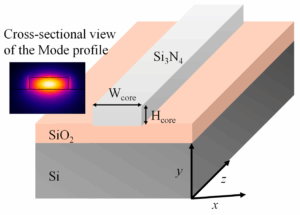
Understand Size and Shape
You wouldn’t try to fit a large sewer pipe into a tight electronics enclosure. Waveguide size and shape are equally critical physical constraints. The internal dimensions directly determine its frequency band (covered previously), but they also determine if it fits physically into your system’s space and minimizes bending losses or unwanted reflections. Rectangular waveguides (like WR standards) are overwhelmingly common, but circular types exist for rotating joints or specific polarization needs. A standard WR-90 (for ~8-12 GHz) has internal dimensions of 0.900″ x 0.400″. Imagine trying to route that through a tightly packed circuit card assembly – or a small WR-10 at ~75-110 GHz measuring a tiny 0.100″ x 0.050″. Physical fit is step zero.
Beyond the fundamental link to frequency, size and shape have practical impacts:
- Physical Space & Routing: This is often the deal-breaker. Measure the available space where the waveguide must go in your assembly: chassis cutouts, between modules, clearance around flanges for wrenches. Consider bends and twists needed to route the signal path. Rectangular waveguides come in standard sizes (WR designations). Length is flexible, as waveguide sections can be cut and flanged, but cross-section is fixed per WR type. An oversized WR-284 (a=2.84″) waveguide for an S-band radar won’t magically shrink; undersized WR-10 needs careful handling in millimeter-wave sensors. Can your enclosure physically accommodate the necessary run, including standard bend radii?
- Standard Shapes & Their Uses:
- Rectangular (Standard WR): By far the most common. Dominates fixed installations, test equipment feeds. Relatively simple to manufacture, flange, and align. Handles dominant TE10 mode efficiently. Example: WR-112 (a=1.122″, b=0.497″, ~15-22 GHz) widely used in Ku-band satellite uplinks/downlinks.
- Circular: Used when continuous rotation is needed (like radar antenna rotary joints) or for handling Circular Polarization (CP) signals without mode conversion. Less common for simple fixed paths due to typically higher cost and complexity in machining/alignment. Example: Circular guides might connect a fixed radar transmitter to a spinning antenna array.
- Ridged / Double-Ridged: Modified rectangular guides with ridges projecting into the broadwall. These extend the operating bandwidth significantly compared to a simple rectangular guide of similar outer size, but often at the cost of higher Insertion Loss and lower Power Handling capability. Example: Used in broadband test equipment covering, say, 1-18 GHz in a single section where space for multiple guides isn’t available.
- Impact of Shape Changes (Bends, Twists): You can’t always run a perfectly straight waveguide. Bends (E-plane, H-plane) and twists are necessary for routing. However:
- Bends Cause Loss: Every bend introduces a small but measurable increase in Insertion Loss and potentially Voltage Standing Wave Ratio (VSWR). Standard manufactured bends are designed to minimize this using specific radii.
- Twists Change Polarization: A twist section physically rotates the waveguide orientation. This rotates the polarization of the signal passing through it by the same angle. Critical if your antenna/device polarization orientation matters. A 90-degree twist section flips horizontal polarization to vertical.
- Minimize & Standardize: Use the gentlest bend radii possible for your frequency. Stick to standard manufactured bend angles (like 15, 30, 45, 90 deg) whenever feasible for predictability and lower cost. Avoid “custom doglegs” unless absolutely unavoidable.
- Material & Wall Effects:
- Thickness = Rigidity: Thicker waveguide walls (like rigid aluminum or copper) resist denting and deformation better, crucial for maintaining precise internal dimensions (and thus predictable electrical performance) during handling, installation, and operation.
- Precision Machining: This is key, especially at higher frequencies (Ka-band, W-band). Tighter dimensional tolerances (±0.001″ or better) are required internally to minimize variations in propagation characteristics and prevent excitation of unwanted modes. Rough internal surfaces increase scattering losses.
| Feature | Impact on Size/Shape Choice | Design Consideration |
|---|---|---|
| Internal Dims | Dictates Frequency Band and Mode Purity | Must match system frequency first. Use WR# or R# standards. |
| Outer Dims | Dictates Physical Fit & Routing | Measure space! Consider bends/flange access. Small guides (e.g., WR-28@Ka) = tighter bends. |
| Shape | Common = Rectangular (WR). Circular for rotation/CP. Ridged for wide bandwidth. | Rectangular for simplicity/cost. Circular if rotation/CP needed. Ridged for bandwidth if loss acceptable. |
| Bends | Cause Signal Loss (IL) & Potential VSWR. Standard radii minimize this. | Use manufactured standard bend angles w/ recommended radii. Avoid tight bends where possible. |
| Twists | Rotate Signal Polarization. Useful for orienting devices. | Specify exact twist angle required (e.g., 90°). Don’t use if polarization must stay fixed. |
| Material Thickness | Thicker walls = Better rigidity & protection for internal dimensions. Thinner = lighter (flexible guide). | Rigid guides: Thicker better. Flexible guides: Thinner necessary, handle with care. |
| Tolerances | Tighter (±0.001″) = More Predictable Performance, esp. at high freq & wide band. Loose = performance variation. | Specify tolerance requirements based on your frequency/bandwidth needs. |
Waveguide size and shape are about physical reality and maintaining signal integrity around corners. Choose the standard WR rectangular size that fits your frequency first. Then, brutally assess if it physically fits and can be routed within your chassis or platform. Use standard bends/twists judiciously, understanding they add loss or rotate polarization. Prioritize rigidity and precision machining for stable RF performance. Don’t just think GHz – think inches and degrees too.
Check Signal Loss Levels
Imagine shouting down a long, rough pipe – your voice gets weaker. Waveguides have similar signal loss, called attenuation. This isn’t just minor; it directly hits your system’s range and sensitivity. Every waveguide has Insertion Loss (IL), the main power drain measured in decibels per unit length (dB/m or dB/ft). A standard WR-90 copper waveguide might have an IL around 0.04 dB/ft at 10 GHz. That seems small, but it adds up: 20 feet of guide means ~0.8 dB loss – that’s almost 20% of your signal power gone before reaching the antenna. If your receiver needs every microwatt, this matters big time. Know your max acceptable loss budget for the entire path.
Signal loss in waveguides isn’t optional; it’s physics. The dominant component is Insertion Loss (IL). Forget “absorption” or “radiation” as major culprits in standard rigid guides – IL captures the main hit from the waveguide’s walls converting RF energy into heat.
The Key Formula: Attenuation (α) ≈ (Rs * kc²) / (2 * a * b * k * η * β) (Where Rs is surface resistance, kc is cutoff wavenumber, a & b are guide dimensions, k is wave number, η is intrinsic impedance, β is phase constant)
Translation: Loss gets worse with higher frequency, smaller waveguide size, and less conductive wall materials. Here’s what drives IL and why you measure it:
- Frequency is King: Loss doesn’t just rise with frequency; it climbs significantly. Those nice low loss figures at the low end of a waveguide’s band? They double or triple as you approach the high end. A WR-28 guide (for Ka-band, ~26-40 GHz) might show 0.05 dB/ft at 28 GHz, but easily hit 0.15 dB/ft or higher near 40 GHz. Systems operating at the top end of a guide’s band pay a steep IL penalty. Always ask for attenuation curves across your entire required band.
- Material Conductivity = Lower Loss: How easily electricity flows in the waveguide walls (conductivity, σ) is crucial. Pure Copper generally offers the lowest loss among common, practical choices because of its high conductivity. Aluminum (6061-T6) is popular due to weight and cost, but its conductivity is only about 60% of copper’s, translating directly to higher IL (think +50% or more compared to copper for the same guide and frequency). Silver plating applied over copper or aluminum boosts surface conductivity significantly, offering IL figures closer to pure silver – a worthwhile upgrade for critical low-loss paths.
- Surface Roughness Matters (Especially at High GHz): Electromagnetic waves travel near the inner surface – the skin depth. If that surface is rough, the electrons travel a longer, “hillier” path, increasing resistance (Rs). Think of smooth pavement vs. gravel for your car. Average Surface Roughness (Ra) specs like <32 microinches (μin) or <0.8 micrometers (μm) are common. At frequencies above ~30 GHz (Ka-band and up), Ra becomes extremely critical. Even moderate roughness can significantly inflate IL beyond the theoretical value based solely on bulk conductivity. Demand smooth finishes for millimeter-wave guides.
- Length Multiplies Loss: This seems obvious but gets overlooked. Loss is specified per unit length. A 10-foot section of guide with 0.06 dB/ft loss means a total hit of 0.6 dB. A 50-foot run? 3.0 dB loss! That’s half your signal power gone. Don’t just look at the per-foot number; multiply it by your actual path length to get the total system impact. Long waveguide runs demand the lowest possible IL guide and meticulous installation.
- Don’t Forget Return Loss (VSWR): While IL dominates, reflections are still important. Mismatches at flanges, dents, or poor bends create VSWR (Voltage Standing Wave Ratio), sending some power back towards the source instead of forward. This reflects as Return Loss (RL) (e.g., -20 dB meaning 1% reflected). High VSWR often correlates with degraded IL, lowers power transfer, and stresses transmitter finals. Quality flanges (like UG-xxU series) properly torqued and straight sections maintain good RL.
Signal loss (Insertion Loss) is your waveguide’s power tax. Key levers are frequency band position (loss rises sharply at band edge), conductive material (copper/silver best), surface finish (smooth = less loss), and total length. Get datasheets showing attenuation vs. frequency curves for your specific guide type and material/finish. Calculate the total IL for your path. If the loss figure looks too high, rethink the guide choice (e.g., smaller size if possible? Silver plated?) or shorten the path. “Low Loss” is relative – quantify it against your system budget.
Check Signal Loss Levels
Think of waveguide loss as a series of small, unavoidable taxes on your signal’s power. This loss, primarily called Insertion Loss (IL), is measured in decibels per length (dB/m or dB/ft). Even small values add up fast. A 10-foot run of standard copper WR-90 guide (~8-12 GHz) has about 0.4 dB loss at 10 GHz. That means roughly 10% of your transmitter power is gone before it even leaves your cabinet, just heating the pipe walls. For sensitive receivers or long paths in radar/satcom, unplanned loss directly kills system range and sensitivity. Know your max acceptable path loss budget upfront.
Understanding waveguide loss isn’t just about a single number; it’s about knowing the factors that drive it in your specific application.
The biggest player is Insertion Loss (IL), the steady drain caused mainly by the finite electrical conductivity of the waveguide walls. Metal isn’t a perfect conductor, especially at RF frequencies where current flows only in a thin skin depth. This surface resistance turns precious RF energy into heat. Factors making this worse include higher operating frequency, smaller waveguide cross-sections, and less conductive wall materials.
Frequency Dependency: Loss isn’t constant across a waveguide’s band. It increases significantly as you approach the upper band edge. For example, a WR-28 waveguide (Ka-band, ~26.5-40 GHz) might have an IL of 0.06 dB/ft at 28 GHz, but this can easily climb to 0.20 dB/ft or more at 38 GHz. Relying on the minimum IL figure listed in a catalog is misleading if you operate at the band edge. Always demand attenuation vs. frequency charts for the specific guide you are evaluating.
Material Conductivity Rules: The conductivity (σ) of the waveguide wall material directly dictates IL. Pure Copper (Cu) has excellent conductivity (~5.96 x 10⁷ S/m) and offers the lowest loss commercially viable option. Aluminum 6061-T6 (Al) is very common due to its light weight and lower cost, but its conductivity (~2.56 x 10⁷ S/m) is roughly 60% of copper’s. This translates directly into higher IL – often 1.5x to 2x the loss of an equivalent copper guide at the same frequency. Silver (Ag) Plating, even a few microns thick over a base metal like copper or aluminum, dramatically improves surface conductivity (Ag σ ≈ 6.3 x 10⁷ S/m), reducing IL to levels very close to pure silver. The improvement is most significant at higher frequencies.
Surface Finish – Smooth Wins: RF currents concentrate on the waveguide’s inner surface. Surface Roughness (Ra), measured in microinches (μin) or micrometers (μm), acts like tiny obstacles to those currents, increasing effective resistance and thus IL. A smooth internal finish (e.g., Ra ≤ 16 μin / 0.4 μm) is essential. This becomes critical at frequencies above 30 GHz (Ka-band, W-band, mmWave) where the skin depth is extremely shallow (<1 μm). Rough surfaces can easily increase IL by 20-50% or more compared to a smooth guide at these frequencies. Specifying Ra requirements is mandatory for high-performance mmWave systems.
Length – The Silent Multiplier: Loss is specified per unit length, but the total loss for your system is IL_per_foot x Path_Length. A 0.05 dB/ft loss seems minimal – until you multiply it by a 50-foot aircraft antenna feedline. Suddenly, 2.5 dB of your signal power is lost. That represents a significant degradation. Calculating the total cumulative loss for your waveguide runs is non-negotiable during system design.
Other Contributors: While wall loss dominates in rigid guides, bends, twists, and flange misalignment introduce additional small Insertion Loss increments and Return Loss (VSWR) problems. Dents or corrosion on the inner walls are disaster zones for IL. Good installation practice minimizes these extras.
Don’t get Insertion Loss sticker shock. Quantify your system’s max acceptable loss, calculate the total path loss meticulously, and choose guides based on measured data across your band. Prioritize high-conductivity materials (Cu/Ag-plated), demand smooth finishes, especially above 30 GHz, and minimize path length. Remember, the total dB loss in your RF chain is what matters. Save budget for the components; don’t waste it warming up a waveguide. “Low Loss” is relative – make sure it meets your design budget.
Choose Suitable Materials
Waveguide material isn’t just about what works; it directly impacts signal loss, power handling, weight, corrosion resistance, and cost. Off-the-shelf aluminum WR-90 costs roughly 150+ per foot. Is that 15-20% lower loss worth the extra $100/foot for your 100-foot satcom antenna feed? Will bare aluminum survive coastal salt spray? Material choice solves real engineering tradeoffs – know what drives performance and what’s just overkill.
Material selection boils down to understanding the fundamental physical properties and how they match your application’s operational environment, performance needs, and budget.
- Electrical Conductivity Rules Loss: The single biggest driver for Insertion Loss (IL) is the electrical conductivity (σ) of the metal. How easily electrons flow on the inner surface matters immensely. Pure Copper (Cu, σ ≈ 5.96 × 10⁷ S/m) is the gold standard for low loss. Aluminum 6061-T6 (Al, σ ≈ 2.56 × 10⁷ S/m = ~60% of Cu) is widely used but delivers significantly higher IL across the board. Silver Plating (Ag, σ ≈ 6.30 × 10⁷ S/m) applied over Cu or Al boosts surface conductivity dramatically – reducing IL on Al by 30-50% and on Cu by 10-20%. Brass or Steel (common in cheap flanges/adapters) have much lower σ (1.5-2.0 × 10⁷ S/m) and incur major IL penalties – best avoided for long guide runs.
- Thermal Conductivity & Power Handling: For high average power, heat dissipation is critical. Copper excels (~400 W/m·K thermal conductivity). Aluminum is good (~200 W/m·K). Lower thermal conductivity materials (like most “flexible” waveguide cores or brass) overheat faster and have drastically reduced average power ratings. For high peak power, the key is surface perfection (preventing arcing – see section 4). Base material matters less here than flawless surface finish and pressurization options, provided bulk conductivity is adequate to handle the average heating. Silver plating offers no meaningful thermal advantage over copper.
- Weight is a Real-World Constraint: Aluminum (Density ~2.7 g/cm³) is roughly 1/3 the weight of Copper (~8.96 g/cm³). This is crucial in weight-sensitive platforms: aircraft antennas, UAV payloads, mobile radar units, large satellite feeds. Saving 100 lbs. on an antenna array often outweighs (pun intended) a fraction of a dB in extra IL. Copper dominates where loss is paramount and weight is secondary (e.g., terrestrial telecom hubs, lab setups).
- Corrosion & Environmental Survival: Bare Aluminum forms a protective oxide layer but remains vulnerable to pitting corrosion in salt spray, harsh chemicals, or high humidity. Copper oxidizes (tarnishes) but is generally more resistant. Silver Plating provides excellent corrosion resistance and protects the base metal. Anodized Aluminum offers good surface protection and electrical isolation but adds negligible corrosion benefit to the internal RF path. For severe environments (marine, industrial), silver plating (over Cu or Al) is preferred. Passivated Stainless Steel flanges are common for corrosion resistance where electrical loss is secondary.
- Mechanical Properties: Aluminum is softer than Copper. This impacts resistance to denting during handling and installation. Copper waveguides are inherently more rigid and less prone to deformation that degrades electrical performance. Aluminum’s softness makes machining easier and cheaper. Flexible waveguide cores (polymer with conductive lining – often silver or tin) sacrifice rigidity and robustness for bendability; handle with extreme care.
- Cost – The Big Compromise: Material cost scales with performance. Copper base material starts 2-3x more expensive than Aluminum per pound. Silver plating adds ~25-50% cost premium on top of the base metal cost and plating process. High-polish finishes (critical for low loss and high peak power) add significant machining cost to any material.
Bare Aluminum wins on cost and weight for most applications. Copper is king for uncompromising low loss. Silver Plating is the premium upgrade for critical low-loss or harsh environment needs. Avoid Brass for guide sections. Flex Guide is a compromise only when essential. Prioritize conductivity for performance paths, weight/cost for platforms, and corrosion plating for harsh env. Your budget and system specs dictate the smart choice – rarely is there a single “best” material.