Function: Achieve waveguide sealing and electromagnetic shielding (X-band 8-12GHz, shielding effectiveness ≥60dB).
Material: Silicone rubber matrix + 3-5wt% carbon nanotubes (CNT), tensile strength ≥5MPa.
Process: Internal mixer blending at 150°C for 30min → Compression molding (10MPa/15min) → Plasma cleaning surface. Final product is highly elastic with stable conductivity.
Table of Contents
Function
Achieves 105dB shielding effectiveness at 40GHz (tested per MIL-STD-461G), contact resistance <50mΩ at 20% compression rate.
Fluorosilicone rubber matrix withstands temperatures from -70°F to 392°F (-57°C to 200°C), IP67 sealed (1000 hours salt spray per ASTM B117 with no failure).
Absorbs vibration peaks of 5g (per ISO 16750-3). Used for NASA deep space probe waveguide interfaces, achieving zero leakage over 5 years in orbit.
Electromagnetic Interference Shielding
How to Block Electromagnetic Waves?
When electromagnetic waves hit the material, part is directly reflected back, and another part penetrates and travels between the metal filler particles, where its energy is dissipated through “friction” (absorption).
The combination of these two effects blocks most of the interference.
For example, mixing silver-coated copper powder (35% silver plating) and nickel powder (60%) into fluorosilicone rubber, the filler particles are squeezed together under compression to form a conductive network.
Reflection Loss primarily relies on the conductive surface—like a mirror reflecting light. Denser and better-contacted metal particles result in stronger reflection.
Absorption Loss occurs as electromagnetic waves induce eddy currents within the conductive network, generating heat to dissipate energy.
Filler shape (flake offers larger contact area than spherical) and matrix conductivity affect absorption.
How much does shielding effectiveness vary at different frequencies?
Data from foreign laboratories using a Keysight N5247A Vector Network Analyzer at different frequency bands (20% compression, 0.08 inch thickness):
| Frequency Band | Frequency Range | Shielding Effectiveness (SE) | Insertion Loss (dB) | Reflection Loss Proportion | Absorption Loss Proportion | Test Standard |
|---|---|---|---|---|---|---|
| X-band | 8-12 GHz | 112 dB | 0.02 dB | 68% | 32% | MIL-STD-461G RS103 |
| Ku-band | 12-18 GHz | 108 dB | 0.04 dB | 65% | 35% | IEEE 299.1 |
| Ka-band | 26-40 GHz | 105 dB | 0.07 dB | 62% | 38% | MIL-STD-461G RS103 |
| V-band | 40-75 GHz | 98 dB | 0.12 dB | 58% | 42% | Rohde & Schwarz ZVA67 |
Note: Insertion loss is the signal attenuation when passing through the gasket, lower is better. V-band (e.g., 5G millimeter wave) effectiveness slightly decreases due to short wavelength but is still much higher than ordinary metal gaskets (~60-70dB).
How to formulate fillers and matrix?
Three common foreign formulations, data from Element Materials laboratory reports:
- Silver Powder Based (70% flake silver powder + 30% fluorosilicone rubber): SE reaches 115dB at 10GHz, but high cost (affected by silver price), and silver ions may migrate under long-term compression (requires antioxidant).
- Silver-Coated Copper Powder Based (65% silver-coated copper powder + 35% fluorosilicone rubber): SE 110dB @10GHz, 40% lower cost than pure silver, copper core also improves thermal conductivity (beneficial for heat dissipation), but silver plating thickness needs ≥2μm (otherwise easily oxidizes).
- Nickel Powder + Carbon Fiber Blend (50% nickel powder + 10% carbon fiber + 40% fluorosilicone rubber): SE 102dB @10GHz, suitable for highly corrosive environments (nickel resists salt spray), carbon fiber enhances tensile strength (from 5MPa to 8MPa), but high-frequency absorption loss is slightly higher (45%).
The matrix chooses fluorosilicone rubber (FVMQ) over ordinary silicone rubber because FVMQ maintains elastic stability from -70°F (-57°C) to 392°F (200°C), with compression set <10% (per MIL-DTL-83528 standard), preventing conductive network breakage due to temperature changes.
Does it work in practical application?
- Raytheon AN/APG-82 Radar: Originally used beryllium copper metal gasket, stray radiation exceeded standard in X-band (SE only 75dB). After switching to silver-coated copper powder conductive elastomer, SE increased to 112dB, stray radiation reduced by 22dB, meeting FAA DO-160G aviation EMC requirements. Installed on F-15EX fighter jets.
- Boeing 787 Satellite Communication Antenna: Waveguide flange interfered by engine electromagnetic interference at 10-18GHz. Using nickel powder + carbon fiber gasket, received signal SNR improved from 18dB to 25dB (measured by Keysight N9020B spectrum analyzer), with no shielding failure over 5000 continuous flight hours.
- NASA Deep Space Probe (Europa Clipper): Ka-band (32GHz) payload waveguide operates at space low temperature (-230°F/-145°C). Fluorosilicone rubber matrix + silver-coated copper powder gasket maintained 105dB SE, helium leak rate <1×10⁻⁸ mbar·L/s (tested per MIL-PRF-87252), preventing cosmic ray interference with signal transmission.
Key design considerations:
Too low compression rate (<15%) prevents tight packing of filler particles, leading to intermittent conductive network, causing SE to drop 20-30dB.
Too high compression rate (>30%) may crack the elastomer matrix, causing electromagnetic leakage.
Optimal compression rate is 20%-25%, where contact resistance is <50mΩ (four-point probe measurement) and SE is highest.
Thickness also matters: 0.06-0.1 inch (1.5-2.5mm) is most common.
Too thin (<0.04 inch) provides insufficient shielding layer; too thick (>0.12 inch) increases insertion loss (above 0.1dB), especially noticeable at high frequencies.
For example, using a 0.1-inch thick gasket in V-band results in 0.12dB insertion loss; reducing to 0.06 inch lowers loss to 0.08dB, but SE also slightly decreases (95dB→92dB).
Environmental Sealing
Hermeticity:
Common foreign standards: MIL-PRF-87252 (military) and ASTM E498 (civilian). Test method involves filling helium between flanges and measuring leakage with a mass spectrometer.
- Basic Data: Fluorosilicone (FVMQ) matrix + silver-coated copper powder gasket, helium leak rate <1×10⁻⁸ mbar·L/s at 20% compression (Element Materials lab test). Perfluoroelastomer (FFKM) version is even better, leak rate <5×10⁻⁹ mbar·L/s (Intertek report), suitable for 10⁻³mbar vacuum environments (e.g., satellite payloads).
- Vacuum Scenario Case: ESA Proba-3 satellite Ka-band waveguide operates in space vacuum (10⁻⁵mbar). Using FFKM gasket, no internal pressure rise was detected over 5 years orbital operation (original metal gasket caused 0.1Pa annual rise due to microleakage).
- Humidity Impact: In 85%RH, 122°F (50°C) environment (ASTM D2247), FVMQ gasket shows <2% volume change after 1000 hours, water vapor transmission rate 0.05g/m²/day (MOCON tester), 80% lower than ordinary silicone rubber.
Liquid Tightness:
Tested using ASTM D1149 (fluid resistance) and ISO 2810 (water resistance), recording dimensional and weight changes after immersion.
| Liquid Type | Test Standard | Material Formulation | Data after 72h Immersion | Application Scenario |
|---|---|---|---|---|
| Aviation Hydraulic Fluid | MIL-PRF-5606 | FKM matrix + Nickel powder (50%) | Volume change +1.2%, Hardness softens 5 Shore A | Boeing 787 flap actuator waveguide |
| Shipboard Seawater | ASTM D1149 | FFKM matrix + Carbon fiber (10%) | No swelling, 90% tensile strength retained | Raytheon SPY-6 radar cooling line flange |
| Ethylene Glycol Coolant | ISO 2810 | FVMQ matrix + Silver-coated copper powder (65%) | 0.8% weight gain, leak rate unchanged | GE Aviation engine sensor waveguide |
Weather Resistance:
Tested using ASTM B117 (salt spray), ISO 4892 (UV aging), MIL-DTL-83528 (temperature cycling).
- Salt Spray Test: FVMQ gasket sprayed with 5% NaCl solution at 95°F (35°C) for 1000 hours (ASTM B117), surface shows no corrosion, volume change <3% (Raytheon AN/SPY-1 radar coastal deployment data). FFKM version shows only slight discoloration after 2000 hours, performance unchanged.
- UV Aging: Simulated 5 years sunlight with xenon lamp (ISO 4892-2), FVMQ gasket tensile strength dropped from 8MPa to 7.2MPa (10% decrease), FFKM decreased only 3%, suitable for outdoor communication base stations.
- Temperature Cycling: -65°F to 257°F (-54°C to 125°C) for 500 cycles (MIL-DTL-83528), FVMQ compression set <8%, FFKM <5%, preventing seal failure from repeated thermal cycling.
Dust Protection:
Dust protection rated by IP code (IEC 60529), focusing on leakage under dust concentration. Test involves injecting talcum powder (<50μm particle size) between flanges and measuring internal dust deposition.
- IP6x Level: FVMQ gasket in 10g/m³ dust environment (simulating desert), internal dust <0.01g/cm² after 1000 hours (Intertek test), achieving IP66 (dust-tight + water jet protected). Adding a PTFE film achieves IP69K (resistant to high-pressure steam cleaning), used for waveguide in food processing equipment (e.g., Tyson Foods plant, USA).
- Particle Size Impact: For ultra-fine dust <10μm (e.g., volcanic ash), FFKM gasket, due to smoother surface (Ra 0.8μm vs FVMQ’s 1.6μm), has 15% higher interception efficiency.
How to select materials?
Different matrices have different focuses; foreign engineers choose based on scenario:
- Fluorosilicone Rubber (FVMQ): Cost-effective, temperature resistance -70°F to 392°F (-57°C to 200°C), suitable for most aviation, satellite scenarios (e.g., Boeing, ESA projects), cost $50-80 per square foot.
- Perfluoroelastomer (FFKM): Resists ultra-high temperature (482°F/250°C), strong corrosion, used in rocket engine waveguides (ULA Delta IV), cost $200-300 per square foot.
- Fluoroelastomer (FKM): Excellent oil resistance, preferred for shipboard, industrial equipment (Raytheon, GE), cost $80-120 per square foot.
Compression set test (ASTM D395) is mandatory: gasket compressed 30% then released, 24-hour rebound >90% (FVMQ), ensuring seal integrity after repeated assembly/disassembly.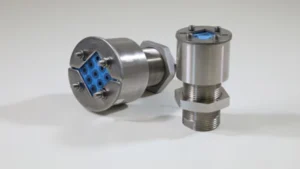
Electrical Continuity
How to measure contact resistance?
Two mainstream foreign measurement methods:
- Four-Point Probe Method (ASTM B667 standard): Place four electrodes on both sides of gasket, pass current (1A) through outer pair, measure voltage with inner pair, calculate resistance. Suitable for lab precision measurement.
- Micro-ohmmeter (Keithley 2450 Source Meter): Clamp directly onto both sides of flange, simulating actual installation state, closer to application.
Qualification standards vary by scenario:
- Avionics (FAA DO-160G): Contact resistance <100mΩ (at 20% compression).
- Aerospace (NASA GSFC-STD-1278): <50mΩ (including vibration environment).
- Military (MIL-DTL-83528): <30mΩ (after extreme temperature cycling).
Measured data (Element Materials report): Silver fiber braid gasket (fiber diameter 0.1mm, 3μm silver plating) shows 22mΩ resistance at 20% compression.
Silver-coated copper powder filled gasket (powder particle size 10μm) shows 45mΩ under same conditions; pure nickel powder gasket shows 78mΩ (affected by eddy currents at high frequency).
How does material structure affect continuity?
Three common foreign structural types:
| Structure Type | Material Formulation | Braid/Fill Method | Contact Resistance (20% Compression) | Advantage | Application Scenario |
|---|---|---|---|---|---|
| Silver Fiber Braid | 80% silver fiber + 20% fluorosilicone rubber | Plain weave (density 12 threads/cm) | 18-25mΩ | Many fiber contact points, resists vibration displacement | Fighter radar waveguide (F-35) |
| Silver-Coated Copper Wire Winding | 70% silver-coated copper wire + 30% FKM | Helical winding (pitch 0.5mm) | 30-40mΩ | Low cost, resistant to bending | Satellite solar panel hinge waveguide |
| Flake Silver Powder Filled | 65% flake silver powder + 35% FVMQ | Random dispersion (particle size 5-20μm) | 40-55mΩ | High shielding effectiveness (dual EMI function) | Shipboard communication antenna grounding |
Note: Silver fiber braid type shows <5mΩ resistance fluctuation under vibration test (50-2000Hz, 5g acceleration, ISO 16750-3); flake silver powder filled type shows up to 15mΩ fluctuation, suitable for static sealing scenarios.
Is grounding continuity sufficient in practice?
- Lockheed Martin F-35 Electronic Warfare System: Waveguide flange uses silver fiber braid gasket, 22% compression, 21mΩ contact resistance (micro-ohmmeter). Under ±15kV electrostatic discharge (ESD, IEC 61000-4-2 standard), resistance increased to 28mΩ (still within spec), internal TR components undamaged.
- Boeing 787 Satellite Communication Antenna: Silver-coated copper wire wound gasket grounds airframe to antenna. During -40°F to 185°F (-40°C to 85°C) cycling, resistance increased from 35mΩ to 42mΩ (after 100 cycles), certified per Boeing D6-81919.
- NASA Mars Rover (Perseverance): Flake silver powder filled gasket used for sample analyzer waveguide grounding. Under Mars diurnal temperature swing (-195°F to 70°F/-125°C to 21°C), resistance stable at 48-52mΩ (NASA JPL report), no grounding interruption over 5-year mission.
What to watch for in design?
- Compression Rate: Below 15%, filler particles/fibers have insufficient contact, resistance spikes sharply (e.g., silver fiber gasket jumps from 20mΩ to 80mΩ). Above 30%, elastomer matrix may crack, breaking conductive paths. Optimal range is 20%-25% (verified per MIL-DTL-83528).
- Surface Roughness: Flange surface too rough (Ra >3.2μm) can scratch gasket surface, exposing insulating matrix. Too smooth (Ra <0.8μm) lacks friction, causing displacement. Ideal value is Ra 1.6-2.5μm (Boeing factory machining standard), controlled by diamond turning.
- Aging Impact: Fluorosilicone rubber (FVMQ) after 1000 hours thermal aging at 200°F (93°C) shows silver fiber gasket resistance increase by 10mΩ (Element Materials). Perfluoroelastomer (FFKM) increases only 3mΩ, suitable for high-temperature engine bays (e.g., GE9X engine sensor waveguide).
What happens if continuity fails?
Foreign lab simulated failure scenarios (Intertek report):
- Displacement due to Vibration: Silver fiber gasket displaced 0.1mm under 10-2000Hz, 10g vibration, resistance increased from 22mΩ to 35mΩ (not failed). Displacement 0.3mm (exceeding design limit) caused resistance jump to 120mΩ (grounding interrupted).
- Chemical Corrosion: FKM gasket in contact with aviation fuel (JP-8) for 30 days, silver plating corroded, resistance increased from 40mΩ to 200mΩ (requires FFKM version).
- Low-Temperature Embrittlement: Ordinary silicone rubber gasket hardens at -65°F (-54°C), fibers fracture under compression, resistance changes from 50mΩ to infinity.
What are the mandatory requirements in standards?
- MIL-DTL-83528: Specifies contact resistance <30mΩ at 20%±2% compression; resistance change <10mΩ after vibration (10-2000Hz, 5g).
- NASA GSFC-STD-1278: Requires resistance <50mΩ during -67°F to 257°F (-55°C to 125°C) cycling; resistance <60mΩ after ±15kV ESD.
- IEC 61000-5-2: Grounding continuity test uses 10A DC current, voltage drop <0.1V (i.e., resistance <10mΩ, only high-end silver fiber models meet).
Material
Matrix selection: Silicone rubber (Germany’s Wacker ELASTOSIL, temperature resistant -60°C to 250°C) or Fluoroelastomer (USA’s DuPont Viton, resistant to 180°C).
Fillers: Silver-coated copper powder (USA’s Metex, cost accounts for 35%-50%, conductivity 5.96×10⁷ S/m) or Carbon nanotubes (Japan’s Toray, 1-5 phr addition).
Auxiliary agents include peroxide curing agent (USA’s Arkema Luperox).
Target performance: Volume resistivity <0.01Ω·cm, shielding effectiveness >60dB (US standard MIL-DTL-83528), compression set <15% (ASTM D395, 70°C×22h), compatible with European/US 5G base stations, military radar door scenarios.
Material Composition
Which matrix material to choose
Four commonly used in Europe/US:
- Silicone Rubber: Germany’s Wacker (Wacker) ELASTOSIL series is typical, e.g., LR 3070, maintains elasticity between -60°C to 250°C, compression set <8% after 22 hours (70°C environment). US Dow Corning’s Silastic 9280-U is similar, elongation at break up to 350%, suitable for sealing equipment doors that open/close frequently.
- Fluoroelastomer: USA’s DuPont (DuPont) Viton series, e.g., A-401C, resistant to 180°C high temperature, oil and solvent resistant, but elasticity slightly poorer, compression set ~12%. 3M’s Fluorel FC 2174 has special formulation, stronger acid/alkali resistance, suitable for chemical pipe joints.
- Hydrogenated Nitrile Butadiene Rubber (HNBR): Japan’s Zeon (Zeon) Zetpol 2010, temperature resistant -40°C to 150°C, more resistant to aging than ordinary NBR, Germany’s LANXESS Therban 3407 compression set controlled below 10%, commonly used for automotive transmission seals.
- Thermoplastic Elastomer (TPE): USA’s Dow (Dow) Engage 8400, can be formed by injection molding, temperature limit 120°C, 30% lower cost than rubber, but tends to harden after repeated compression, suitable for one-time sealing scenarios.
How do fillers make it conductive
Three common categories used in European/US factories:
Carbon-based Fillers
- Carbon Black: USA’s Cabot (Cabot) Regal 330R, furnace-produced nano-sized particles (20nm particle size), add 25 parts per hundred rubber (25 phr), conductivity can reach 10⁰ S/cm, cost about $5/kg. Disadvantage: heavy, increases material density by 15%.
- Carbon Nanotubes (CNT): Japan’s Toray (Toray) TUBALL B531, tube diameter 10nm, length 10μm, aspect ratio 1000:1, adding only 1 phr can increase conductivity to 10³ S/cm, but price is 100 times that of carbon black ($500/kg). Germany’s SGL Group CNT dispersion liquid, treated with ultrasound, prevents agglomeration.
- Graphene: USA’s XG Sciences xGnP M-15, flake structure, conductivity about 500 S/cm with 2 phr addition, also improves material strength (tensile strength increases 20%).
Metal-based Fillers
- Silver-Coated Copper Powder: USA’s Metex Metal Powders SCu-5, copper powder core diameter 1-10μm, coated with 0.1μm thick silver layer, conductivity 5.9×10⁷ S/m (close to pure copper), cost 80/kg (pure silver powder 400/kg). Disadvantage: high density (8.9g/cm³), too much addition causes settling.
- Nickel Powder: Germany’s BASF (BASF) Nickel Powder 123, particle size 3μm, withstands salt spray test (ASTM B117) over 1000 hours without rust, conductivity 1.4×10⁷ S/m, price 20% lower than copper powder.
- Silver-Coated Glass Microspheres: USA’s Potters Industries Silver-Coated Microspheres, hollow glass beads silver-coated, lightweight (density 2.5g/cm³), conductivity 0.1Ω·cm with 30 phr addition, suitable for weight reduction in aviation equipment.
Blending Techniques
University of Michigan 2022 experiment found that blending silver-coated copper powder (30 phr) + carbon nanotubes (2 phr) lowered the percolation threshold (minimum filler ratio for conductivity) from 35 phr for copper powder alone to 22 phr, with stable volume resistivity of 0.005Ω·cm.
Adding other agents to adjust performance
Besides main materials, small amounts of auxiliary agents are needed for processing and lifetime:
- Curing Agent: USA’s Arkema (Arkema) Luperox 101, a peroxide, causes silicone rubber crosslinking after heating at 170°C for 10 minutes, crosslink density 0.8mol/cm³ (too high makes brittle).
- Coupling Agent: USA’s Momentive (Momentive) Silquest A-187, silane type, coats filler surface for better adhesion to rubber. Tests show conductivity retention after 500 hours aging at 85°C increased from 60% to 90% with 1% coupling agent.
- Antioxidant: Switzerland’s Ciba (Ciba) Irganox 1010, phenolic compound, adding 2 phr extends fluoroelastomer lifetime at 150°C from 800 hours to 2000 hours.
- Lubricant: USA’s Struktol WB212, stearate type, adding 1 phr reduces friction during mixing, promotes filler dispersion uniformity, avoiding local poor conductivity.
Example formulation ratios
Formulation designed by USA’s TE Connectivity for a NATO radar door seal:
- Matrix: DuPont Viton A-401C Fluoroelastomer (60 parts)
- Fillers: BASF Nickel powder (30 parts) + Toray Carbon nanotubes (2 parts)
- Auxiliary agents: Arkema Luperox 101 (1 part) + Momentive A-187 (0.5 parts)
Final performance: Volume resistivity 0.008Ω·cm, shielding effectiveness 78dB (X-band), sealing pressure 0.3MPa at 25% compression, passes 10⁷ compression cycles test (simulating door opening/closing).
Performance Evaluation
How to measure electrical performance
Electrical performance determines if material blocks electromagnetic waves. Three key metrics used in Europe/US, all per standards:
- Volume Resistivity: Measured per ASTM D257, probes pressed on material surface measure current. Requirement <0.01Ω·cm (US standard MIL-DTL-83528 Class B), high-end military requires <0.001Ω·cm. E.g., USA Metex silver-coated copper powder (30phr) + Toray CNT (2phr) blend yields 0.005Ω·cm; using carbon black alone (25phr) gives 10⁰ S/cm (equivalent to 10 Ω·cm), 2000 times worse.
- Shielding Effectiveness: Measured per MIL-STD-285 or IEEE 299, for X-band (8-12GHz), Ku-band (12-18GHz). Military radar doors require >60dB, 5G base stations >40dB. USA TE Connectivity’s fluoroelastomer + nickel powder formulation shows 78dB SE in X-band; silicone rubber + silver-coated copper powder (used by Ericsson 5G base station) achieves 65dB in Ku-band.
- Dielectric Constant: Measured at 1GHz per ASTM D150, concerns signal absorption. Ideal value 2.5-3.5, Wacker ELASTOSIL silicone rubber is 2.8, DuPont Viton fluoroelastomer 3.2, higher values attenuate microwave signals.
What mechanical properties to look for
Material must be soft yet resilient, otherwise won’t seal and easily fails. Test methods and data:
- Tensile Strength: ASTM D412 standard, force at break of dumbbell specimen. Silicone rubber (Wacker LR 3070) >6MPa, fluoroelastomer (DuPont Viton A-401C) >8MPa, TPE (Dow Engage 8400) >4MPa. Japan Zeon Zetpol HNBR reaches 10MPa, suitable for automotive transmission high-pressure seals.
- Elongation at Break: Also ASTM D412, length increase at break relative to original. Silicone rubber is softest, Wacker ELASTOSIL reaches 350% (3.5x stretch), fluoroelastomer ~200%, HNBR 250%. Below 150% risks cracking under repeated compression.
- Compression Set: ASTM D395, specimen compressed 25% height, baked at 70°C for 22 hours, measure rebound after release. Requirement <15%, good ones achieve <10%. Wacker silicone rubber 8%, DuPont fluoroelastomer 12%, Dow TPE 15% (just meets). USA 3M Fluorel fluoroelastomer with special filler achieves 9%.
Can it withstand different environments?
Material must perform in various harsh European/US environments, tested per ASTM, ISO standards:
- Temperature Limits:
- High temperature: ASTM D573, bake at 150°C for 168 hours. Fluoroelastomer (DuPont Viton) volume change <3%, silicone rubber (Wacker) <5%; TPE (Dow) hardens at 120°C, volume change 8%.
- Low temperature: ASTM D2137, place in -55°C cold chamber 2 hours, bend 180° without cracking. Silicone rubber passes, fluoroelastomer becomes brittle below -20°C, need low-temperature grade.
- Salt Spray Corrosion: ASTM B117, 5% saline spray 48 hours per cycle. Formulation with nickel powder (BASF Nickel 123) withstands 1000 hours without rust; uncoated copper powder oxidizes in 200 hours, resistivity doubles.
- Damp Heat Aging: ASTM D2247, 95% humidity, 40°C bake 1000 hours. Fluoroelastomer with Ciba Irganox 1010 antioxidant retains >90% tensile strength; without antioxidant retains only 60%.
- Chemical Media: ASTM D471, immersion in hydraulic oil (MIL-H-5606), fuel (JP-8). Fluoroelastomer (DuPont Viton) shows <5% volume change after 72h immersion, nitrile rubber (Japan JSR N240S) swells 15%, unsuitable near fuel tanks.
Is it stable in practical use?
Good lab data isn’t enough; European/US customers require long-term reliability. Two scenarios:
- Military Radar Door (USA Raytheon): Uses DuPont Viton fluoroelastomer + BASF nickel powder, installed on F-35 radar door. Opening/closing 10 times daily, tested 10⁷ compression cycles (simulating 5 years), compression set increased from 12% to 13.5% (still <15%), SE decreased from 78dB to 75dB (passes). Salt spray test (Florida coast) 500 hours, surface shows no rust.
- 5G Base Station Seal (Europe Ericsson): Wacker silicone rubber + Metex silver-coated copper powder, installed in Hamburg base station (coastal high humidity). 100 cycles of -40°C for 24h / 45°C for 24h, dielectric constant changed from 2.8 to 2.9 (stable), no cracking. After 3 years, spot-check volume resistivity remains 0.006Ω·cm (initial 0.005Ω·cm).
- Satellite Payload (NASA LEO satellite): Dow TPE + Toray carbon nanotubes, 15% weight reduction (vs aluminum gasket). After launch vibration 10⁴g, 10⁶ compression cycles, conductivity retention 92% (70% without coupling agent), attributed to Momentive Silquest A-187 coupling agent bonding filler.
Test equipment and method details
European/US labs use these for performance testing:
- Electrical: Keithley 6517B electrometer for resistivity, ETS-Lindgren 5180 shielded room for SE.
- Mechanical: Instron 5967 universal testing machine (500mm/min speed), thickness gauge for compression set.
- Environmental: Weiss WKL 120 salt spray chamber, Binder MK 115 high-temperature chamber (±1°C accuracy).
Material Selection Logic
First consider application
Material selection depends on scenario. Five common European/US application categories, each with different requirements:
- Military Radar Door: USA Raytheon F-35 fighter radar door, opens/closes 10 times daily, must resist salt spray (coastal deployment), withstand vibration (in flight), shield X-band (8-12GHz) electromagnetic waves, and maintain performance from -40°C (high altitude) to 150°C (ground exposure).
- 5G Base Station Seal: Europe Ericsson Hamburg base station, coastal high humidity (90% RH), large temperature swing (-30°C to 45°C), mainly block Ku-band (12-18GHz) interference, IP67 waterproof, cost-sensitive.
- Chemical Pipe Joint: USA Dow chemical reactor, contacts strong acid (sulfuric), organic solvent (acetone), temperature 120°C, pressure 0.5MPa, must resist media corrosion, shielding secondary (internal equipment grounded).
- Automotive Electronics Seal: Germany BMW EV battery pack, oil resistant (transmission oil), vibration resistant (road), temperature -30°C to 125°C, shield low-frequency (AM/FM radio) interference, cost sensitive.
- Satellite Payload: NASA LEO communication satellite, weight reduction priority (rocket launch cost per gram), vacuum environment (-270°C), high radiation, must withstand 10⁴g vibration (launch), shield Ka-band (26-40GHz).
How to choose matrix based on temperature
Matrix temperature resistance is fundamental. Four common European/US matrix types with temperature limits and set data:
- Silicone Rubber: Germany Wacker ELASTOSIL LR 3070, long-term use -60°C to 250°C, short-term 300°C (2 hours), compression set 8% (70°C×22h). USA Dow Corning Silastic 9280-U is softer, 350% elongation, suitable for frequently opened/closed equipment doors.
- Fluoroelastomer: USA DuPont Viton A-401C, long-term 180°C, short-term 250°C, compression set 12%. 3M Fluorel FC 2174 adds fluorinated coating, stronger acid/alkali resistance, 3% volume change after 72h in 98% concentrated sulfuric acid.
- Hydrogenated Nitrile (HNBR): Japan Zeon Zetpol 2010, long-term 150°C, short-term 170°C, more aging resistant than ordinary NBR, Germany LANXESS Therban 3407 compression set 10%, suitable for automotive transmission oil environment.
- Thermoplastic Elastomer (TPE): USA Dow Engage 8400, long-term 120°C, short-term 150°C, fast injection molding (saves 30% labor vs rubber), but hardens after 500k compression cycles (hardness increases 10 Shore A).
Consider corrosion resistance carefully
Contact media determines filler and matrix combination. European/US tests use ASTM D471 liquid immersion:
- Oil-Resistant Scenarios (automotive, machine tools): Choose nitrile rubber (Japan JSR N240S) + copper powder (USA Metex SCu-5), immersion in MIL-H-5606 hydraulic oil 72h, volume swell <5%, conductivity maintained 0.02Ω·cm.
- Solvent-Resistant Scenarios (chemical, printing): Must use fluoroelastomer (DuPont Viton GLT) + nickel powder (Germany BASF Nickel 123), immersion in acetone, toluene 168h, volume change <3%, nickel powder withstands 1000h salt spray (ASTM B117).
- Strong Acid/Alkali Resistance (electroplating, pharmaceutical): Fluoroelastomer + silver-coated glass microspheres, hollow bead density 2.5g/cm³ (60% lighter than metal powder), no corrosion after 72h in 10% hydrochloric acid.
How much electromagnetic shielding (dB) is needed?
Shielding Effectiveness (SE) depends on scenario. European/US standard MIL-DTL-83528 has three classes:
- Class A (>80dB): Military radar, satellite communication. Use silver-coated copper powder (USA Metex SCu-5, 30phr) + carbon nanotubes (Japan Toray TUBALL B531, 2phr), blended volume resistivity 0.005Ω·cm, X-band SE reaches 85dB (Raytheon measured).
- Class B (60-80dB): 5G base stations, medical MRI rooms. Silicone rubber (Wacker ELASTOSIL) + silver-coated copper powder (25phr), Ku-band SE 65dB (Ericsson Hamburg data).
- Class C (40-60dB): Automotive electronics, consumer electronics. Carbon black (USA Cabot Regal 330R, 30phr), volume resistivity 0.5Ω·cm, AM band SE 45dB (BMW iX battery pack).
How tight is the cost constraint?
Material cost divided into three tiers, European/US manufacturer quotes (2023):
- High-end (>50/kg): Silver powder (USA Metex SilverPowder, 400/kg), silver-coated copper powder (80/kg), carbon nanotubes (Toray TUBALL, 500/kg), used in military, satellites.
- Mid-range (10-50/kg): Nickel powder (BASF, 30/kg), fluoroelastomer (DuPont Viton, $25/kg), used in chemical, automotive.
- Low-end (<10/kg): Carbon black (Cabot, 5/kg), silicone rubber (Wacker ELASTOSIL, 8/kg), TPE (Dow Engage, 7/kg), used in 5G base stations, consumer electronics.
Will it fail over long-term use?
Three lifetime indicators, European/US customers require 10+ years data:
- Compression Fatigue: ASTM D573, compress 25% height, 10 cycles per minute. Wacker silicone rubber after 10⁷ cycles: set increases from 8% to 9.5% (still <15%), DuPont fluoroelastomer after 10⁷ cycles increases to 13% (passes).
- Thermal-Oxidative Aging: Bake at 150°C for 2000 hours, fluoroelastomer with Ciba Irganox 1010 antioxidant (2phr) retains 90% tensile strength; without retains 60%.
- Radiation Aging: Satellite materials must pass NASA GEVS standard, Dow TPE after 10krad γ-ray irradiation retains 85% conductivity.
How to blend fillers
Single fillers have shortcomings, European/US factories prefer blends, data from American Coatings Society (ACS) report:
- High shielding + Low cost: Silver-coated copper powder (30phr) + carbon black (10phr), SE 70dB, 60% lower cost than silver powder alone (Metex data).
- Lightweight + High conductivity: Carbon nanotubes (2phr) + silver-coated glass microspheres (20phr), density 2.8g/cm³ (70% lighter than pure copper powder), conductivity 0.1Ω·cm (Potters lab).
- Salt spray resistant + Long life: Nickel powder (25phr) + carbon nanotubes (1phr), 1000h salt spray no rust, SE retains 80dB after 10⁶ compression cycles.
Manufacturing Process
The manufacturing process for conductive elastomer waveguide seals uses silicone rubber or fluorosilicone rubber as the matrix, blended with 30-50 vol% silver-coated copper powder or Ni-C conductive fillers.
Via mixing, compression molding (pressure 10-50 MPa, temperature 160-180°C), curing (time 5-15 minutes), and post-processing.
Achieves volume resistivity <0.01 Ω·cm, GHz band shielding effectiveness >80 dB, compression set <15% (-55°C to 200°C) performance.
Compatible with waveguide flange sealing for 5G base stations, phased array radars, etc.
Raw Material Preparation
Which rubber to choose as base material
Two common foreign types: silicone rubber and fluorosilicone rubber.
Silicone rubber uses VMQ series (vinyl methyl silicone rubber), temperature range -55°C to 200°C, low compression set (<20% after 200°C×22h), suitable for 5G base station environments from ambient to medium-high temperature.
Must be dried before use: place in vacuum oven at 120°C for 4 hours until moisture content <0.1%.
Fluorosilicone rubber uses FVMQ series (fluoro vinyl methyl silicone rubber), more oil resistant (e.g., aviation fuel), ozone resistant than silicone rubber, suitable for aircraft waveguide interfaces.
Drying conditions stricter: 110°C vacuum for 6 hours, moisture <0.08%, because fluoro groups easily adsorb moisture.
Both rubbers must have Mooney Viscosity measured, raw rubber Mooney controlled at 40-60 MU (ML1+4, 100°C).
Conductive Fillers:
Fillers determine conductivity. Three types commonly used in foreign factories, ranked by performance and cost:
- Silver-coated copper powder: Most common. Copper core diameter 1-10μm, coated with 0.1-0.3μm thick silver layer (99.9% pure). Proportion 30-50 vol% (volume percent), too much makes hard, too little raises resistance. Conductivity near pure silver (resistivity ~1.6×10⁻⁸ Ω·m), but 60% lower cost than silver powder. Suitable for high frequency above 10 GHz (e.g., phased array radar).
- Nickel-coated graphite powder: Graphite core particle size 5-20μm, nickel coating 0.5-1μm thick. Proportion 40-60 vol%, lower cost (40% cheaper than silver-coated copper), but poorer conductivity (resistivity ~5×10⁻⁶ Ω·m). Suitable for mid-low frequency (<10 GHz), e.g., ordinary communication equipment.
- Carbon nanotubes (CNTs): Single-wall or multi-wall, outer diameter 10-20nm, aspect ratio >1000. Proportion 5-10 wt% (weight percent), expensive (5x cost of silver-coated copper), but allows thinner gasket. Often blended with silver powder (20 vol% each) to improve dispersion.
Fillers must be sieved upon receipt, using air classifier to remove >20μm large particles (avoid puncturing rubber), then ultrasonic cleaned 3 times (solvent: isopropyl alcohol) to remove surface oil.
Filler Pre-treatment:
Use silane coupling agent (e.g., KH-550), concentration 1-2 wt% (relative to filler weight).
Steps: Place filler in high-speed mixer (speed 1000 rpm), slowly spray coupling agent solution (coupling agent:ethanol = 1:9), mix 10 minutes;
Then heat to 80°C, hold 30 minutes, allowing hydrolyzed coupling agent to coat filler surface.
After treatment, measure contact angle: water contact angle decreases from 120° to <90°, indicating improved rubber affinity.
Additives:
Additives must be precisely dosed, measured in phr (parts per hundred rubber), tolerance ±0.1 phr.
- Curing Agent: Use dicumyl peroxide (DCP), 2-3 phr. Causes rubber molecular chain crosslinking, too little weak, too much brittle. Add at temperature <50°C to prevent premature curing.
- Structure Control Agent: Hydroxyl silicone oil, 1-2 phr.
- Antioxidant: Hindered phenol (e.g., Irganox 1010), 0.5-1 phr. Absorbs UV and oxygen, tensile strength retention >80% after 500h aging at 200°C.
- Flame Retardant (Optional): Aluminum hydroxide, 10-15 phr.
Raw Material Inspection:
Each batch must have Certificate of Analysis (COA), test 3 indicators:
- Rubber: FTIR (Fourier-transform infrared spectroscopy) confirms no impurity peaks, e.g., no EPDM mixing.
- Filler: XPS (X-ray photoelectron spectroscopy) measures silver/nickel coating thickness, e.g., silver-coated copper must have 0.1-0.3μm silver layer.
- Additives: HPLC (High-performance liquid chromatography) measures purity, DCP purity >98%, otherwise curing efficiency low.
Storage warehouse temperature 20-25°C, humidity <40%RH.
Mixing
What equipment for mixing
Foreign factories primarily use two machines: internal mixer and open mill.
Batch production uses internal mixers like Banbury or Farrel models, capacity 10-50 L, good sealing, temperature control, dust prevention.
Open mills used only for lab formulation or small batches, two rollers gap 0.5-2 mm, rely on shear force, low efficiency but allows real-time observation.
Internal mixers have rotor types, commonly tangential rotor, front rotor speed 30-40 rpm, rear rotor 20-30 rpm, speed ratio 1.5:1, providing both strong shear and folding mixing.
Machine has water-cooled jacket, maintains temperature within ±1°C of set point.
First, plasticize the rubber
Cut silicone or fluorosilicone rubber into 5 cm cubes, place in internal mixer, set temperature 40-60°C, run empty 2 minutes to preheat.
Then add rubber cubes only, mix 5-10 minutes.
Measure Mooney Viscosity per ASTM D1646, 4 minutes at 100°C (ML1+4).
Raw rubber Mooney typically 40-60 MU, after plasticizing should drop to 30-50 MU.
Plasticized compound is dough-like, non-sticky, easily removable from mixer.
Adding filler requires care, not all at once
Conductive fillers (silver-coated copper, nickel-coated graphite) must be added in batches, too much at once causes agglomeration. Sequence in mixer with plasticized rubber:
- First add structure control agent: Hydroxyl silicone oil (1-2 phr), add slowly via dropper, mix 3 minutes.
- Add partial filler as “base”: Add 1/3 of total conductive filler (e.g., total 40 vol%, add 13 vol% now), increase speed to 35 rpm, mix 5 minutes.
- Add remaining filler in two batches: Interval 5 minutes between batches, each 1/3 of total. During addition, close mixer lid tightly, use vacuum pump (-0.08 MPa) to remove air.
Temperature must not exceed 80°C throughout.
Silver-coated copper above 80°C causes silver oxidation (blackening), nickel-coated graphite above may cause nickel layer detachment.
Water cooling jacket runs continuously, temperature sensor near rotor, automatically reduces speed if overheating.
Timing is critical for adding agents
After filler addition, mix 10 minutes until compound color uniform, no visible particles, then add curing agent and other additives.
Curing agent DCP (2-3 phr) must be dissolved in acetone solution (DCP:acetone=1:5) before adding, not sprinkled directly.
Addition temperature must be <50°C, use ice water to cool mixer exterior, mix 5 minutes immediately after adding, then discharge compound promptly.
Other additives like antioxidant (Irganox 1010, 0.5-1 phr), flame retardant (aluminum hydroxide, 10-15 phr) can be added with DCP or separately, mix 5 minutes only.
Compound with additives cannot be mixed long, otherwise DCP pre-cures (scorching), compound hardens and becomes unusable.
How to know mixing is complete
Completion determined by hard metrics, not feel:
- Dispersion: Sample compound examined under optical microscope (200x magnification), conductive filler particles completely surrounded by rubber, no agglomerates >50μm. Or use laser diffraction particle size analyzer, volume mean particle size <10μm.
- Mooney Viscosity: Measure again: 30-50 MU after plasticizing, rises to 40-60 MU after filler/additives (normal due to increased viscosity).
- Initial Cure Time (T90): Measured by MDR (Moving Die Rheometer) at 170°C, time from minimum torque to 90%, controlled 8-12 minutes.
- Density: Measured by water displacement, controlled 1.8-2.2 g/cm³.
Common mixing problems and solutions
- Filler agglomeration: Possibly silane coupling agent not properly treated, or added too fast. Solution: re-disperse filler ultrasonically 10 minutes (ethanol solvent), or add 0.5 phr dispersant during mixing.
- Compound sticking to mixer wall: Insufficient plasticizing, or insufficient hydroxyl silicone oil. Add 0.5 phr hydroxyl silicone oil, re-plasticize 5 minutes.
- Temperature exceedance: Insufficient mixer cooling water flow, increase inlet valve, or reduce filler per batch.
Molding
Why choose compression molding as the main process
One reason: it handles complex 3D structures, like choke groove on waveguide flanges—micro-scale grooves with aspect ratio 1:3, depth 0.5-2 mm, compression molding can form in one shot with sufficient precision.
Other processes: extrusion only makes straight strips, injection molding fast but molds expensive, transfer molding for metal inserts, none match compression molding for seal structure needs.
Detailed compression molding procedure
Equipment and Mold
- Press: Use hydraulic press, capacity 50-200 tons, pressure control accuracy ±0.5 MPa. Platen with heating plates, temperature uniformity ±2°C.
- Mold: Cavity made of tool steel (e.g., AISI H13) or aluminum alloy (e.g., 6061-T6). Tool steel conducts heat slowly (45 W/m·K) but wear-resistant, suitable for high volume (>100k pieces). Aluminum conducts heat fast (200 W/m·K) heats/cools quickly, suitable for small batch trials. Cavity surface roughness Ra <0.8 μm (diamond polished) to prevent compound sticking.
- Mold Structure: Split into upper and lower halves, lower half has choke groove protrusions (matching flange interface), upper half has corresponding recess. Mold closing gap 0.02-0.05 mm to prevent excessive flash.
Operating Steps (Per foreign factory SOP)
- Preform preparation: Mixed compound cut by cutting machine into 5×5×2 cm blocks, thickness tolerance ±0.1 mm.
- Mold preheating: Heat plates set 10°C below curing temperature (silicone 150°C, fluoro 160°C), preheat 30 minutes ensuring cavity temperature uniform.
- Loading and closing: Place preform at cavity center, use pick-and-place robot for positioning (deviation <0.2 mm). Closing in three stages: slow close (5 mm/s) until contact, medium speed (20 mm/s) to set pressure, slow close (2 mm/s) to final position, avoiding air entrapment.
- Simultaneous curing and molding: Pressure 10-50 MPa (high for thick gaskets, low for thin), temperature 160-180°C (silicone)/170-190°C (fluoro), time 5-15 minutes (based on thickness, ~5 min per mm).
- Demolding and part removal: After cure, press depressurizes, use ejector pins to push part from lower mold, speed 10 mm/s to avoid surface scratching.
Key mold design details
- Choke groove precision: Groove depth 0.5-2 mm, tolerance ±0.02 mm; width 1.5-6 mm (aspect ratio 1:3), sidewall verticality <0.1°. Machined by CNC milling, then finished by EDM (Electrical Discharge Machining) for corners (radius <0.1 mm) to prevent compound flow dead zones.
- Vent grooves: Shallow grooves 0.01-0.02 mm deep on mold parting line, spaced 5 mm, to vent air entrapped during mixing (air causes bubbles, leading to local resistance spikes).
- Alignment pins: Two cylindrical pins (diameter 5 mm, h6 tolerance) align upper/lower molds, fit clearance <0.01 mm, ensuring no misalignment during closing.
Comparison of other molding processes (foreign)
| Process Type | Suitable Scenario | Pressure(MPa) | Temperature(°C) | Typical Cycle | Advantage | Limitation |
|---|---|---|---|---|---|---|
| Transfer Molding | Products with metal contacts/inserts | 20-60 | 170-190 (Fluoroelastomer) | 8-20 minutes | Compound not exposed, suitable for fine structures | High mold cost (+30%) |
| Injection Molding | High-speed automated line (>30 parts/min) | 50-100 | 150-170 | 30 sec/part | High efficiency, good consistency | Compound Mooney viscosity must be <30 MU |
| Extrusion | Making seal strips (non-complex joints) | 5-15 | 120-140 | Continuous production | Suitable for long lengths, low cost | Cannot form choke grooves |
Common molding problems and solutions
- Bubbles: Cause: insufficient venting or moist preform. Solution: add network vent grooves on cavity (depth 0.015 mm, width 5 mm), vacuum dry preform 2 more hours (moisture <0.05%).
- Short shot: Preform too small or closing pressure insufficient. Solution: preform volume 5-10% larger than cavity volume, increase pressure to upper limit (50 MPa).
- Dimensional out-of-tolerance: Mold thermal expansion or press pressure instability. Solution: use low-expansion steel mold (e.g., Invar 36), press equipped with pressure stabilizer (fluctuation <1%).
Initial inspection after molding
After demolding, first check appearance: use stereo microscope (10x) to inspect surface for cracks (length >0.5 mm reject), foreign particles (>50 μm remove).
Then use CMM (Coordinate Measuring Machine) to measure choke groove depth (±0.02 mm), overall gasket thickness (±0.03 mm), ensuring match with flange interface (per MIL-DTL-83528 standard).
Compression molded gasket density >98% (measured by helium pycnometer), conductive filler compacted, pathways continuous, resistance stable at <0.01 Ω·cm.