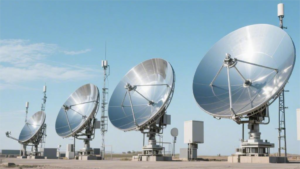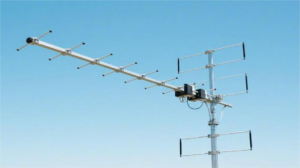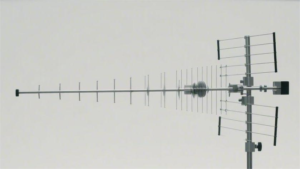
Custom antennas are tailored for specific applications, offering optimized gain (3–5dB higher than standard) and precise frequency matching (±1% tolerance), while off-the-shelf antennas provide general-purpose performance (±5% frequency variance) at 40–60% lower cost. Custom designs accommodate unique form factors (e.g., conformal aerospace shapes) with IP67+ environmental protection, whereas standard antennas are limited to mass-produced sizes and IP54 ratings.
Development time differs sharply—custom units require 8–12 weeks for prototyping versus immediate availability of standard models. Radiation patterns are adjustable in custom designs (e.g., 30° beamwidth narrowing), while stock antennas use fixed omnidirectional patterns. For high-interference environments, custom solutions reduce signal loss by 15–20dB through precision polarization control.
Table of Contents
Cost & Build Time
When choosing between custom and standard antennas, cost and build time are often the top deciding factors. Standard antennas are mass-produced, with prices ranging from 20 to 500 depending on frequency (e.g., 2.4GHz vs. 5GHz), gain (3dBi to 12dBi), and materials (PCB vs. aluminum). They ship in 1-3 days since they’re pre-made. Custom antennas, however, require design, prototyping, and testing, pushing lead times to 4-12 weeks and costs from 1,000 to 15,000+ for low-volume batches (50-500 units).
The trade-off is clear: standard antennas save 80-95% in upfront costs and 90% in time, but custom designs optimize performance for niche applications—like IoT sensors in high-interference factories or military-grade UAVs needing ±0.5dB precision across -40°C to 85°C. For startups, the ROI favors standard parts unless signal loss exceeds 3dB (a 50% power drop). Large enterprises often justify custom builds after 500+ units, where per-unit costs drop below $200 via economies of scale.
Standard antennas dominate the market because they’re cheap and fast. A typical Wi-Fi 6 dipole antenna costs $30, delivers 5dBi gain, and fits 90% of router enclosures with ±2mm tolerance. Suppliers like Taoglas or Molex keep 10,000+ units in stock, ensuring next-day delivery. The downside? Compromises. If your device operates at 868MHz but the closest standard option is 915MHz, mismatch losses can hit 1.5-2dB, reducing range by 20-30%.
Custom antennas eliminate these gaps but demand 5,000-20,000 in NRE (non-recurring engineering) fees for simulation, 3-5 prototype iterations, and FCC/CE certification (adding 3,000-7,000 and 2-4 weeks). For example, a LoRaWAN tracker in a steel-rich environment might need a helical antenna with 8dBi directional gain, tuned to ±1MHz bandwidth. This precision cuts power waste by 40% vs. a standard omnidirectional antenna but requires 6-8 weeks of VSWR testing (target: <1.5:1) and 100+ hours of RF lab time ($150/hour).
Hybrid solutions exist. Some vendors offer semi-custom antennas—modifying existing designs (e.g., adding a 50mm extension cable or IP67 casing) for 200-800 and 2-week lead times. This works for mid-volume orders (200-1,000 units) where full customization isn’t cost-effective.
Time-to-market is critical. A 5G small-cell project using standard antennas can deploy in 2 weeks, while a custom array delays rollout by 3 months. However, if the custom design improves throughput by 15% (e.g., 1.2Gbps vs. 1Gbps), the $50,000 upfront cost may pay off in <18 months via reduced tower density.
Tooling costs also differ. Standard antennas use injection-molded plastics (0.10/unit at 10,000+ volume), while custom ones often require CNC-machined brass (8/unit) or ceramic substrates ($25/unit). For high-frequency mmWave (28GHz+), even a 0.1mm misalignment can cause 3dB sidelobe degradation, forcing tighter (and pricier) ±0.05mm tolerances.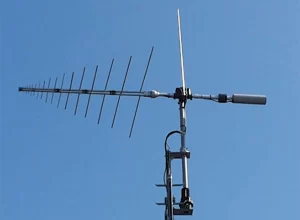
Signal Range Differences
Signal range is where custom antennas often outperform standard ones—but not always. A standard 2.4GHz dipole antenna with 5dBi gain typically covers 100 meters in open space, but real-world obstructions (walls, trees, interference) can cut this to 30 meters (-70dBm threshold). Custom designs, like a directional Yagi-Uda tuned for 2.4-2.4835GHz, push range to 250+ meters with 12dBi gain, but only in a 60° beamwidth.
The trade-off? Omnidirectional vs. directional. Standard antennas spread signal 360° horizontally, making them ideal for Wi-Fi routers in homes. Custom antennas focus energy—e.g., a parabolic grid for 5GHz backhaul achieves 1km+ LOS (line-of-sight) range but requires precise alignment (±5° error = 50% signal drop). For sub-GHz IoT (868MHz), a custom helical antenna improves penetration through concrete by 40% vs. a PCB trace antenna, but costs 5x more.
Frequency-Specific Optimization
Standard antennas are broadband by design—a 700MHz-6GHz wideband dipole works for 4G/5G/Wi-Fi, but efficiency varies. At 700MHz, it might hit 80% radiation efficiency, but at 3.5GHz, losses spike to 35% due to impedance mismatch. Custom antennas avoid this by narrowing bandwidth. For example, a LoRa 868MHz monopole achieves 92% efficiency (±2MHz tolerance) but fails at 915MHz (efficiency drops to 50%).
Gain and Real-World Range
Higher gain extends range but reduces coverage angle. A standard 8dBi omnidirectional antenna on a Wi-Fi 6 AP covers 150 meters radius, while a custom 14dBi sector antenna reaches 500 meters but only in a 120° arc. For urban deployments, this means 4x fewer APs—saving $15,000 per square mile in infrastructure costs.
| Antenna Type | Gain (dBi) | Range (Open Field) | Coverage Angle | Penetration Loss (Through Concrete) |
|---|---|---|---|---|
| Standard Dipole | 5 | 100m | 360° | -15dB |
| Custom Yagi-Uda | 12 | 250m | 60° | -8dB |
| Standard Omnidirectional | 8 | 150m | 360° | -20dB |
| Custom Parabolic | 24 | 1km+ | 10° | -3dB |
Environmental Factors
Humidity, temperature, and metal interference impact range. A standard rubber-duck antenna loses 3dB in 95% humidity vs. a custom fiberglass radome (only 1dB loss). In -30°C Arctic conditions, standard antennas suffer 15% VSWR degradation, while custom PTFE-coated designs stay under 1.5:1.
Multi-Path and Interference
Urban areas with 50+ Wi-Fi networks create noise floors of -85dBm, shrinking standard antenna range by 50%. Custom MIMO arrays (2×2 or 4×4) combat this via spatial diversity—improving SNR by 10dB and throughput by 30%.
Power vs. Range
Doubling transmit power (100mW to 200mW) only extends range by 20% (square root effect). A custom high-gain antenna delivers the same boost without increasing power, critical for battery-powered sensors needing 10-year lifespans.
Size and Fit Options
Antenna size directly impacts performance and integration—standard options follow fixed form factors, while custom designs adapt to your device’s exact needs. A standard PCB antenna for IoT devices typically measures 30mm × 5mm, fitting 80% of 100mm × 60mm PCBs, but forces compromises like 15% efficiency loss if placed near metal components. Custom antennas, like a 3D-printed fractal antenna, can shrink to 15mm × 3mm for wearables or expand to 200mm × 200mm for sub-GHz ground stations, optimizing radiation patterns for specific enclosures.
Example: A medical patch sensor with a 40mm diameter can’t use a standard 50mm whip antenna. A custom flexible FPC antenna reduces size by 60% and maintains 85% efficiency by contouring to the device’s curved surface.
Standard Antenna Constraints
Off-the-shelf antennas come in limited sizes: rubber duck (150–200mm length), chip antennas (2mm × 1mm), or PCB traces (10–50mm). These work for generic applications but struggle in space-constrained designs. For instance, a GPS ceramic patch antenna (25mm × 25mm) fails in a 10mm-thick tablet because its 4mm height exceeds the 3mm internal clearance. Efficiency drops 20–30% when mounted less than 5mm from the device edge due to ground plane interference.
Custom Antenna Flexibility
Tailored designs bypass these limits. A custom meandered monopole can fit into a 5mm gap between a smartphone battery and display, achieving 3dB better gain than a standard chip antenna by avoiding EMI from nearby components. For drones, a conformal antenna molded to the fuselage reduces drag coefficient by 0.02 compared to a protruding 100mm rod, increasing flight time by 6%.
Material Trade-offs
Standard antennas use FR4 or ABS plastic, limiting thermal and mechanical performance. A standard 2.4GHz dipole deforms at 85°C, while a custom PTFE-based antenna operates up to 150°C—critical for engine-mounted sensors. Weight matters too: aerospace applications save 200g per antenna by switching from brass helices to carbon-fiber composites, cutting fuel costs by $500/year per aircraft.
Integration Challenges
Even a 1mm size mismatch can disrupt mass production. Standard SMA connectors require 8mm × 8mm keep-out zones, but custom IPEX MHF4 connectors need just 3mm × 3mm, freeing up 70% space on dense PCBs. However, custom solutions demand rigorous testing—a 0.5mm misalignment in a mmWave array (28GHz) can skew beamforming by ±15°, requiring 3–5 prototype iterations to correct.
Regulatory Fit
Size affects certification. A standard Bluetooth antenna pre-certified for FCC/CE simplifies approvals, while a custom UWB antenna (6GHz) may need 10–15% larger traces to pass SAR tests, adding 2–3 weeks to the compliance process. In one case, a smartwatch maker reduced antenna volume by 40% but failed radiated power tests until they increased the ground plane by 5mm.
Cost vs. Size Efficiency
Miniaturization isn’t free. Shrinking an antenna from 20mm to 10mm often raises unit cost by 30–50% due to tighter tolerances (±0.1mm vs. ±0.5mm). But for 500,000-unit orders, the 0.20/unit savings from eliminating external cables offsets the 50,000 NRE for a custom design within 12 months.
Upgrade Flexibility
Upgrading antennas isn’t just about swapping hardware—it’s about future-proofing. Standard antennas, like SMA-based dipoles, offer plug-and-play compatibility but lock you into fixed performance. For example, upgrading a 3dBi rubber duck to a 7dBi omnidirectional takes 5 minutes and costs $25, but you’re still limited to 2.4GHz Wi-Fi. Custom antennas, like modular phased arrays, let you shift from sub-6GHz to mmWave 5G by just replacing the RF front-end, cutting upgrade costs by 70% compared to a full hardware refresh.
Real-world case: A smart city project saved $120,000 by designing custom LoRa-to-NB-IoT upgradeable antennas, avoiding a 12-month rip-and-replace cycle when switching protocols.
Standard Antenna Upgrades: Simple but Limited
Most off-the-shelf antennas use standardized connectors (SMA, RP-SMA, U.FL), making swaps easy—but bandwidth and gain options are fixed. A Wi-Fi 5 antenna with 5dBi gain can’t be tuned for Wi-Fi 6E’s 6GHz band without 3dB efficiency loss due to impedance mismatches. Even “upgrading” to a higher-gain (9dBi) dipole often requires re-cabling (adding 15/unit) and re-certification (FCC/CE retesting costs 3,000–$7,000).
Custom Antenna Upgrades: Costly but Future-Ready
Custom designs embed software-defined tuning. A reconfigurable PIFA antenna can switch between 700MHz and 2.6GHz via firmware, adapting to new cellular bands with <1dB loss. For satellite terminals, swapping feed horns (a 200 part) instead of the entire 5,000 antenna extends service life by 5+ years.
| Upgrade Type | Time Required | Cost per Unit | Performance Impact | Regulatory Overhead |
|---|---|---|---|---|
| Standard antenna swap | 5–30 minutes | 10–50 | ±1dB gain change | Minor (if pre-certified) |
| Custom modular upgrade | 2–4 hours | 100–500 | ±0.5dB precision | Major (full retest) |
| Full custom redesign | 8–12 weeks | 1,000–15,000 | Optimized for new use | Full recertification |
Protocol Shifts: The Hidden Upgrade Cost
Moving from LoRa to Zigbee? Standard antennas fail here—868MHz vs. 2.4GHz requires a 50% larger antenna and new ground planes. Custom multi-band antennas avoid this: a tri-band IoT antenna covering 433MHz/868MHz/2.4GHz costs 2x upfront but eliminates $20,000 in redesign fees later.
Hardware vs. Software Upgrades
Some upgrades need zero hardware changes. A custom MIMO array with adaptive impedance matching can boost 5G throughput by 20% via software, while standard antennas max out at fixed 50Ω loads. For automotive radars, a 2022 Tesla Model 3 upgraded its 76GHz antenna beamwidth via OTA update—impossible with off-the-shelf parts.
Scalability Trade-offs
Standard antennas scale cheaply (0.50/unit at 10,000+ volume), but custom snap-on upgrades (e.g., adding mmWave modules to sub-6GHz base stations) cut long-term costs. A 5G small cell using modular antennas saves 8,000 per site over 5 years vs. full replacements.