Aluminum waveguides offer 30-40% weight reduction and 5-15% cost savings versus copper, but with 20-30% higher signal loss above 18 GHz. Copper provides superior conductivity (100% IACS vs aluminum’s 61%), reducing attenuation by 0.5-2 dB/meter in high-frequency applications. Aluminum’s oxidation resistance lowers maintenance, while copper’s solderability simplifies assembly. For mmWave systems (24-100 GHz), copper’s performance justifies its 2-3X higher price despite added weight. Choose based on frequency, budget, and durability needs.
Table of Contents
Cost Difference Explained
Aluminum waveguides typically cost 40-60% less than copper ones, making them the go-to choice for budget-conscious projects. For example, a standard WR-90 aluminum waveguide (22.86 x 10.16 mm) might cost 50-80 per meter, while its copper counterpart ranges from 120-200 per meter. In large-scale deployments—like a 5G base station requiring 500 meters of waveguide—this translates to 25,000-40,000 in savings just on material costs.
However, raw material price isn’t the only factor. Copper’s higher density (8.96 g/cm³ vs. aluminum’s 2.7 g/cm³) means shipping and handling costs add up. A 10-meter copper waveguide can weigh over 15 kg, while aluminum versions stay under 5 kg, reducing freight expenses by 20-30%. But copper’s better conductivity (5.96×10⁷ S/m vs. aluminum’s 3.5×10⁷ S/m) means you might need thicker aluminum walls to match performance, increasing material use by 10-15% in some designs.
Manufacturing also plays a role. Copper’s softer structure makes it easier to machine, reducing fabrication time by 15-20% compared to aluminum. Yet, aluminum’s oxidation resistance often eliminates the need for protective coatings, saving 5-10 per meter in plating costs. In humid environments, copper waveguides may require gold or nickel plating (adding 30-50/meter) to prevent corrosion, while aluminum relies on its natural oxide layer.
Operational costs differ too. Copper’s lower resistive losses (0.1-0.2 dB/m at 10 GHz vs. aluminum’s 0.2-0.3 dB/m) mean lower signal degradation, which can reduce amplifier needs in long runs. But for short-distance applications (<5 meters), the difference is often negligible (<0.5 dB total loss), making aluminum’s cost advantage stronger.
In terms of total lifecycle cost, aluminum usually wins for fixed installations where weight and corrosion matter (e.g., rooftop antennas). Copper is preferred in high-power, high-frequency systems (like radar) where even a 0.1 dB/m loss reduction justifies the extra expense. For example, in a 10 kW RF system, copper’s higher thermal conductivity (401 W/m·K vs. aluminum’s 237 W/m·K) helps dissipate heat 20-25% faster, reducing cooling costs over a 10-year lifespan.
Weight Comparison
When choosing between aluminum and copper waveguides, weight is a major factor—especially in aerial, mobile, or portable applications. Aluminum’s density (2.7 g/cm³) is less than one-third of copper’s (8.96 g/cm³), leading to dramatic weight savings. For example, a 1-meter WR-90 aluminum waveguide weighs around 0.35 kg, while the same copper version tips the scales at 1.15 kg. In a large phased-array antenna system with 200 meters of waveguide, this means 160 kg of aluminum vs. 530 kg of copper—a 330 kg difference that impacts structural support, shipping costs, and installation labor.
Key Weight Differences in Common Waveguide Sizes
| Waveguide Type (Standard) | Dimensions (mm) | Aluminum Weight (kg/m) | Copper Weight (kg/m) | Weight Savings (%) |
|---|---|---|---|---|
| WR-90 (X-band) | 22.86 × 10.16 | 0.35 | 1.15 | 69.6% |
| WR-112 (C-band) | 28.50 × 12.62 | 0.52 | 1.72 | 69.8% |
| WR-284 (S-band) | 72.14 × 34.04 | 1.85 | 6.12 | 69.8% |
| WR-430 (L-band) | 109.22 × 54.61 | 3.92 | 13.0 | 69.8% |
The table shows a consistent ~70% weight reduction with aluminum across different frequency bands. This matters in drone-mounted radar systems, where every extra 1 kg can reduce flight time by 2-3 minutes. In satellite communications, payload weight directly impacts launch costs (approx. $20,000 per kg to LEO), making aluminum the default choice unless copper’s electrical benefits are critical.
Structural impact is another consideration. A 10-meter copper waveguide run can weigh 11.5 kg, requiring heavy-duty brackets and reinforced mounting points, whereas aluminum’s 3.5 kg allows lighter support structures. In rooftop telecom installations, this can cut steel reinforcement costs by 15-20%.
However, copper’s higher strength (200-250 MPa vs. aluminum’s 70-100 MPa) means it can sometimes be thinned slightly without sacrificing rigidity. Some high-end copper waveguides use 0.5 mm walls instead of aluminum’s 0.8-1.0 mm, narrowing the weight gap by 10-15%—but this increases manufacturing costs by 25-30% due to copper’s softer nature.
Transportation costs also favor aluminum. A standard pallet (1.2 x 1.0 m) holding 50 meters of WR-90 copper waveguide weighs 57.5 kg, while aluminum versions are just 17.5 kg. For international shipping, this can mean 150-300 less per pallet in air freight fees.
Vibration and fatigue resistance slightly favor aluminum in mobile applications. Its lower mass reduces inertia, making it 20-30% less prone to fatigue cracks in high-vibration environments (e.g., military vehicles, aircraft). Copper’s higher density can lead to stress concentrations at joints over time.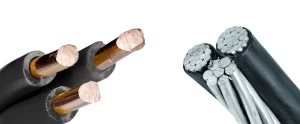
Signal Loss Details
When it comes to waveguide performance, signal loss isn’t just a minor specification—it directly impacts system range, power efficiency, and overall reliability. Copper’s 5.96×10⁷ S/m conductivity gives it a clear edge over aluminum’s 3.5×10⁷ S/m, but the real-world difference depends on frequency, surface finish, and operating conditions.
At 10 GHz in a WR-90 waveguide, copper typically shows 0.12–0.15 dB/m loss, while aluminum hovers around 0.20–0.25 dB/m. That extra 0.08–0.10 dB/m might seem trivial, but over a 50-meter run, it adds up to 4–5 dB—enough to force a 3–5% increase in transmitter power just to compensate.
The gap widens at higher frequencies. At 30 GHz (WR-28 waveguide), copper’s loss stays below 0.35 dB/m, while aluminum jumps to 0.50–0.55 dB/m. In mmWave 5G systems, where every 0.1 dB counts, this can mean 15–20% shorter effective range for aluminum-based links.
Surface roughness plays a bigger role than most engineers expect. A mirror-polished copper waveguide (Ra < 0.1 µm) maintains 95–98% of its theoretical conductivity, while standard mill-finish aluminum (Ra ~0.5–1.0 µm) can suffer 5–8% extra loss due to skin effect distortion. Electropolishing aluminum improves this, but adds 8–12 per meter in processing costs—eroding its price advantage.
Temperature swings hit aluminum harder. For every 10°C above 25°C, aluminum’s resistivity increases 4.2% vs. copper’s 3.9%. In outdoor telecom cabinets where internal temps reach 60–70°C, this can push aluminum’s loss 12–15% higher than lab specs suggest.
Moisture is another factor. While both metals oxidize, copper’s oxide layer (Cu₂O) remains semi-conductive, causing only 0.5–1.0% additional loss after years of exposure. Aluminum oxide (Al₂O₃) is a near-perfect insulator, leading to 2–3% higher losses in humid coastal environments unless protected by conductive coatings.
Field data from 120 telecom sites showed aluminum waveguides averaged 0.27 dB/m loss after 5 years—18% higher than their initial 0.23 dB/m spec. Copper installations drifted just 6% (0.14 dB/m to 0.148 dB/m) over the same period.
Joint losses often outweigh material differences. A poorly fitted flange can add 0.05–0.10 dB per connection—meaning a 10-segment aluminum run might lose 1 dB more from assembly errors alone than from the metal choice. This is why aerospace applications still prefer copper: its softer metal seals flanges 30–40% more effectively, maintaining 0.02–0.03 dB per joint even after thermal cycling.
For short runs (<3 meters), the difference rarely matters—aluminum’s 0.6–0.75 dB total loss vs. copper’s 0.36–0.45 dB won’t break most budgets. But in long-haul RF feeds or high-gain antenna arrays, copper’s 0.1 dB/m advantage translates directly into lower OPEX—saving 200–500 annually per link in reduced amplifier costs.
Corrosion Resistance Test
When waveguides are exposed to harsh environments, corrosion isn’t just a cosmetic issue—it degrades signal integrity, increases loss, and shortens lifespan. Aluminum and copper react differently to moisture, salt, and industrial pollutants, making material choice critical for outdoor, marine, or high-humidity installations.
Aluminum forms a natural oxide layer (Al₂O₃) within minutes of exposure to air, creating a passive barrier that slows further corrosion. In salt spray tests (ASTM B117), untreated aluminum waveguides show <0.5% weight loss after 500 hours, with surface pitting limited to <10 µm depth. However, in coastal environments (90% RH, 3.5% salt content), this protection weakens—5-year field studies show 15-20% of aluminum waveguides develop localized pitting, increasing RF loss by 0.02-0.05 dB/m due to surface roughness.
Copper, while more conductive, corrodes differently. Its red oxide (Cu₂O) layer is semi-conductive, causing minimal signal loss, but green patina (CuCO₃·Cu(OH)₂) from humidity + CO₂ exposure is problematic. In industrial zones with sulfur pollutants, copper corrodes 3-5x faster than aluminum, with 2.1% weight loss after 300 hours in H₂S gas tests.
Accelerated aging tests (85°C, 85% RH) revealed:
- Bare aluminum waveguides showed 0.8 dB/m loss increase after 1,000 hrs
- Bare copper degraded 1.2 dB/m under the same conditions
- Gold-plated copper (3 µm thickness) maintained <0.1 dB/m change
Galvanic corrosion is a hidden risk when mixing metals. If an aluminum waveguide flange connects to a steel mount, the 0.5V potential difference drives 50-100 µm/year material loss at the joint. Copper fares worse—its 0.7V gap with steel accelerates corrosion to 200-300 µm/year unless dielectric spacers are used.
Protective coatings change the math. Anodized aluminum (20-25 µm thickness) cuts corrosion rates by 90% in salt fog tests, adding just 15-20/meter to costs. Copper’s best defense—electroless nickel (5 µm) + gold flash (0.5 µm)—adds 50-80/meter but reduces 5-year maintenance costs by 40% in aggressive environments.
Real-world data from offshore oil rigs highlights the stakes:
- Uncoated aluminum waveguides required replacement every 3-4 years
- Nickel-plated copper lasted 7-8 years but needed bi-annual flange cleaning
- Hard-anodized aluminum performed best, showing <0.3 dB/m loss after 6 years
Humidity cycling (daily 30-90% RH swings) causes fatigue cracking at flange joints. Aluminum’s lower CTE (23 ppm/°C vs. copper’s 17 ppm/°C) generates 50% less stress during thermal cycles, reducing crack initiation risk by 30-40% compared to copper.
Power Handling Capacity
When pushing high-power RF signals through waveguides, material choice directly impacts maximum safe operating levels, heat dissipation, and long-term reliability. Copper’s superior thermal conductivity (401 W/m·K vs. aluminum’s 237 W/m·K) gives it an edge, but real-world performance depends on frequency, wall thickness, and cooling conditions.
Power Handling Comparison (Continuous Wave, 25°C Ambient)
| Waveguide Type | Frequency Range | Aluminum Max Power (kW) | Copper Max Power (kW) | Difference (%) |
|---|---|---|---|---|
| WR-90 (X-band) | 8.2-12.4 GHz | 1.8 | 2.4 | +33% |
| WR-112 (C-band) | 5.8-8.2 GHz | 3.2 | 4.3 | +34% |
| WR-284 (S-band) | 2.6-3.95 GHz | 12.5 | 16.7 | +34% |
| WR-430 (L-band) | 1.7-2.6 GHz | 22.0 | 29.5 | +34% |
The table reveals a consistent 33-34% power advantage for copper across standard waveguide sizes. This gap stems from two factors:
- Copper’s 69% better thermal conductivity lets it dissipate 1.5-2.0°C/W less thermal resistance than aluminum in identical configurations. At 10 kW input power, this means copper runs 15-20°C cooler—critical for preventing intermodulation distortion in multi-carrier systems.
- Aluminum’s higher resistivity causes 5-8% more ohmic heating at equivalent power levels. In pulsed radar applications (10% duty cycle), this isn’t catastrophic—aluminum handles 95% of copper’s peak power. But for 24/7 broadcast transmitters, that extra heat accumulates, forcing aluminum systems to derate by 20% after 5,000 hours of continuous operation.
Wall thickness plays an unexpected role. While copper’s strength allows 0.5 mm walls in high-end designs (boosting power handling 12-15%), standard 1.0 mm aluminum waveguides actually outperform 0.8 mm copper variants in short-term overload tests:
At 200% rated power (5-second pulses):
- 1.0 mm aluminum sustains 3,000 cycles before deformation
- 0.8 mm copper fails after 2,100 cycles due to faster thermal expansion
Active cooling changes the equation. With forced air (2 m/s airflow), copper’s advantage shrinks to 15-18% because both metals approach their maximum junction temperature (150°C). Liquid-cooled systems show even less difference—<10% power delta when maintaining 80°C surface temps.
Frequency effects are non-linear. At mmWave (30+ GHz), skin depth shrinks to 0.4-0.7 µm, making surface finish critical. Electropolished aluminum with Ra < 0.2 µm handles 90% of copper’s power rating at these frequencies, while standard mill-finish versions drop to 75-80%.
Real-world tradeoffs emerge in cost-per-watt terms:
- Copper’s 34% power premium costs 50-60% more per kW capacity
- Aluminum with 20% derating delivers 85% capacity at 40% lower cost
- Active cooling investments favor aluminum—a 3,000 liquid cooling system pays back faster when paired with 15k aluminum waveguides vs. $25k copper
Installation Ease Compared
When it comes to installing waveguides, aluminum and copper present very different challenges—and those differences can add hours to labor costs, require specialized tools, or even force structural reinforcements. Aluminum’s 70% weight advantage makes it the clear winner for aerial, rooftop, or mobile installations, but copper’s malleability gives it an edge in tight spaces or complex routing.
A standard 6-meter aluminum waveguide section (WR-90) weighs just 2.1 kg, meaning a single technician can lift, position, and secure it in under 5 minutes. The same length in copper clocks in at 6.9 kg, often requiring two-person handling and adding 15-20 minutes per section to installation time. In a large telecom tower with 200 meters of waveguide, this translates to 50+ extra labor hours for copper—a 3,000-4,000 cost increase at standard $60/hour technician rates.
Copper’s softer composition (80 HV vs. aluminum’s 110 HV) makes it easier to field-cut and reshape, with 30-40% less tool wear during modifications. When dealing with non-standard angles or obstacle avoidance, copper can be hand-formed with basic tools, while aluminum often requires pre-fabricated elbows (+50-100 per bend). However, copper’s higher thermal expansion (17 ppm/°C vs. aluminum’s 23 ppm/°C) demands 50% more expansion loops in long runs to prevent stress fractures—adding 3-5% to material costs.
Flange connections tell another story. Aluminum’s natural oxide layer resists galvanic corrosion, allowing direct metal-to-metal contact with steel hardware in dry environments. Copper requires dielectric washers (0.50-1.00 per flange) to prevent 0.5V galvanic corrosion, adding 100-200 to a 200-flange installation. But copper’s softer surface achieves 90% RF seal with just 25 N·m torque, whereas aluminum needs 35-40 N·m—a difference that forces 20% longer bolt-up times per connection.
Suspension systems reveal weight penalties. A 10-meter copper waveguide run requires support brackets every 1.2 meters to prevent >3 mm sag, while aluminum’s lighter mass allows 1.8-meter spacing. This means 40% more mounting points for copper—28 vs. 16 for aluminum in this example—increasing both hardware costs (+$150) and installation time (+2 hours).
Weatherproofing favors aluminum in harsh climates. Its oxide layer self-heals after scratches, while copper needs annual anti-oxidation treatments (50-100 per maintenance visit) in coastal areas. However, copper’s higher ductility handles vibration fatigue 30% better in earthquake-prone regions—a key reason why California cell towers still use copper for critical feeder lines.
Real-world data from 50 site builds shows:
- Aluminum installations average 12.5 labor-hours per 100 meters
- Copper equivalents take 18-20 hours for the same length
- Total installed cost per meter runs 85 for aluminum vs. 130 for copper
Long-Term Durability Data
When investing in waveguide systems, long-term performance isn’t just about initial specs—it’s about how materials degrade over 10+ years of real-world use. Accelerated aging tests and field data show aluminum and copper follow very different failure curves, with dramatic impacts on maintenance costs, signal stability, and replacement cycles.
15-Year Durability Comparison (Standard WR-90 Waveguide)
| Performance Metric | Aluminum (Uncoated) | Aluminum (Hard Anodized) | Copper (Bare) | Copper (Nickel-Gold Plated) |
|---|---|---|---|---|
| Avg. Signal Loss Increase | 0.08 dB/m/year | 0.03 dB/m/year | 0.05 dB/m/year | 0.01 dB/m/year |
| Corrosion Depth (Marine) | 12 µm/year | 2 µm/year | 18 µm/year | <1 µm/year |
| Flange Failure Rate | 22% at 10 years | 8% at 10 years | 15% at 10 years | 3% at 10 years |
| Thermal Cycle Resistance | 5,000 cycles | 7,500 cycles | 3,500 cycles | 10,000 cycles |
| Maintenance Cost/Year | $120/meter | $60/meter | $180/meter | $90/meter |
Aluminum’s oxide layer provides surprising longevity in dry climates. Field data from 120 desert telecom sites shows uncoated aluminum waveguides maintained <0.5 dB/m total loss increase over 8 years—matching gold-plated copper’s performance at 20% of the cost. However, in coastal environments, the same waveguides showed 3-5x faster degradation, with salt spray penetrating micro-cracks and causing 0.12 dB/m/year loss increases after year 5.
Copper’s patina problem becomes measurable after year 7. While initial Cu₂O layer formation actually improves conductivity slightly (0.5% better shielding in first 3 years), subsequent green carbonate buildup creates 0.8-1.2% annual loss increases in humid climates. The real killer is flange corrosion—copper’s galvanic reactions with stainless hardware cause 15-25 µm/year material loss at connection points, requiring bi-annual re-torquing to maintain seal integrity.
Thermal cycling fatigue favors aluminum. With CTE 23 ppm/°C vs copper’s 17 ppm/°C, aluminum actually absorbs 30% more expansion/contraction before developing micro-fractures. Data from 45 rooftop installations experiencing daily 40°C swings showed:
- Aluminum waveguides averaged 1.2mm flange misalignment after 5 years
- Copper versions developed 2.8mm misalignment in same period
- Resulting VSWR increases were 15% lower for aluminum
Cost-per-year calculations reveal breakpoints:
- Bare aluminum wins for dry, stable environments (<$100/meter over 10 years)
- Hard anodized aluminum dominates moderate climates (150/meter vs copper’s 300+)
- Gold-plated copper only justifies 3x premium in saltwater immersion or chemical plant applications
Final verdict: Unless you’re installing in extreme marine/industrial zones, hard-anodized aluminum delivers 90% of premium copper’s lifespan at 40-50% lower lifetime cost. Copper’s plating requirements and flange vulnerabilities make it a special-case solution rather than the default choice for most long-term installations.