+86 29 8881 0979

Author name: Dolph

How to measure waveguide antenna radiation patterns

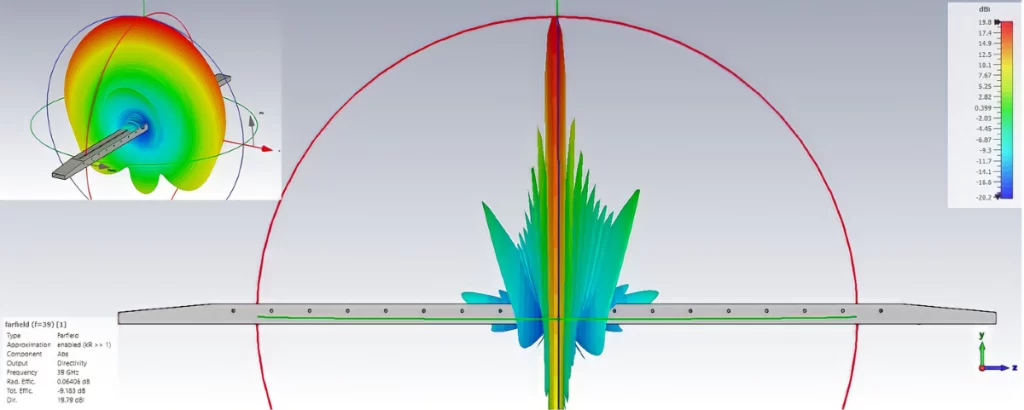
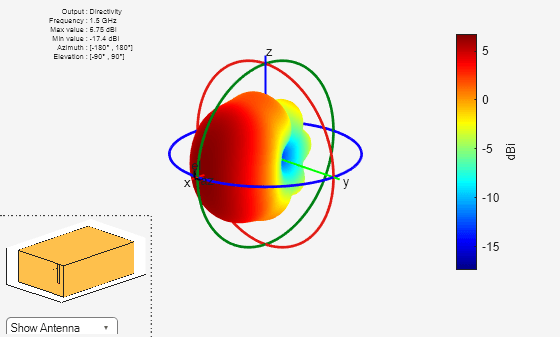
To measure waveguide antenna radiation patterns, use a vector network analyzer in an anechoic chamber: mount the antenna on a precision turntable, scan azimuth/elevation angles at 5° steps (2–40 GHz), capture S-parameters, and apply Fourier transforms to generate 3D pattern data, verifying gain and sidelobe levels. Set Up Test Equipment For a standard X-band waveguide […]

How to measure waveguide antenna radiation patterns Read More »
How to upgrade traditional antennas with waveguide technology

Upgrade traditional antennas by integrating a waveguide feed to replace the conventional dipole. This modification can boost gain by 3-6 dB and efficiently handle higher frequencies (2-40 GHz) with minimal loss. Precisely couple the waveguide port to the antenna’s feed point and ensure a weatherproof seal to prevent moisture degradation. Waveguide Basics Explained For a

How to upgrade traditional antennas with waveguide technology Read More »

What are the 5 steps to install a waveguide antenna system

To install a waveguide antenna system, first align its frequency (e.g., 12–18GHz for Ku-band) with the feed source to minimize insertion loss (<0.5dB). Secure the antenna to a stable mount using 5–8Nm torque, adjust elevation/azimuth via laser alignment, then calibrate VSWR (<1.5) with a network analyzer, and test signal strength (≥-80dBm) to confirm connectivity. Plan

What are the 5 steps to install a waveguide antenna system Read More »

How to select waveguide components for satellite communication

To select waveguide components for satellite communication, match their frequency (e.g., 12–18GHz for Ku-band) to the system’s operating range to minimize insertion loss (<0.5dB/cm). Use corrosion-resistant stainless steel or aluminum with joint gaps <0.1mm, and verify compliance with ITU-R S.465 standards for optimal signal integrity. Define Your Frequency Band​​ In satellite communications, this typically means

How to select waveguide components for satellite communication Read More »

What are the 5 latest trends in waveguide antenna technology

Recent waveguide antenna trends include: 26-40GHz millimeter-wave integration for 5G/satcom, boosting gain by 15% via 64-element phased arrays; carbon fiber composites reducing weight by 30% while maintaining <0.5dB insertion loss; RIS-enhanced designs improving beam efficiency by 5-8dB; and microchannel cooling enabling ±2℃ thermal stability at 100W/cm² power density. Integrated Antenna Design Over the past three

What are the 5 latest trends in waveguide antenna technology Read More »

How to troubleshoot waveguide antenna performance issues

To troubleshoot waveguide antenna performance, first measure VSWR with a tester (target <1.5; >1.5 indicates connector oxidation or misalignment). Use a 28GHz signal generator: if gain drops >2dB from spec, check waveguide flange joints for gaps. Rotate antenna to verify polarization—stable -30dBm±2dB signals confirm correct alignment. Ensure operation within 25±5℃, <60%RH to avoid thermal expansion

How to troubleshoot waveguide antenna performance issues Read More »

How to connect waveguide components to RF antennas

Connect waveguide components to RF antennas using precisely aligned flanges (e.g., CPR-229) to minimize signal loss. Seal joints with conductive gaskets or copper tape to maintain an airtight, low-VSWR interface (<1.2:1 ideal). Use a torque wrench to tighten flange bolts to the specified value (e.g., 25 in-lbs) for consistent electrical continuity. ​​Waveguide and Antenna Interface

How to connect waveguide components to RF antennas Read More »

What is the role of waveguide duplexers in communication systems

Waveguide duplexers are crucial for allowing a single antenna to simultaneously transmit and receive signals, often operating in frequency ranges like 3.5-4.2 GHz. They use internal filters to provide high isolation, typically over 30 dB, preventing powerful transmitted signals from overwhelming sensitive receivers, which is vital in radar and cellular systems. What is a Waveguide

What is the role of waveguide duplexers in communication systems Read More »

What are the 4 advantages of waveguide amplifiers over RF amplifiers

Waveguide amplifiers surpass RF amplifiers with higher frequency support (30-300GHz vs. <6GHz), lower insertion loss (<0.5dB vs. 1.2dB typical), 2-3× greater power capacity (100W+ vs. 20-30W), and broader bandwidth (>10GHz vs. ≤2GHz), optimizing high-frequency transmission efficiency. ​​Handles High Power Signals​​ While a typical coaxial-based RF amplifier might comfortably handle powers up to 500 watts, it

What are the 4 advantages of waveguide amplifiers over RF amplifiers Read More »

How to reduce insertion loss in waveguide assemblies

To reduce waveguide assembly insertion loss, optimize surface roughness (Ra≤0.2μm, cutting 30% loss vs. Ra=1μm), align with <λ/100 gap (e.g., <0.25mm in X-band for 15% reduction), and use low-loss materials like gold-plated copper to minimize resistive losses. Check Connector Alignment Studies indicate that a lateral offset of just ​​0.1 mm​​ in a standard WR-90 waveguide

How to reduce insertion loss in waveguide assemblies Read More »

Scroll to Top
Blank Form (#3)