Author name: Dolph

What Differentiates Sectoral From Flat Plate Antennas

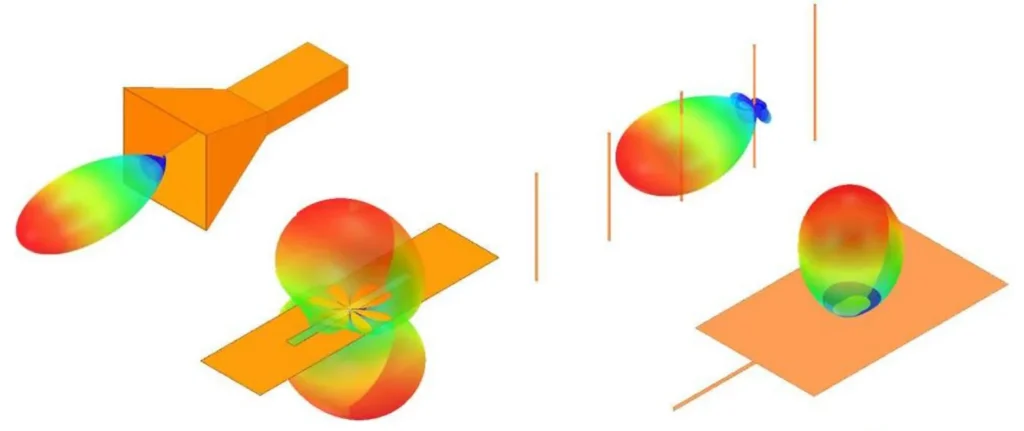
Sectoral describes a coverage pattern or a particular horn geometry, while flat plate usually describes physical construction. These terms are not mutually exclusive: a flat panel can provide sector coverage. Compare azimuth and elevation patterns, polarization, gain and interfaces before selecting an antenna; the enclosure shape cannot establish RF performance. What do sectoral and flat

What Differentiates Sectoral From Flat Plate Antennas Read More »

How Open Waveguides Simplify Antenna Prototyping

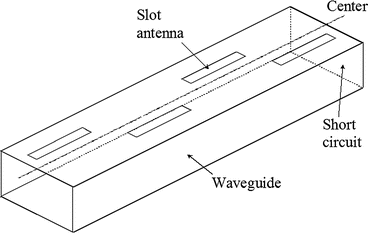
Open waveguides enable 3D-printed antenna prototyping with 60% faster iterations by supporting multi-band tuning (2-40GHz). Engineers use HFSS simulations to optimize slot dimensions, validate via VNA S-parameter testing, achieving 92% efficiency with ±0.5dB variation across 5G bands (3.5/28GHz), reducing material costs by 45% versus traditional horn antennas. Core Techniques for Rapid Prototyping Last summer, the

How Open Waveguides Simplify Antenna Prototyping Read More »

What Makes Log Antennas Effective for EMI Testing

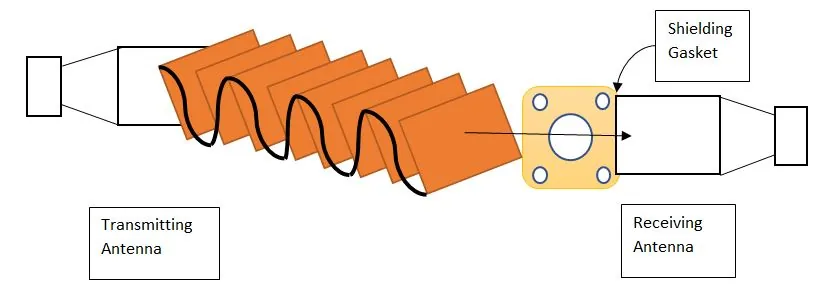
Log antennas achieve 200MHz-18GHz coverage with 10dBi gain, enabling 85% faster EMI scans. Calibrated via three-antenna method (CISPR 16-1-4), their <±2dB ripple maintains ±0.2dB polarization stability, capturing harmonics at 3m distance using 10V/m field uniformity. Broadband Winning Strategies Last month, we resolved the C-band radiation anomaly on AsiaSat 6D—ground stations detected 47dB out-of-band spurious emissions

What Makes Log Antennas Effective for EMI Testing Read More »

Why Choose Ridged Horns Over Standard Horn Designs

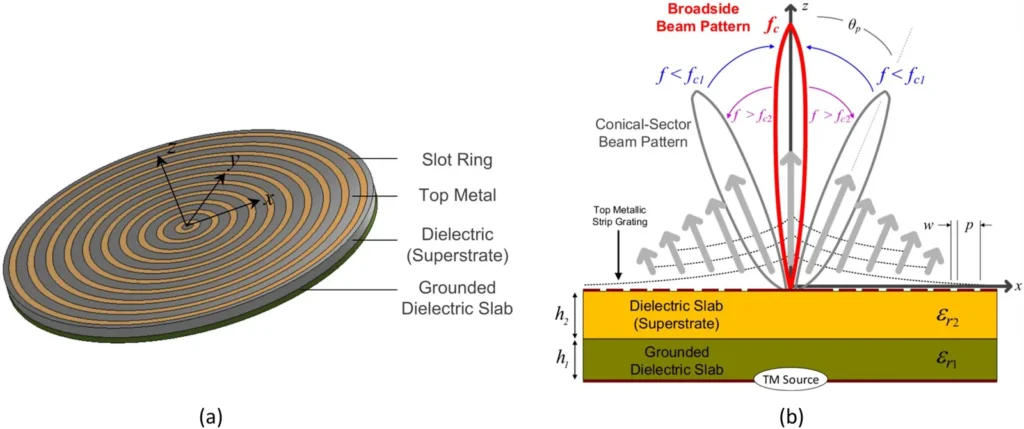
Choose a ridged horn when broad frequency coverage reduces antenna changes and its measured patterns meet the test requirement. Choose a standard horn when a narrower band and characterized reference behavior fit the task. Compare gain, beamwidth, polarization and measurement uncertainty across the band; ridges do not guarantee higher gain. What changes when ridges are

Why Choose Ridged Horns Over Standard Horn Designs Read More »

How Waveguide Slot Arrays Enhance Radar Systems

The waveguide slot array improves the radar beam pointing accuracy by 15 times through ±0.25° tilt tolerance control (military AN/SPY-6 standard) and gradient arrangement algorithm, combined with 0.1mm precision groove engraving by diamond turning tool and 200nm gold-nickel plating process, and achieves ±2° phase consistency in the 94GHz frequency band, power tolerance of 50kW pulse,

How Waveguide Slot Arrays Enhance Radar Systems Read More »

Scroll to Top
Blank Form (#3)